Got contracts to review? While you're here for policies, let Cobrief make contract review effortless—start your free review now.
Customize this template for free
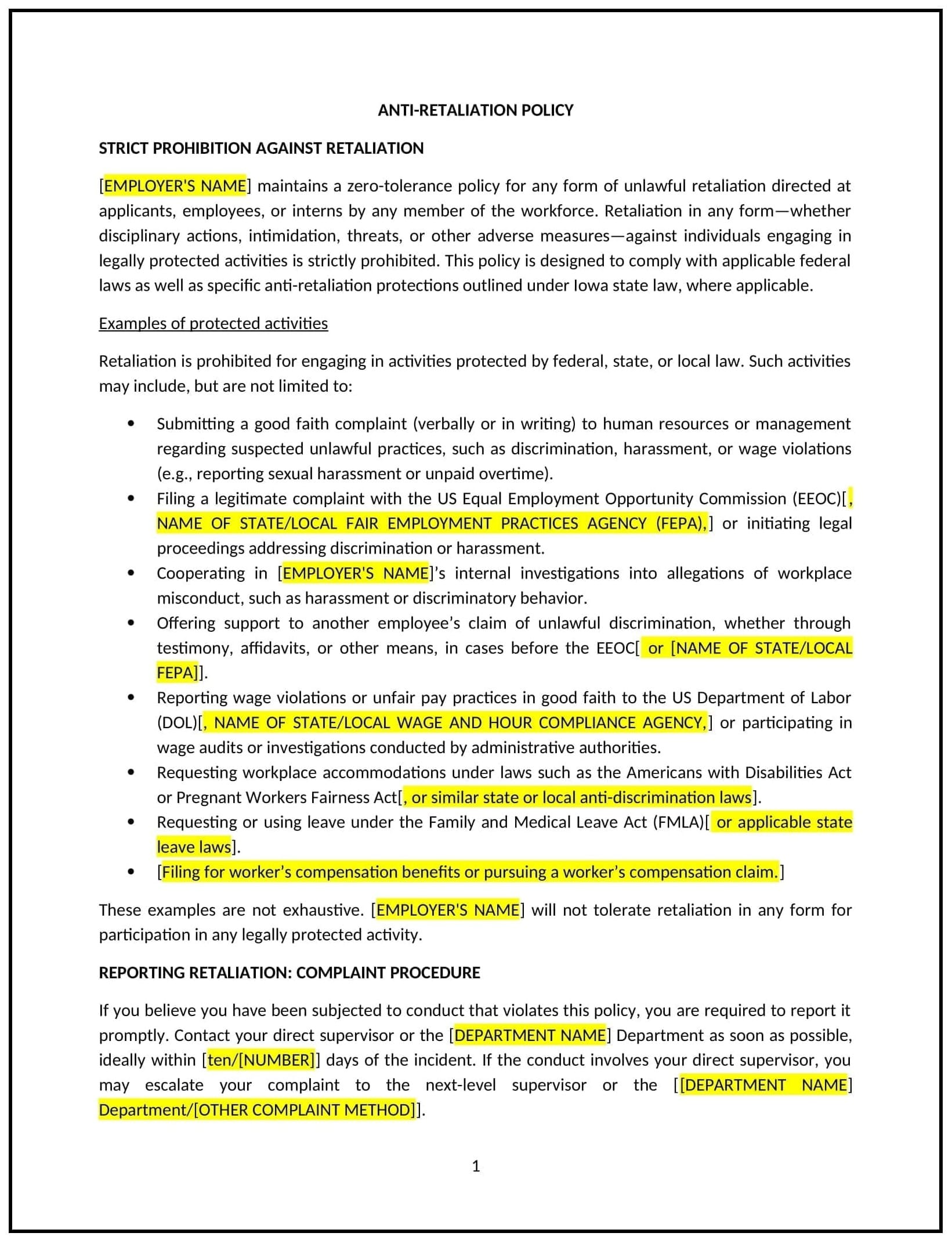
Anti-retaliation policy (Iowa)
An anti-retaliation policy helps Iowa businesses create a work environment where employees feel safe reporting concerns without fear of punishment. Retaliation occurs when an employer or manager takes adverse action against an employee for engaging in legally protected activities, such as reporting harassment, discrimination, workplace safety issues, or unethical behavior.
This policy outlines protections for employees, establishes reporting and investigation procedures, and clarifies consequences for retaliatory behavior. It helps businesses uphold ethical standards while fostering trust and accountability in the workplace.
By implementing this policy, businesses in Iowa can promote ethical workplace practices, encourage open communication, and minimize risks associated with retaliation claims.
How to use this anti-retaliation policy (Iowa)
- Define retaliation: Clearly explain what constitutes retaliation, such as termination, demotion, negative performance reviews, or exclusion from workplace opportunities.
- Identify protected activities: Specify the types of activities that are protected under the policy, such as whistleblowing, participating in investigations, or reporting workplace concerns.
- Establish reporting procedures: Outline how employees can report suspected retaliation, including anonymous reporting options.
- Investigate claims fairly: Describe the process for reviewing retaliation complaints and determining appropriate corrective action.
- Emphasize non-retaliation commitments: Communicate that employees will not face consequences for reporting concerns in good faith.
- Train managers and supervisors: Provide education on how to handle reports professionally and avoid actions that may be perceived as retaliatory.
- Enforce consequences: Specify disciplinary actions for employees or managers found to have engaged in retaliation.
- Review and update: Regularly assess and update the policy to reflect changes in Iowa workplace laws or company practices.
Benefits of using this anti-retaliation policy (Iowa)
This policy offers several advantages for Iowa businesses:
- Promotes an ethical workplace: Encourages employees to report concerns without fear of negative consequences.
- Reduces legal and financial risks: Helps businesses manage and resolve retaliation claims effectively.
- Strengthens employee trust: Demonstrates a commitment to fairness and accountability.
- Supports early issue resolution: Provides a structured process for handling concerns before they escalate.
- Encourages open communication: Creates a workplace culture where employees feel safe voicing concerns.
- Protects business reputation: Establishes clear standards for professional conduct and ethical decision-making.
Tips for using this anti-retaliation policy (Iowa)
- Communicate the policy: Businesses should make employees aware of their rights and protections under this policy.
- Offer multiple reporting channels: Businesses should provide employees with various ways to report retaliation, including anonymous options.
- Maintain confidentiality: Businesses should protect the identities of individuals involved in retaliation claims whenever possible.
- Provide leadership training: Businesses should educate managers on handling reports professionally and avoiding behaviors that may be perceived as retaliatory.
- Respond promptly: Businesses should investigate retaliation claims quickly and document findings thoroughly.
- Apply disciplinary actions consistently: Businesses should enforce consequences fairly to reinforce accountability.