Got contracts to review? While you're here for policies, let Cobrief make contract review effortless—start your free review now.
Customize this template for free
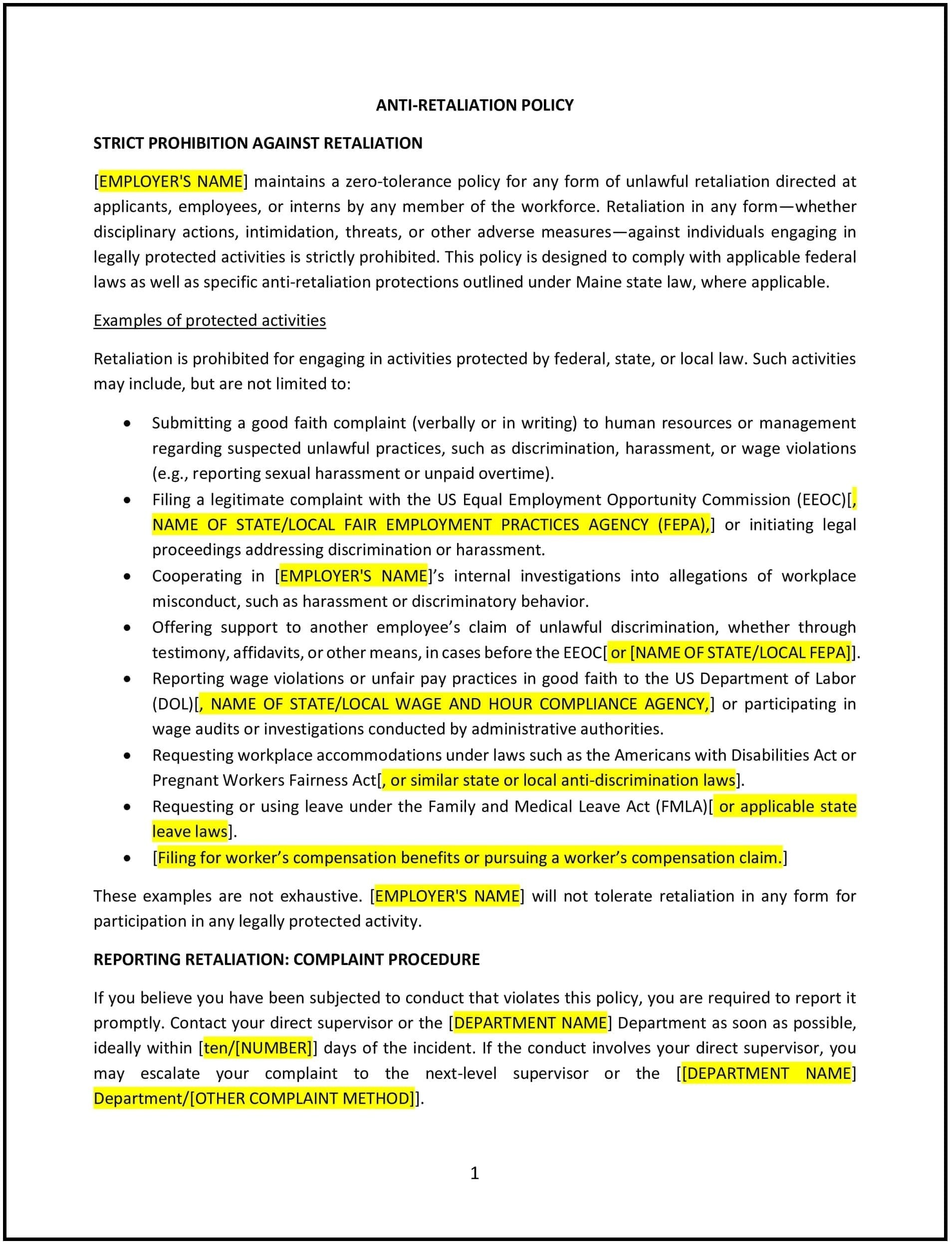
Anti-retaliation policy (Maine): Free template
This anti-retaliation policy is designed to help Maine businesses create a workplace culture that protects employees who report misconduct or participate in investigations. It provides clear guidelines to prevent retaliation, ensuring employees feel safe to raise concerns and businesses can address issues effectively while maintaining compliance with state and federal laws.
By implementing this policy, Maine businesses can promote trust, encourage transparency, and minimize risks related to retaliation claims.
How to use this anti-retaliation policy (Maine)
- Define retaliation: Clearly explain what constitutes retaliation, such as adverse actions taken against employees for reporting misconduct or participating in investigations.
- Establish reporting procedures: Provide businesses with steps for employees to report suspected retaliation, including confidential reporting options.
- Designate responsibility: Identify the managers or departments responsible for handling retaliation claims, such as HR or compliance teams.
- Outline investigation protocols: Include a process for investigating retaliation claims, with timelines and confidentiality safeguards.
- Clarify consequences: State the disciplinary actions businesses should take if retaliation occurs, including termination if necessary.
- Educate employees: Emphasize the importance of anti-retaliation principles during onboarding and through regular training sessions.
- Monitor implementation: Recommend periodic reviews to ensure anti-retaliation measures are followed.
- Align with legal standards: Highlight the need for businesses to stay updated on Maine and federal laws regarding retaliation.
Benefits of using this anti-retaliation policy (Maine)
Implementing this policy provides several advantages for Maine businesses:
- Encourages reporting: Creates an environment where employees feel safe reporting concerns or misconduct.
- Builds trust: Demonstrates the company’s commitment to protecting employees from retaliation.
- Mitigates legal risks: Helps businesses comply with Maine and federal anti-retaliation laws, reducing potential penalties.
- Promotes transparency: Establishes clear processes for addressing and preventing retaliation.
- Strengthens company culture: Fosters an ethical workplace by prioritizing accountability and fairness.
Tips for using this anti-retaliation policy (Maine)
- Communicate effectively: Share the policy with employees during onboarding and include it in the employee handbook.
- Train managers: Ensure managers understand how to handle retaliation claims and prevent retaliatory actions.
- Document thoroughly: Keep detailed records of all reports, investigations, and actions taken to demonstrate compliance.
- Foster a safe environment: Encourage open communication so employees feel comfortable raising concerns.
- Review regularly: Update the policy to reflect any changes in Maine or federal laws.
- Seek feedback: Periodically ask employees for input on how to improve anti-retaliation practices.