Anti-retaliation policy (Mississippi): Free template
Got contracts to review? While you're here for policies, let Cobrief make contract review effortless—start your free review now.
Customize this template for free
Anti-retaliation policy (Mississippi)
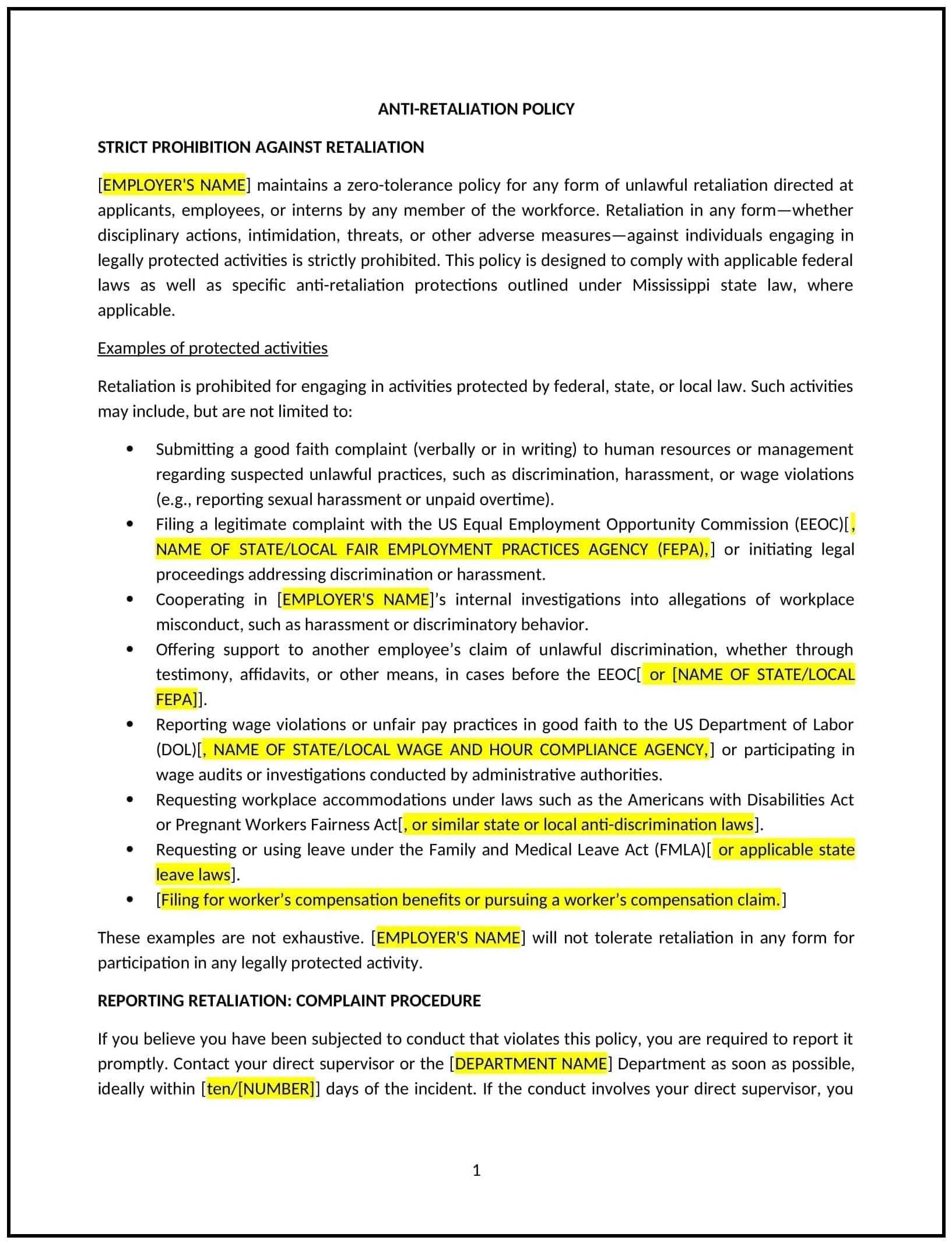
An anti-retaliation policy helps Mississippi businesses protect employees who engage in protected activities, such as reporting harassment, filing complaints, participating in investigations, or exercising other legal rights. This policy ensures that employees are not subjected to retaliation for standing up against unethical practices, discrimination, or other unlawful actions within the workplace.
By implementing this policy, businesses create a safer work environment, foster open communication, and encourage employees to report concerns without fear of reprisal, which is essential for maintaining a transparent and compliant workplace.
How to use this anti-retaliation policy (Mississippi)
- Define retaliation: Clearly define what constitutes retaliation, including any adverse actions taken against employees for reporting misconduct, participating in investigations, or exercising rights protected under the law. Examples of retaliation include demotion, termination, harassment, or any form of discrimination following a protected activity.
- Establish protections: Outline the specific protections provided to employees who report concerns or participate in investigations. These protections should apply to employees at all levels of the organization and should cover complaints related to harassment, discrimination, wage theft, and other workplace violations.
- Create reporting channels: Provide clear instructions on how employees can report retaliation, including contact points within HR, an ombudsman, or a designated compliance officer. Ensure that employees have multiple ways to report concerns confidentially.
- Set clear guidelines for investigating claims: Define the process for investigating retaliation claims, including how investigations will be conducted, the timeline for resolution, and the protection of all involved parties' confidentiality.
- Define consequences for retaliation: Specify the consequences for employees who engage in retaliatory behavior, such as disciplinary action up to and including termination. Ensure that retaliation claims are handled swiftly and fairly to avoid escalating workplace tension.
- Provide training and awareness: Regularly train employees and management on the anti-retaliation policy, emphasizing the importance of protecting employees’ rights and maintaining a respectful work environment.
- Monitor and review: Periodically review the policy to ensure that it remains effective and relevant, particularly as legal standards and organizational needs evolve.
Benefits of using this anti-retaliation policy (Mississippi)
This policy provides several benefits for Mississippi businesses:
- Protects employees from unfair treatment: By implementing a clear anti-retaliation policy, businesses help ensure that employees who speak up against unlawful behavior are not punished or penalized for their actions.
- Promotes a transparent work environment: A strong anti-retaliation policy encourages employees to report misconduct or raise concerns, which leads to a more transparent and honest work environment.
- Reduces legal risks: By preventing retaliation, businesses minimize the risk of costly lawsuits or regulatory penalties that may result from retaliatory actions.
- Enhances employee trust: Employees are more likely to report problems and cooperate with investigations if they know their rights are protected. This fosters trust between employees and management.
- Encourages a compliant workplace: When employees feel secure in reporting violations, businesses are more likely to identify and address potential legal or ethical issues proactively, ensuring better overall compliance.
Tips for using this anti-retaliation policy (Mississippi)
- Communicate the policy effectively: Ensure all employees understand the anti-retaliation policy, including their right to report concerns without fear of retaliation.
- Offer multiple reporting channels: Provide employees with multiple ways to report retaliation concerns, such as email, phone, or an anonymous hotline, to ensure accessibility and confidentiality.
- Investigate complaints thoroughly: Ensure that all complaints of retaliation are investigated promptly, with impartiality, and in a manner that protects the rights of the individuals involved.
- Address retaliation swiftly: Respond to any instances of retaliation promptly to prevent escalation and maintain a positive work environment.
- Keep the policy up-to-date: Regularly review and update the policy to reflect changes in laws, business practices, or internal needs.