Got contracts to review? While you're here for policies, let Cobrief make contract review effortless—start your free review now.
Customize this template for free
Anti-retaliation policy (Oklahoma)
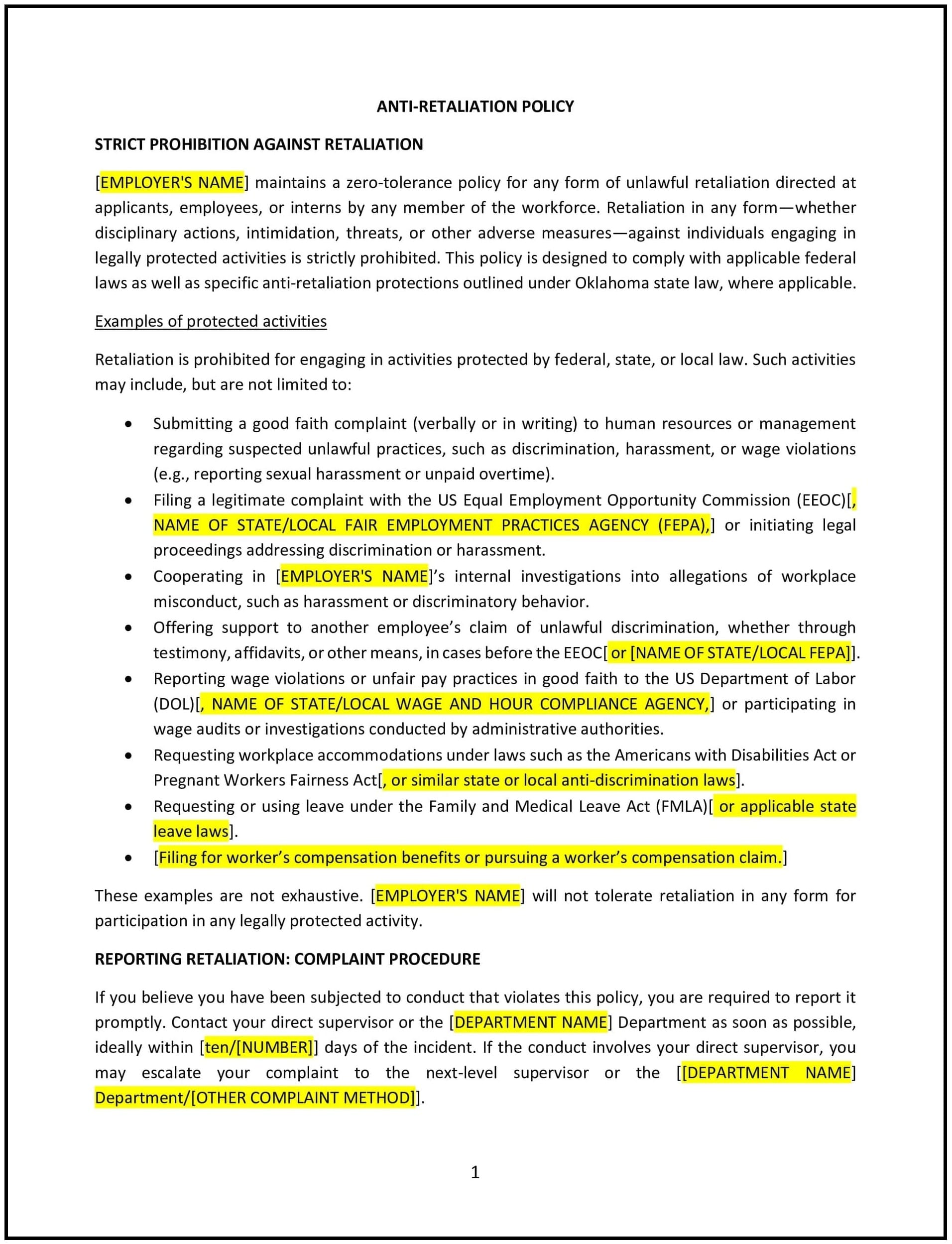
This anti-retaliation policy is designed to help Oklahoma businesses protect employees who report misconduct, such as harassment, discrimination, or safety violations. It outlines procedures for preventing and addressing retaliation against employees who raise concerns in good faith.
By adopting this policy, businesses can promote transparency, encourage reporting, and maintain a fair and ethical workplace.
How to use this anti-retaliation policy (Oklahoma)
- Define retaliation: Clearly explain what constitutes retaliation, such as demotion, termination, or other adverse actions against employees who report concerns.
- Establish reporting procedures: Provide steps for employees to report retaliation, including multiple reporting channels and anonymous options.
- Outline investigation processes: Describe how retaliation complaints will be investigated, ensuring fairness, confidentiality, and promptness.
- Specify consequences: Define the disciplinary actions for confirmed retaliation, such as warnings, suspension, or termination.
- Train employees and managers: Educate staff on recognizing and preventing retaliation, and train managers on handling complaints effectively.
- Promote awareness: Regularly communicate the policy to employees and include it in the employee handbook.
- Review and update: Assess the policy annually to ensure it remains effective and aligned with evolving workplace dynamics and legal standards.
Benefits of using this anti-retaliation policy (Oklahoma)
This policy offers several advantages for Oklahoma businesses:
- Encourages reporting: Protects employees who raise concerns, fostering a culture of transparency and accountability.
- Reduces conflicts: Addresses retaliation early, preventing escalation and promoting fairness.
- Enhances compliance: Aligns with state and federal laws that prohibit retaliation, such as whistleblower protections.
- Mitigates risks: Reduces the likelihood of legal disputes or reputational damage related to retaliation.
- Builds trust: Demonstrates a commitment to maintaining a fair and ethical workplace.
Tips for using this anti-retaliation policy (Oklahoma)
- Communicate clearly: Ensure all employees understand the policy and their rights to report concerns without fear of retaliation.
- Train managers: Equip supervisors with the skills to handle retaliation complaints effectively.
- Encourage reporting: Foster an environment where employees feel safe reporting retaliation or other misconduct.
- Monitor trends: Track retaliation complaints to identify patterns and address underlying issues.
- Update regularly: Review the policy annually to ensure it remains relevant and effective.