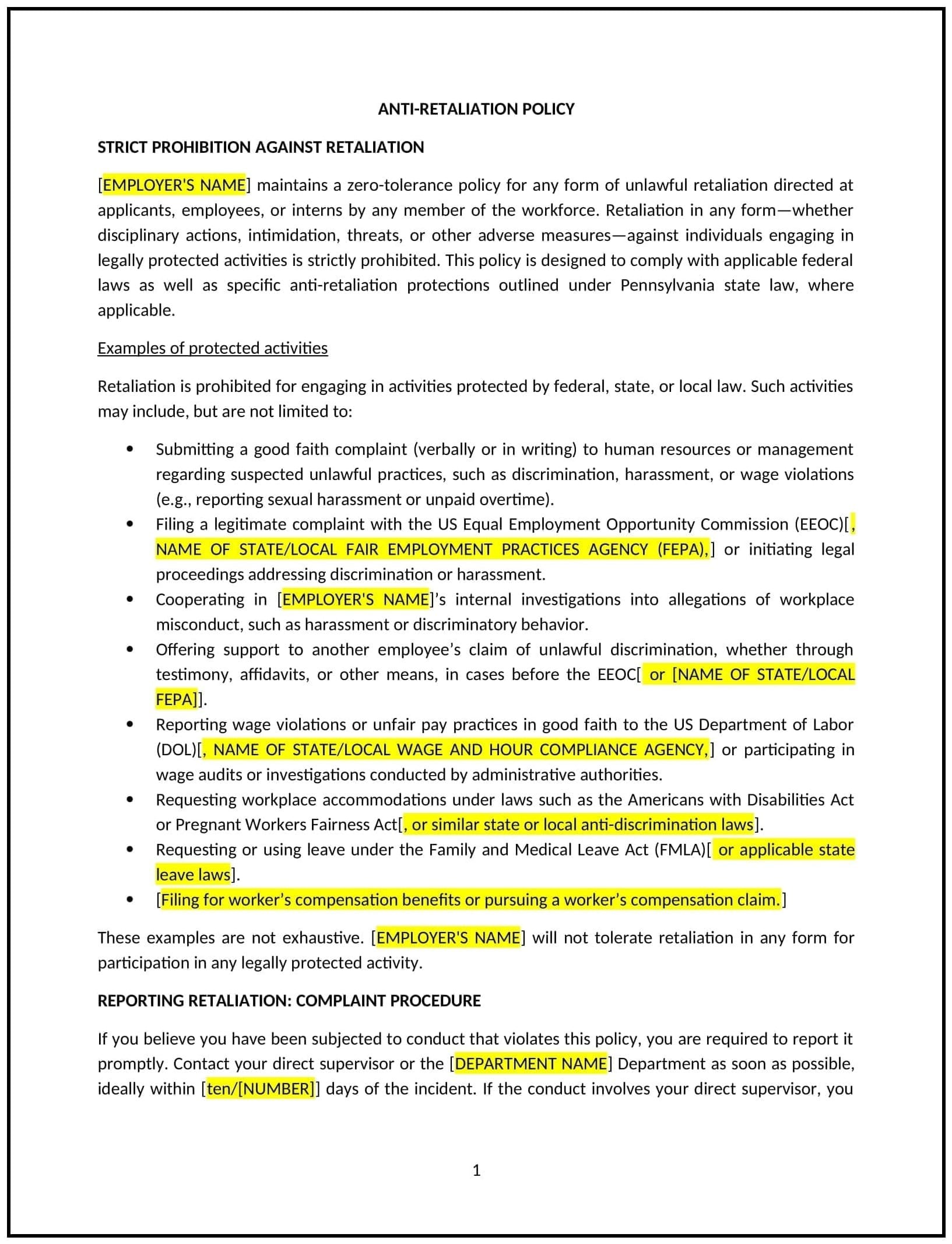
Anti-retaliation policy (Pennsylvania): Free template
Protects employees from retaliation when they report concerns or participate in investigations in good faith.
- Policies
- Pennsylvania
Anti-retaliation policy (Pennsylvania)
This anti-retaliation policy is designed to help businesses in Pennsylvania protect employees from retaliation when they report workplace concerns, such as harassment, discrimination, or violations of laws and policies. Whether addressing small-scale complaints or managing whistleblower protections, this template provides a framework for fostering a transparent and supportive workplace culture in compliance with Pennsylvania labor laws and federal regulations.
By using this template, businesses can build trust, encourage accountability, and reduce the risks associated with retaliation claims.
How to use this anti-retaliation policy (Pennsylvania)
- Define retaliation: Clearly specify actions that constitute retaliation, such as termination, demotion, or other adverse actions taken against employees who report workplace issues.
- Outline reporting procedures: Provide steps for reporting concerns, including multiple reporting channels like HR, supervisors, or anonymous hotlines.
- Establish investigation protocols: Detail the process for investigating reports of retaliation, emphasizing confidentiality and impartiality.
- Include preventive measures: Highlight the importance of training managers and employees on recognizing and preventing retaliatory behaviors.
- Reflect Pennsylvania-specific considerations: Tailor the policy to align with state laws and workforce dynamics, such as whistleblower protections under Pennsylvania statutes.
Benefits of using an anti-retaliation policy (Pennsylvania)
A well-structured attendance policy supports operational efficiency and fairness. Here's how it helps:
- Promotes transparency: Encourages employees to report concerns without fear of reprisal, fostering a culture of accountability.
- Supports compliance: Aligns with Pennsylvania labor laws and federal anti-retaliation regulations, reducing legal risks.
- Enhances trust: Demonstrates the business’s commitment to protecting employees who report legitimate concerns.
- Mitigates risks: Reduces the likelihood of legal claims and reputational damage associated with retaliation cases.
- Improves workplace morale: Creates a supportive environment where employees feel safe raising issues and engaging in open communication.
Tips for using an anti-retaliation policy (Pennsylvania)
- Communicate expectations: Share the policy with employees and ensure they understand their rights and the importance of reporting concerns.
- Train managers: Equip supervisors with the knowledge to handle reports of retaliation appropriately and prevent retaliatory behaviors.
- Monitor workplace culture: Regularly assess the workplace environment to identify and address potential issues proactively.
- Document incidents: Maintain thorough records of reports, investigations, and resolutions to ensure accountability and compliance.
- Review periodically: Update the policy to reflect changes in Pennsylvania labor laws, federal regulations, or organizational practices.
Frequently asked questions (FAQs)
Similar templates
Where deals go from offer to paid
