Got contracts to review? While you're here for policies, let Cobrief make contract review effortless—start your free review now.
Customize this template for free
Attendance policy (California)
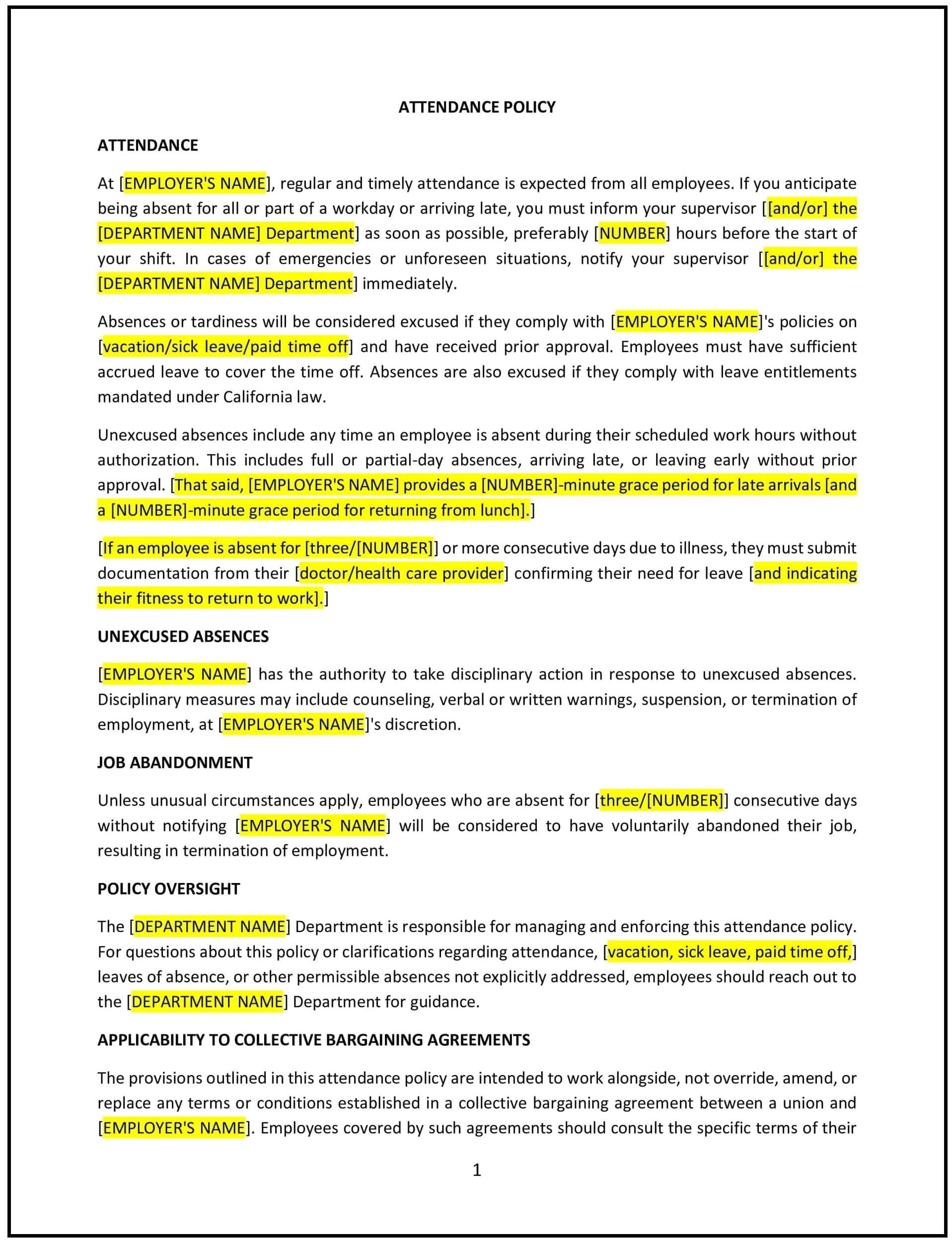
In California, an attendance policy provides businesses with guidelines to manage employee attendance, ensuring operational efficiency and fairness. This policy establishes clear expectations for punctuality, absence reporting, and leave procedures, helping businesses maintain productivity while supporting compliance with California labor laws.
This policy outlines acceptable attendance practices, procedures for reporting absences, and consequences for repeated violations. By implementing this policy, California businesses can promote accountability and ensure consistent application of attendance standards.
How to use this attendance policy (California)
- Define expectations: Clearly communicate rules for attendance, including start times, acceptable tardiness, and absence reporting procedures.
- Outline leave procedures: Specify how employees should request time off, including notice periods and required documentation for absences.
- Address state-specific considerations: Include policies that reflect California labor laws, such as mandatory paid sick leave and reporting time pay.
- Set consequences: Establish disciplinary actions for unexcused absences, repeated tardiness, or no-shows, ensuring alignment with California regulations.
- Provide flexibility: Adapt the policy to account for California’s diverse workforce needs, such as remote work arrangements or unpredictable schedules.
Benefits of using this attendance policy (California)
This policy offers several advantages for California businesses:
- Promotes operational efficiency: Ensures consistent attendance to minimize disruptions and maintain productivity.
- Supports compliance: Aligns with California labor laws, including requirements for paid sick leave and meal/rest breaks.
- Encourages accountability: Provides employees with clear expectations for attendance and absence reporting.
- Enhances fairness: Applies attendance standards consistently, reducing the potential for perceived favoritism or discrimination.
- Mitigates risks: Helps businesses address attendance issues before they escalate into performance or legal concerns.
Tips for using this attendance policy (California)
- Reflect California-specific laws: Ensure the policy complies with the state’s requirements for paid sick leave, reporting time pay, and other labor standards.
- Train managers: Provide supervisors with guidance on enforcing the policy consistently and fairly.
- Use attendance tracking tools: Implement systems to monitor employee attendance and generate reports for better oversight.
- Encourage communication: Foster an open dialogue where employees feel comfortable discussing attendance challenges or scheduling conflicts.
- Review regularly: Update the policy to reflect changes in California laws, business needs, or workforce trends.