Got contracts to review? While you're here for policies, let Cobrief make contract review effortless—start your free review now.
Customize this template for free
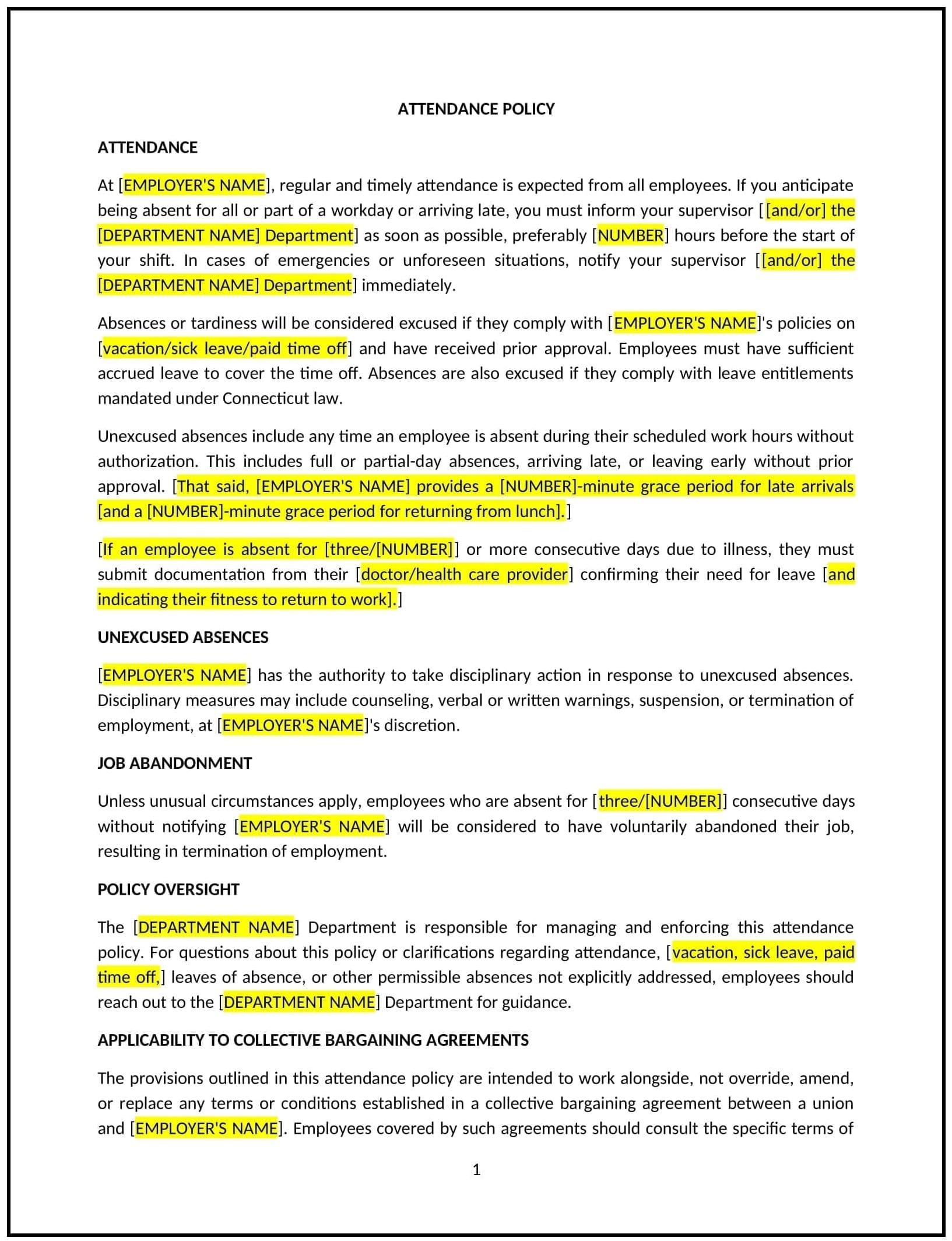
Attendance policy (Connecticut)
An attendance policy helps employees in Connecticut understand expectations regarding attendance, punctuality, and the process for reporting absences. This policy outlines the guidelines for requesting time off, handling absenteeism, and the responsibilities of employees to ensure that attendance is managed efficiently while maintaining fairness.
By following this policy, employees can manage their time off responsibly, ensure consistent work attendance, and adhere to company guidelines.
How to use this attendance policy (Connecticut)
- Define acceptable attendance: Employees should understand the company’s expectations for punctuality and regular attendance. Clear guidelines should be provided for reporting absences, including acceptable reasons (e.g., illness, emergencies, etc.).
- Requesting time off: Employees should notify their manager in advance and follow proper procedures for requesting time off, ensuring minimal disruption to the workplace.
- Handling absenteeism: Employees must inform their manager promptly of absences. When an employee’s absenteeism becomes excessive, they should follow the outlined steps for addressing and rectifying the issue.
- Aligning with company policies: Employees should comply with the company’s procedures regarding attendance and time-off requests, which may include providing documentation for absences or following up on prolonged absences.
- Fostering fairness: The policy aims to ensure that all employees are held to the same standards and treated fairly, particularly regarding time off and absenteeism.
Benefits of using this attendance policy (Connecticut)
This policy offers several benefits for employees in Connecticut:
- Clarity and fairness: Ensures employees understand the rules and expectations regarding attendance, reducing misunderstandings.
- Encourages responsibility: Employees are empowered to manage their attendance, ensuring that they meet expectations and can address absences responsibly.
- Promotes workplace consistency: Helps ensure that all employees are treated equally in regard to absenteeism, preventing favoritism or bias.
- Provides transparency: Clear guidelines on time-off requests and absenteeism help employees navigate the process and avoid conflicts.
- Maintains productivity: Helps employees manage their time off efficiently, minimizing disruptions and ensuring work continuity.
Tips for using this attendance policy (Connecticut)
- Communicate expectations clearly: Employees should understand the policy fully, including the specific steps for requesting time off and managing absences.
- Plan ahead for absences: Encourage employees to request time off in advance when possible to avoid disruption to the team.
- Monitor attendance: Managers should keep track of employee attendance to identify patterns and address concerns promptly.
- Offer flexibility where possible: Where feasible, provide flexible working arrangements or options for managing time off.
- Review periodically: Employees should be aware that the policy will be updated as needed to reflect changes in laws or business needs.