Got contracts to review? While you're here for policies, let Cobrief make contract review effortless—start your free review now.
Customize this template for free
Attendance policy (Georgia)
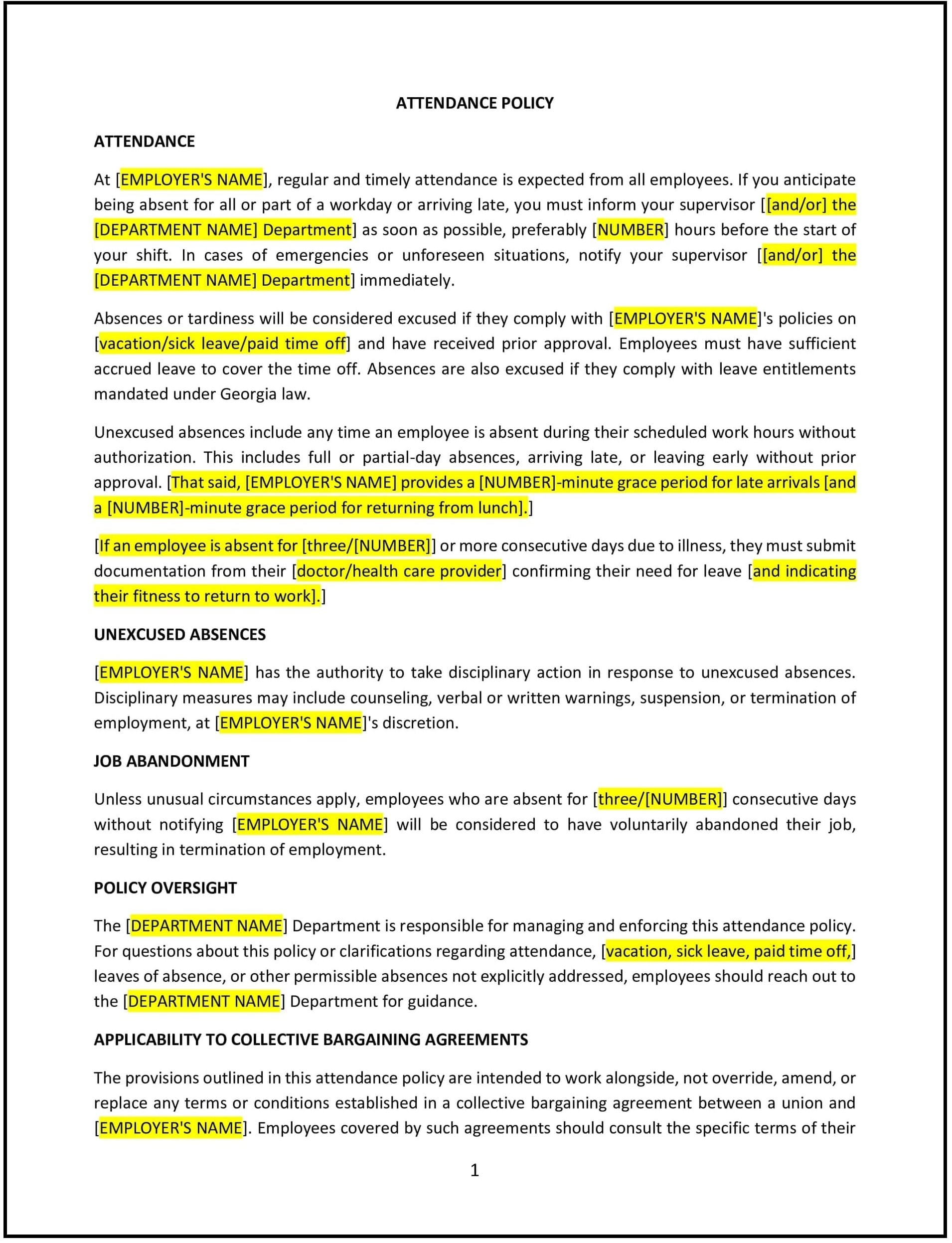
This attendance policy is designed to help Georgia businesses establish clear expectations regarding employee attendance and punctuality. The policy outlines procedures for reporting absences, handling tardiness, and managing attendance-related issues to ensure smooth operations and maintain a productive work environment.
By implementing this policy, businesses can promote accountability, minimize disruptions, and support a fair and transparent approach to attendance management.
How to use this attendance policy (Georgia)
- Define attendance expectations: Clearly outline expectations for attendance, including regular work hours, punctuality, and standards for absenteeism.
- Establish reporting procedures: Specify how employees should report absences or tardiness, including the required notice period and the method of communication (e.g., email, phone, or an HR portal).
- Differentiate types of absences: Clarify the difference between excused and unexcused absences, including examples such as medical leave, personal emergencies, or unauthorized absences.
- Set consequences for excessive absenteeism: Outline the disciplinary actions that may result from excessive or unexcused absences, including verbal warnings, written warnings, or termination.
- Address tardiness: Include guidelines for addressing late arrivals, such as how tardiness is defined and how repeated occurrences will be handled.
- Provide accommodations: Address the process for requesting reasonable accommodations for employees who may need flexibility due to medical, family, or other personal circumstances.
- Track attendance: Implement a system for monitoring attendance, such as timesheets, punch cards, or digital tracking software, to ensure consistency and transparency.
- Review and update regularly: Periodically review the policy to ensure it aligns with Georgia’s labor laws, evolving workplace needs, and employee feedback.
Benefits of using this attendance policy (Georgia)
Implementing this policy provides several advantages for Georgia businesses:
- Promotes accountability: Employees understand their responsibilities regarding attendance, fostering a culture of accountability and professionalism.
- Reduces disruptions: Clear attendance guidelines help minimize operational disruptions caused by absenteeism or tardiness.
- Improves communication: Standardized reporting procedures ensure timely communication about absences, enabling businesses to adjust schedules and maintain workflow.
- Supports fairness: A consistent approach to attendance management ensures that all employees are treated fairly and equitably.
- Reflects Georgia-specific needs: The policy can address local business practices and cultural considerations unique to Georgia, ensuring it resonates with employees.
Tips for using this attendance policy (Georgia)
- Communicate clearly: Make sure employees understand the attendance policy and how it applies to them. Provide copies during onboarding and review it periodically with the team.
- Encourage open dialogue: Foster a culture where employees feel comfortable discussing potential attendance challenges with their manager or HR. This can help address issues before they escalate.
- Be flexible when appropriate: Consider offering flexible scheduling or remote work options to accommodate employees' personal needs, especially in unforeseen circumstances.
- Address issues promptly: Handle attendance concerns as they arise to avoid setting precedents that may be difficult to manage later.
- Monitor and adjust: Regularly assess attendance patterns and update the policy to address any emerging trends or business needs.