Got contracts to review? While you're here for policies, let Cobrief make contract review effortless—start your free review now.
Customize this template for free
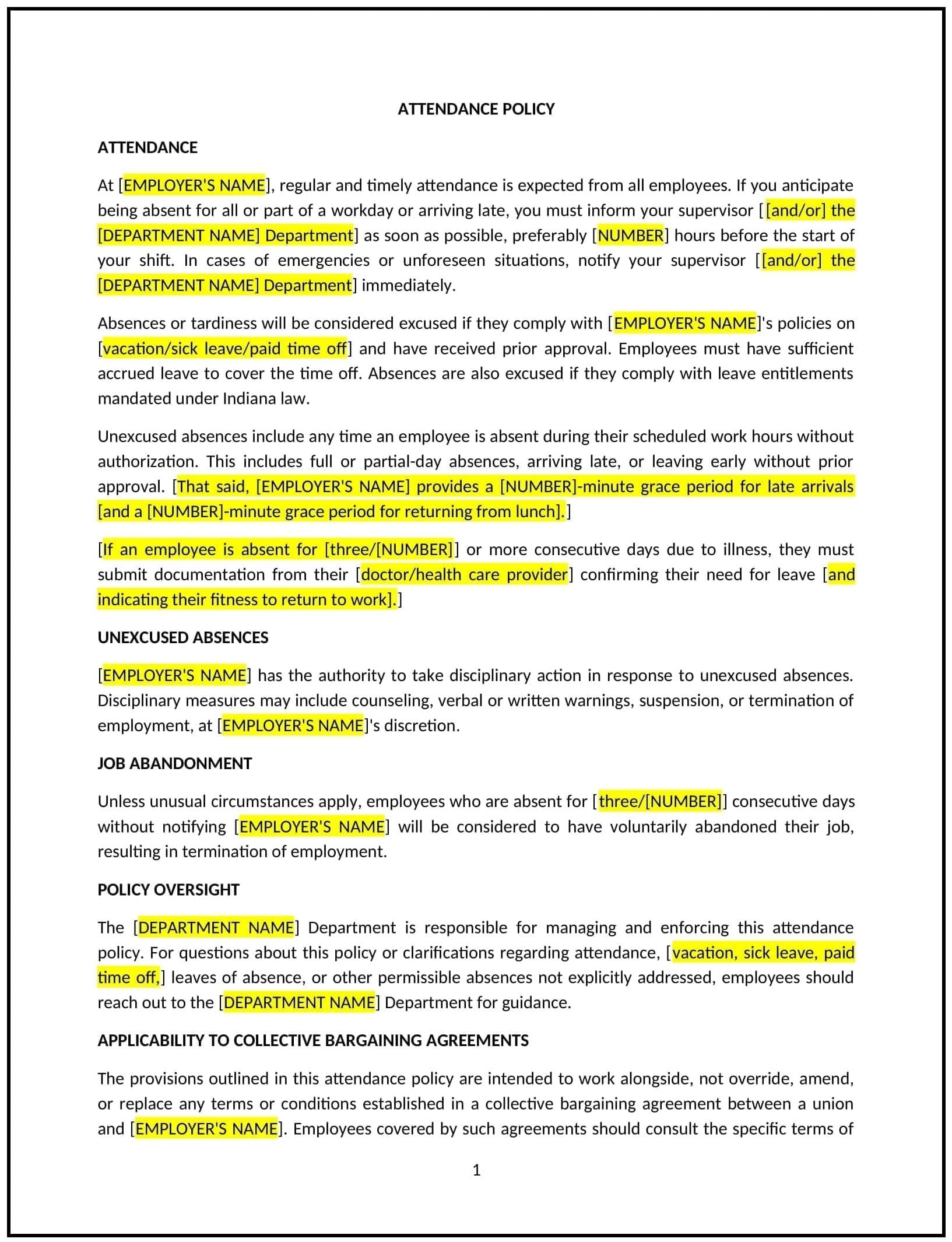
Attendance policy (Indiana): Free template
The attendance policy helps Indiana businesses set clear expectations for employee attendance and punctuality. This policy defines the procedures for reporting absences, the process for requesting time off, and the consequences of non-compliance. By using this template, businesses can ensure smooth operations by reducing disruptions caused by absenteeism, while maintaining fairness and consistency in how attendance issues are addressed.
By implementing this policy, Indiana businesses promote reliability, improve productivity, and create a clear framework for managing employee attendance while addressing any potential attendance-related issues proactively.
How to use this attendance policy (Indiana)
- Define attendance expectations: Clearly outline the company’s expectations for punctuality, including what constitutes an acceptable absence, tardiness, or early departure. Specify the acceptable reasons for absence, such as illness, family emergencies, or personal leave.
- Set reporting procedures: Establish a procedure for employees to follow when they are unable to report to work. Include requirements for notifying their manager in advance (whenever possible), and specify how much notice is needed for planned absences (e.g., vacation or medical appointments).
- Address unplanned absences: Define the steps employees must take when experiencing unplanned absences, such as reporting illness or emergencies. The policy should specify how soon employees should inform their supervisor about the need for an unscheduled absence.
- Include time-off request procedures: Clearly state how employees should request time off in advance, including vacation days, personal leave, or public holidays. Provide any necessary forms or systems for submitting requests.
- Set guidelines for excessive absenteeism: Define what constitutes excessive absenteeism, including a specific number of unexcused absences within a designated period. Include the steps the company will take if an employee’s attendance becomes a concern, such as verbal warnings, written notices, or other disciplinary actions.
- Address attendance for remote workers: If applicable, clarify the attendance expectations for remote employees, including any specific rules regarding virtual meetings, flexible hours, and remote absence notifications.
- Specify consequences for policy violations: Outline the consequences for failing to comply with the attendance policy, which may include progressive discipline up to termination. Ensure the policy reflects consistent and fair application of these consequences.
Benefits of using this attendance policy (Indiana)
Implementing this policy offers several key benefits for Indiana businesses:
- Promotes reliability and accountability: By clearly defining attendance expectations, the policy helps foster a culture of reliability where employees are held accountable for their presence at work.
- Improves productivity: Clear attendance guidelines reduce disruptions in the workplace and ensure that enough staff is available to meet business needs, contributing to consistent productivity.
- Ensures fairness and consistency: A well-communicated attendance policy ensures all employees are treated fairly and equitably when it comes to attendance issues, reducing the risk of misunderstandings or favoritism.
- Reduces absenteeism-related costs: By addressing attendance issues early and setting clear guidelines, businesses can reduce the costs associated with absenteeism, such as lost productivity and the need for temporary replacements.
- Supports planning and resource allocation: By having a clear system for requesting time off, businesses can plan better for absences and ensure adequate staffing, avoiding disruptions in operations.
- Enhances employee satisfaction: Clear and reasonable attendance guidelines can improve employee satisfaction by offering a transparent process for requesting and reporting absences, as well as providing flexibility in certain circumstances.
Tips for using this attendance policy (Indiana)
- Communicate the policy effectively: Ensure all employees understand the attendance policy and its procedures. Provide it in the employee handbook, during orientation, and in periodic training or reminders.
- Monitor attendance: Track attendance regularly to identify any patterns of absenteeism. Early intervention can help address attendance concerns before they escalate.
- Be flexible where possible: While consistency is important, be flexible when possible, especially in cases of emergency or personal situations that may require time off. The policy should provide room for consideration of unique circumstances.
- Address attendance issues promptly: If an employee’s attendance becomes a concern, address the issue quickly to prevent disruptions and ensure fairness. The policy should outline steps for intervention, such as counseling, warnings, or further action if necessary.
- Review the policy regularly: Regularly review the attendance policy to ensure it aligns with any changes in state or federal laws or shifts in company needs, and to address any emerging trends in employee attendance.