Got contracts to review? While you're here for policies, let Cobrief make contract review effortless—start your free review now.
Customize this template for free
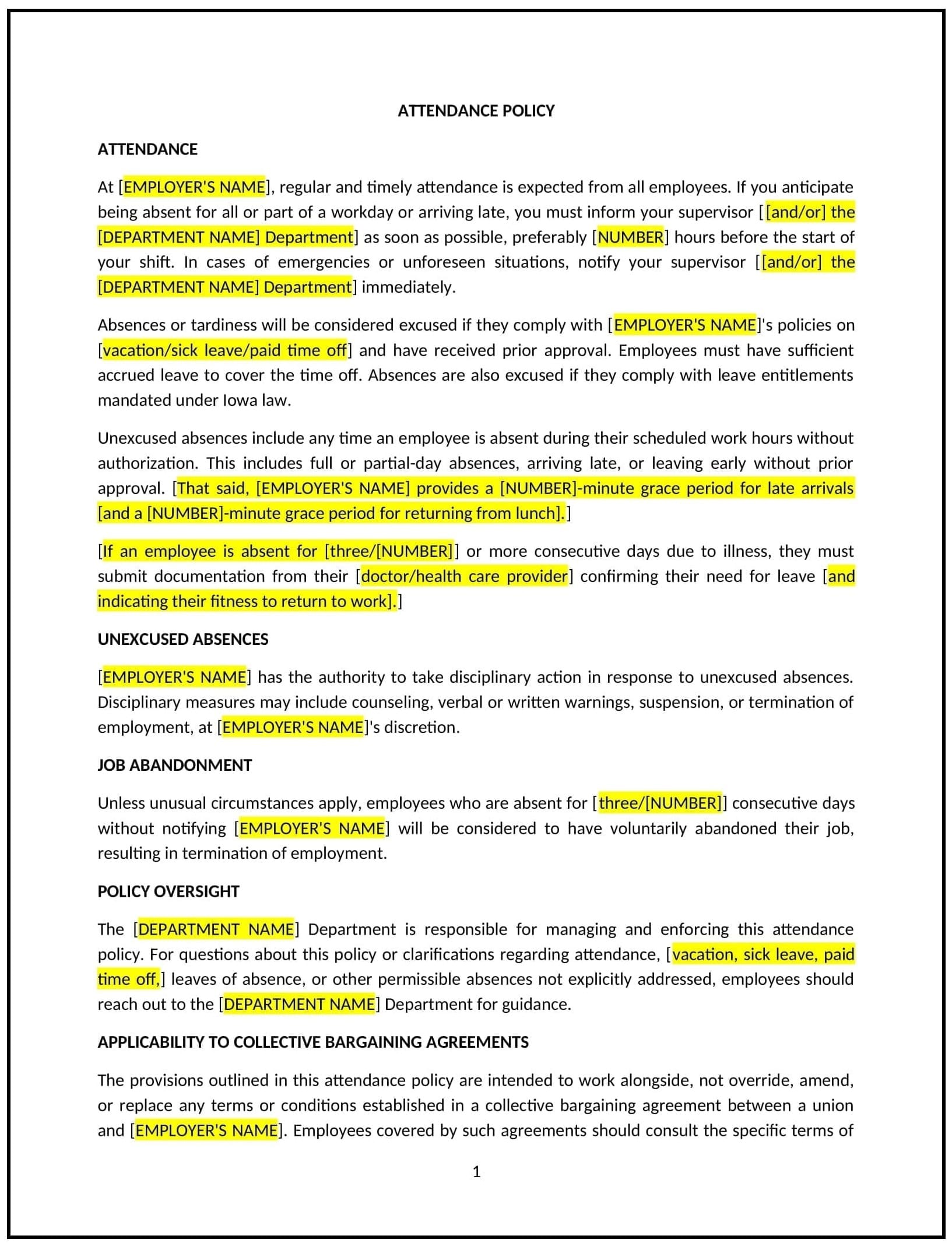
Attendance policy (Iowa)
An attendance policy helps Iowa businesses establish clear expectations for employee attendance, punctuality, and absence reporting. A structured approach to attendance supports business operations, minimizes disruptions, and promotes a reliable work environment.
This policy outlines attendance guidelines, reporting procedures, and potential consequences for excessive absenteeism or tardiness. It also provides flexibility for necessary absences while ensuring accountability.
By implementing this policy, businesses in Iowa can maintain productivity, improve workforce reliability, and promote fairness in attendance expectations.
How to use this attendance policy (Iowa)
- Define attendance expectations: Outline the standard work hours and expectations for punctuality.
- Establish absence reporting procedures: Specify how employees should notify their supervisor if they are unable to work, including the required notice period.
- Address tardiness: Clarify when late arrivals are considered excessive and how they will be managed.
- Allow for excused absences: Define situations where absences may be excused, such as illness, family emergencies, or approved time off.
- Implement tracking measures: Establish a system for recording attendance, including absences and tardiness.
- Set consequences for violations: Outline disciplinary actions for repeated tardiness or excessive unexcused absences.
- Provide accommodations when needed: Allow for reasonable adjustments in cases of medical conditions or other extenuating circumstances.
- Review and update: Regularly assess and revise the policy to align with Iowa labor laws and business needs.
Benefits of using this attendance policy (Iowa)
This policy offers several advantages for Iowa businesses:
- Improves workplace reliability: Encourages employees to be punctual and accountable.
- Reduces business disruptions: Minimizes productivity loss caused by unplanned absences.
- Promotes fairness: Establishes consistent rules for attendance across the organization.
- Supports employee accountability: Encourages employees to take responsibility for their attendance.
- Helps manage staffing levels: Provides a structured approach to handling absences and scheduling adjustments.
- Encourages proactive communication: Ensures employees notify supervisors promptly about attendance issues.
Tips for using this attendance policy (Iowa)
- Set clear expectations: Businesses should define acceptable attendance and tardiness standards.
- Provide multiple reporting options: Businesses should allow employees to report absences through phone, email, or a designated system.
- Monitor attendance trends: Businesses should track patterns of absenteeism to address potential issues proactively.
- Offer flexibility when possible: Businesses should consider remote work or adjusted schedules for employees with valid needs.
- Communicate policy updates: Businesses should ensure employees are aware of any changes to attendance guidelines.
- Apply the policy consistently: Businesses should enforce attendance expectations fairly for all employees.