Got contracts to review? While you're here for policies, let Cobrief make contract review effortless—start your free review now.
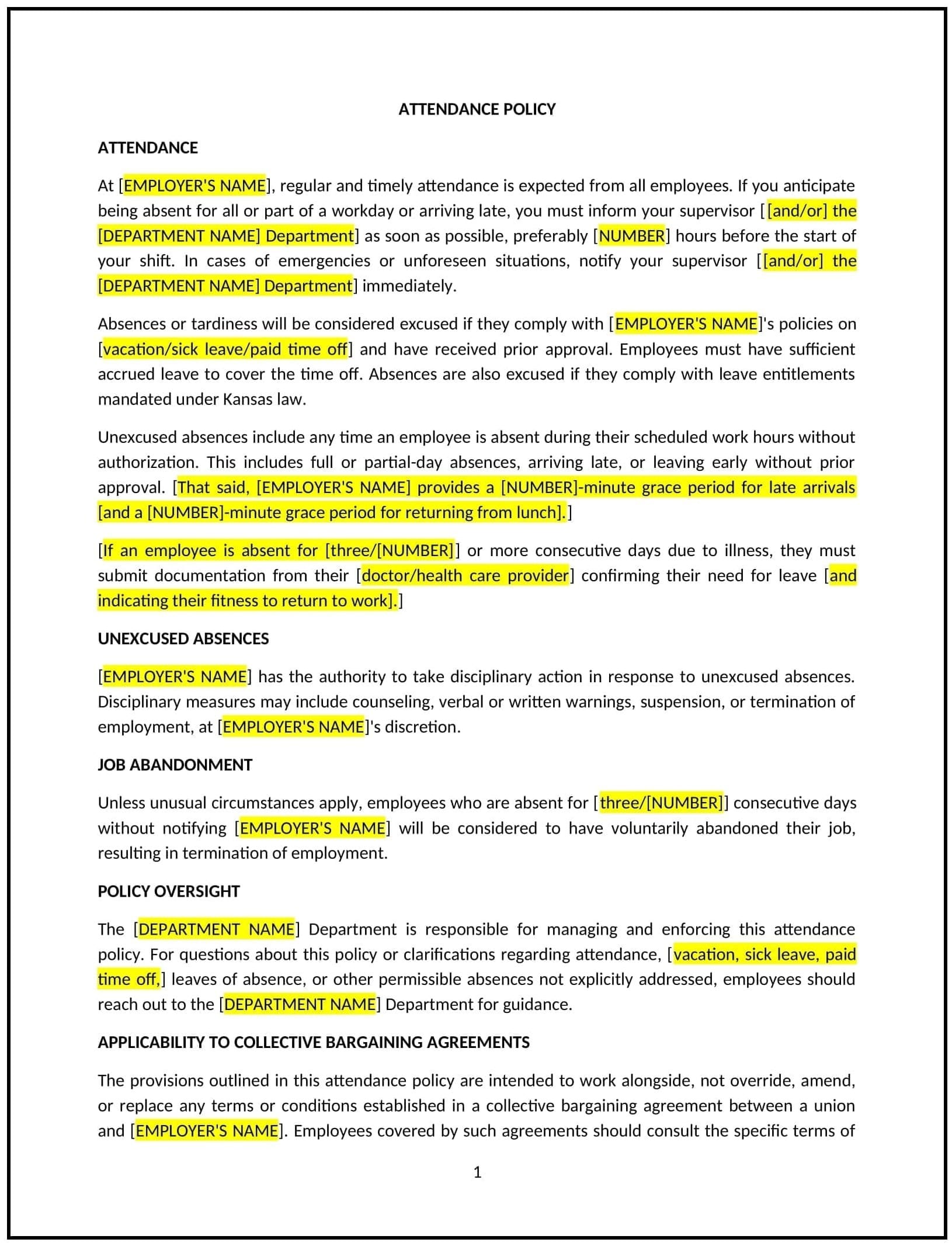
Customize this template for free
Attendance policy (Kansas)
An attendance policy helps Kansas businesses establish clear expectations for employee attendance, punctuality, and time-off procedures. This policy provides guidelines for reporting absences, handling tardiness, and addressing excessive absenteeism while ensuring workplace productivity.
By implementing this policy, businesses can promote accountability, minimize disruptions, and create a structured approach to managing attendance.
How to use this attendance policy (Kansas)
- Define attendance expectations: Businesses should set clear guidelines on working hours, required attendance, and expectations for timely arrival.
- Establish reporting procedures: Employees should know how to report absences, including whom to notify and any required documentation, such as medical notes for extended absences.
- Outline tardiness guidelines: Businesses should define what constitutes tardiness, how late arrivals are tracked, and when corrective action may be necessary.
- Address planned and unplanned absences: Businesses should distinguish between approved absences, such as vacation or medical leave, and unplanned absences that may disrupt operations.
- Set disciplinary measures: Businesses should outline the consequences of excessive absences or repeated tardiness while ensuring consistency in enforcement.
- Encourage proactive communication: Employees should be encouraged to communicate scheduling conflicts or attendance issues in advance when possible.
- Review and update regularly: Businesses should periodically assess the policy to address operational needs, workforce expectations, and any regulatory changes.
Benefits of using an attendance policy (Kansas)
- Improves workplace productivity: Encourages employees to maintain consistent attendance, reducing workflow disruptions.
- Promotes fairness and accountability: Establishes clear expectations for all employees, preventing misunderstandings.
- Reduces absenteeism: Provides a structured approach for tracking and addressing attendance issues.
- Encourages proactive communication: Employees are more likely to communicate absences or scheduling conflicts when expectations are clearly outlined.
- Streamlines workforce planning: Helps businesses manage scheduling, shift coverage, and workload distribution more efficiently.
- Supports employee engagement: Encourages a culture of reliability and teamwork by promoting consistent attendance.
Tips for using this attendance policy (Kansas)
- Communicate expectations clearly: Businesses should ensure employees understand attendance requirements and reporting procedures.
- Provide multiple reporting options: Allow employees to report absences through designated HR contacts, managers, or an online system.
- Track absences consistently: Businesses should implement a fair system for monitoring and addressing attendance issues.
- Allow flexibility when necessary: Businesses should balance attendance expectations with reasonable accommodations for medical or personal circumstances.
- Apply disciplinary actions fairly: Businesses should enforce attendance rules consistently while considering the reasons behind absences.
- Review attendance trends: Regularly analyzing attendance data can help businesses identify patterns and address underlying issues.