Got contracts to review? While you're here for policies, let Cobrief make contract review effortless—start your free review now.
Customize this template for free
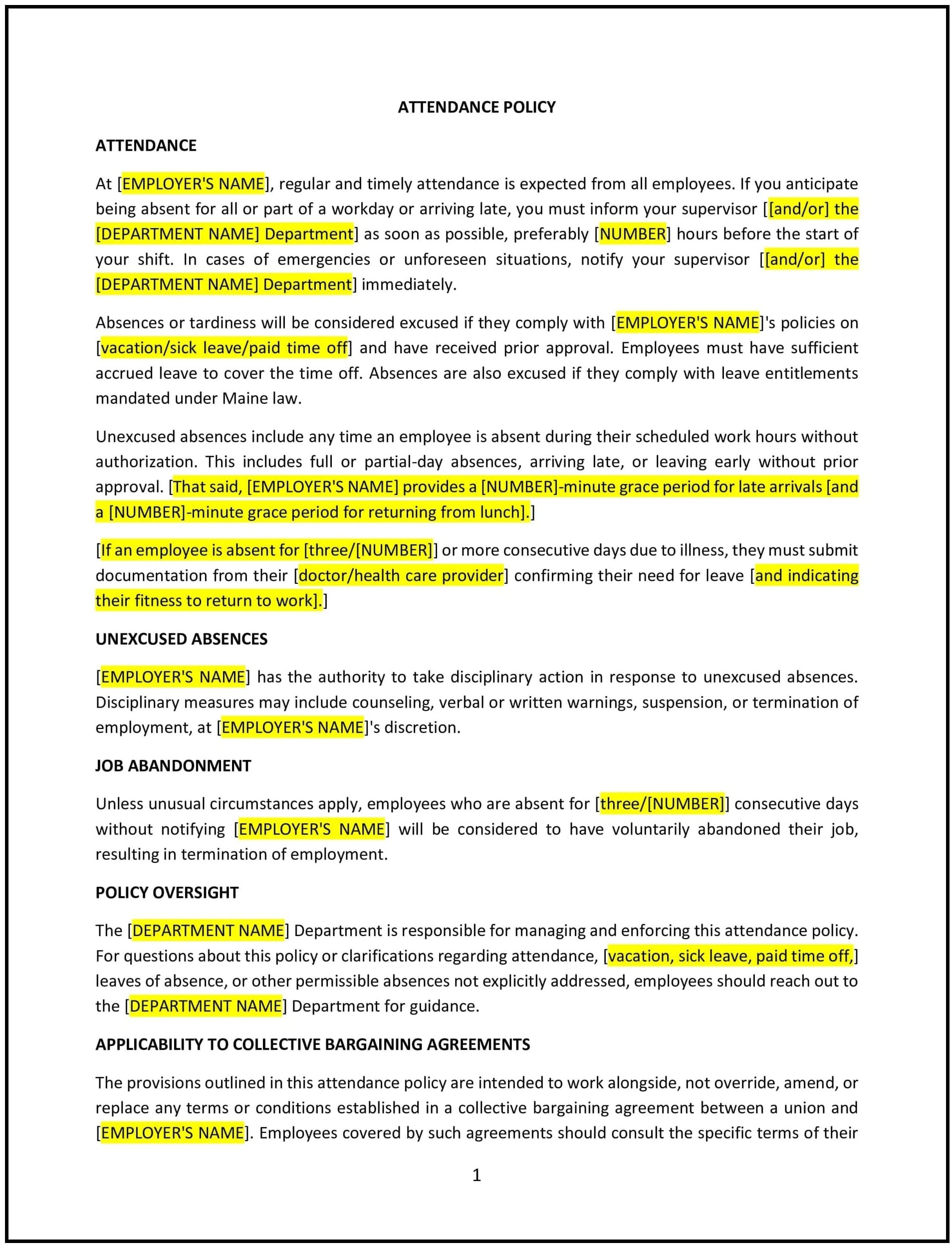
Attendance policy (Maine): Free template
This attendance policy is designed to help Maine businesses establish clear expectations for employee attendance and punctuality. It outlines procedures for tracking attendance, handling absences, and addressing tardiness, ensuring businesses can maintain operational efficiency while accommodating legitimate employee needs.
By implementing this policy, Maine businesses can promote accountability, reduce absenteeism, and create a structured approach to managing attendance issues.
How to use this attendance policy (Maine)
- Define attendance expectations: Clearly outline work schedules, including start times, breaks, and end times, to set expectations for employees.
- Establish absence procedures: Provide steps employees should follow to notify the business of absences, including required timelines and documentation.
- Address tardiness: Specify how businesses will handle late arrivals, including progressive disciplinary measures if necessary.
- Clarify time-off policies: Include guidelines for requesting and approving planned absences, such as vacations or personal leave.
- Include accommodations: Outline how the business will handle absences due to illness, emergencies, or legally protected reasons under Maine law.
- Document tracking methods: Specify how attendance will be tracked, such as through timesheets, punch clocks, or digital systems.
- Address consequences: State the actions businesses may take for excessive absenteeism or tardiness, such as warnings or termination.
- Regularly review: Recommend periodic reviews to ensure the policy reflects changes in laws or business needs.
Benefits of using this attendance policy (Maine)
Implementing this policy provides several benefits for Maine businesses:
- Improves operational efficiency: Ensures businesses can plan workflows and meet deadlines by reducing absenteeism and tardiness.
- Promotes accountability: Encourages employees to take responsibility for their attendance.
- Reduces misunderstandings: Provides a clear framework for addressing attendance issues, minimizing disputes.
- Supports compliance: Aligns with Maine laws governing employee leave and accommodations.
- Enhances employee morale: Establishes a fair and consistent approach to attendance management.
Tips for using this attendance policy (Maine)
- Communicate expectations: Share the policy with employees during onboarding and ensure it is readily accessible, such as in the employee handbook.
- Train managers: Equip managers with tools to track attendance and address issues consistently.
- Document absences: Maintain accurate records of absences, tardiness, and related communications to support fair decision-making.
- Offer flexibility: Consider flexible scheduling or remote work options when appropriate to support employee needs.
- Monitor compliance: Regularly review attendance records to identify trends and address concerns proactively.
- Update as needed: Adjust the policy to reflect changes in Maine’s employment laws or workplace practices.