Bereavement leave policy (Mississippi): Free template
Got contracts to review? While you're here for policies, let Cobrief make contract review effortless—start your free review now.
Customize this template for free
Bereavement leave policy (Mississippi)
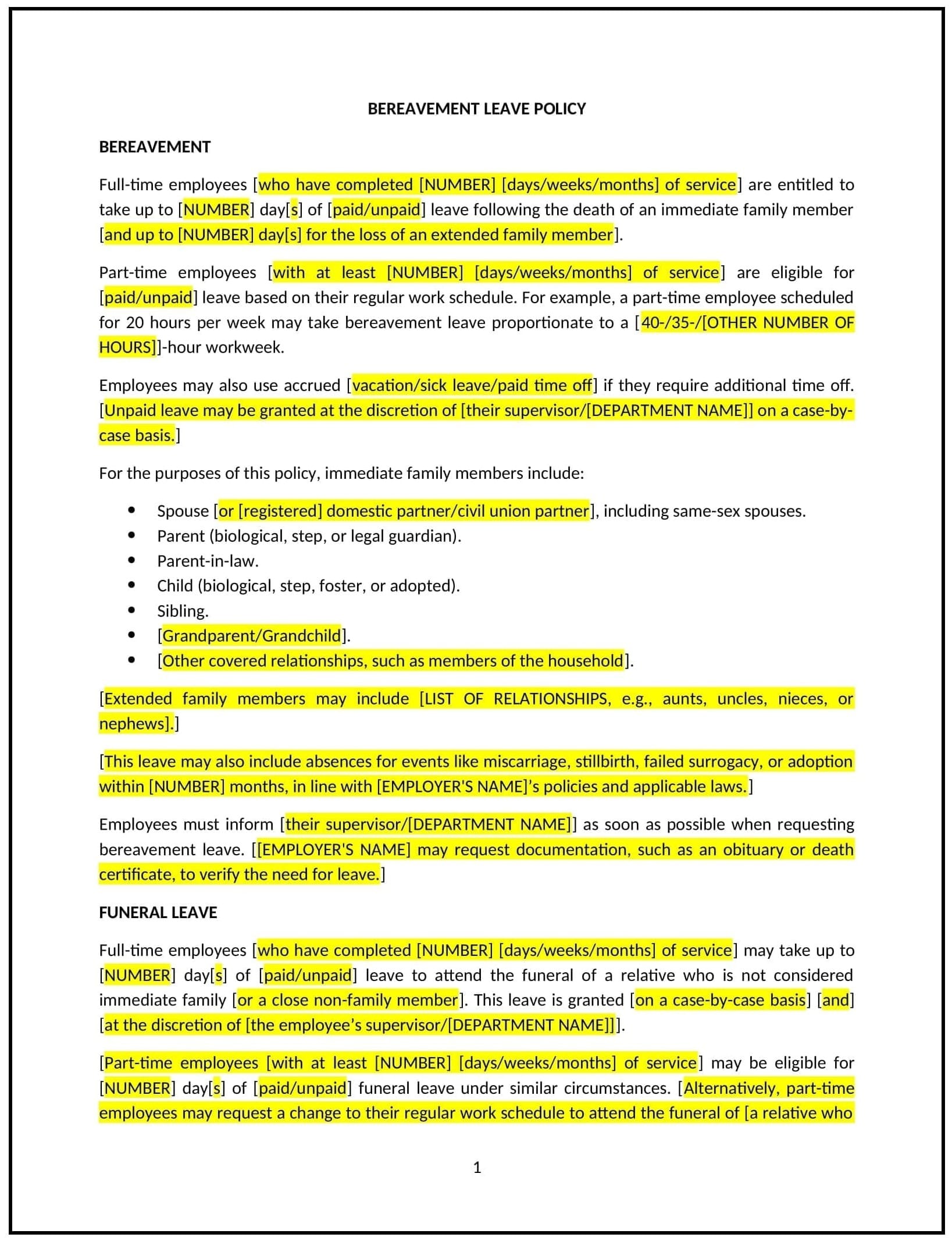
A bereavement leave policy helps Mississippi businesses manage employee leave in the event of the death of a family member or loved one. This policy outlines the process for requesting bereavement leave, the length of time employees are eligible for leave, and the types of relationships that qualify for leave.
By implementing this policy, businesses provide employees with the time and support needed to cope with a loss while maintaining a fair and consistent approach to time-off requests.
How to use this bereavement leave policy (Mississippi)
- Define eligibility: Clearly define which employees are eligible for bereavement leave. For example, employees who have been with the company for a certain period of time may be entitled to paid or unpaid leave upon the death of a close family member.
- Specify the qualifying relationships: Outline which family relationships qualify for bereavement leave, such as parents, siblings, spouses, children, grandparents, and other significant relationships.
- Determine the length of leave: Specify the number of days off employees are entitled to for bereavement leave. The policy can differentiate between immediate family members and extended family, with different leave durations depending on the relationship.
- Outline the process for requesting leave: Provide clear instructions on how employees should request bereavement leave, including the notification timeline, whether documentation (such as a death certificate) is required, and how to submit the request.
- Address paid vs. unpaid leave: Clarify whether bereavement leave is paid or unpaid. For example, some companies may provide paid leave for a set number of days, while others may offer unpaid leave or require employees to use accrued PTO.
- Allow flexibility: Acknowledge that grieving periods can vary in length and that employees may need additional time off beyond the standard bereavement leave. Consider allowing employees to use additional paid or unpaid leave if necessary.
- Ensure confidentiality: Emphasize that any personal information related to bereavement leave (such as the nature of the relationship or documentation) will be kept confidential and only shared with those who need to know for administrative purposes.
- Review and update: Periodically review the policy to ensure it reflects any changes in laws, company practices, or employee feedback regarding bereavement leave.
Benefits of using this bereavement leave policy (Mississippi)
This policy provides several benefits for Mississippi businesses:
- Supports employee well-being: Bereavement leave allows employees to take time off to mourn and handle funeral arrangements, reducing stress and helping them cope with their loss.
- Promotes a compassionate workplace: Offering bereavement leave fosters a caring work environment, showing employees that the company values their personal needs during difficult times.
- Reduces absenteeism: By providing time off for grieving, businesses can reduce the likelihood of employees taking unscheduled absences or being distracted while at work.
- Ensures fairness and consistency: A clear policy ensures that all employees are treated fairly and consistently when it comes to taking time off for bereavement, reducing potential conflicts.
- Improves employee retention: Offering bereavement leave demonstrates a company’s commitment to its employees’ well-being, contributing to greater employee loyalty and retention.
Tips for using this bereavement leave policy (Mississippi)
- Communicate the policy clearly: Ensure that all employees are aware of the bereavement leave policy, how to request time off, and what documentation may be required.
- Be flexible with the length of leave: Recognize that the amount of time needed for grieving can vary and provide employees with the flexibility to take additional time off if necessary.
- Maintain privacy: Keep all personal information related to the employee’s leave confidential and share it only with those who need to know.
- Review the policy regularly: Periodically evaluate the policy to ensure it meets the needs of employees and remains compliant with applicable laws.
- Consider cultural and religious needs: Be mindful of different cultural and religious practices related to mourning, and offer accommodations where possible.