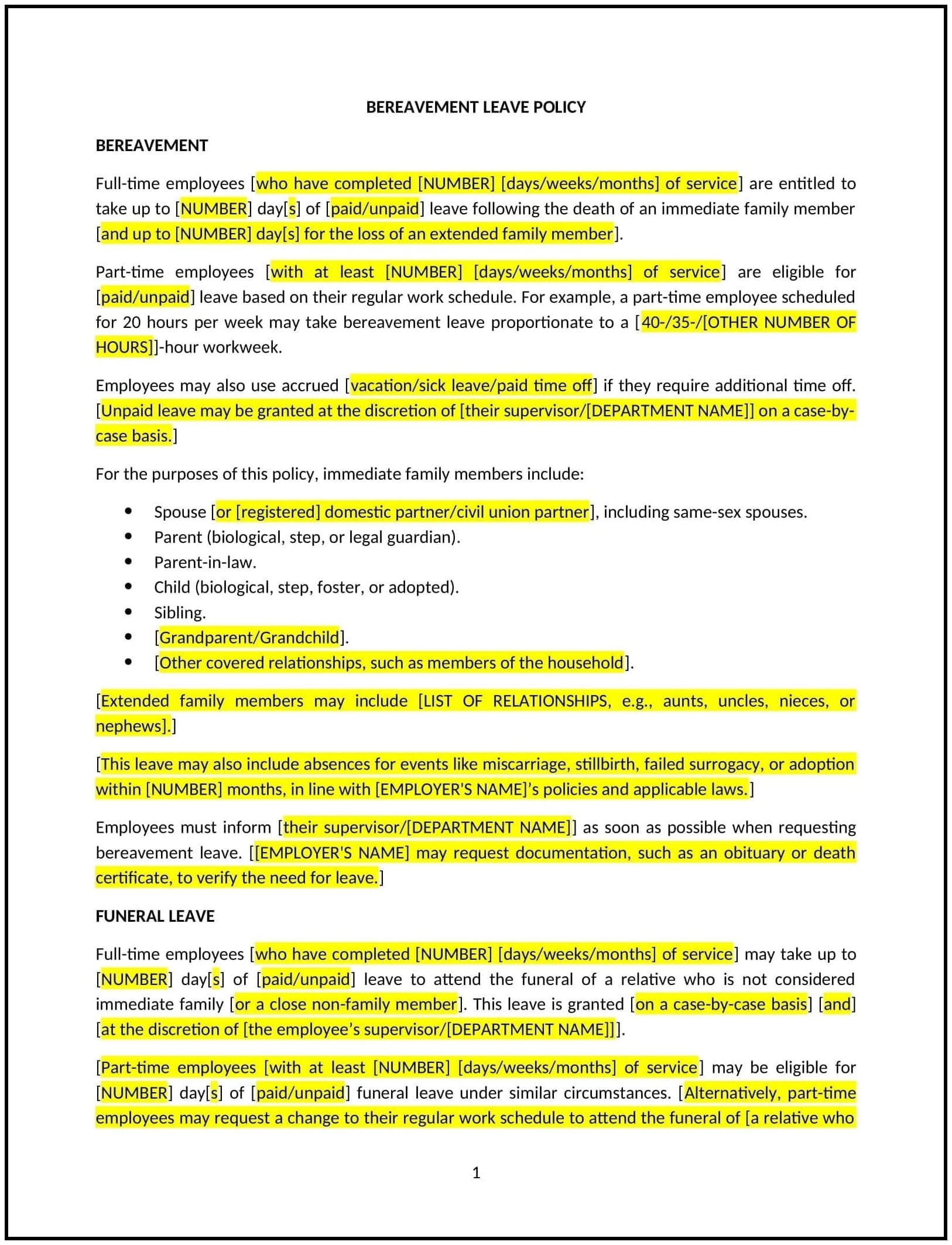
Bereavement leave policy (Montana): Free template
Provides time off for employees grieving the loss of an immediate family member or loved one.
- Policies
- Montana
Bereavement leave policy (Montana)
A bereavement leave policy helps Montana businesses provide employees with time off to grieve and manage personal matters following the loss of a loved one. This policy outlines the eligibility criteria, duration of leave, and procedures for requesting time off. It also helps businesses balance operational needs while supporting employees during difficult times.
By implementing this policy, businesses can foster a compassionate work environment, improve employee well-being, and provide clear guidance on bereavement-related absences.
How to use this bereavement leave policy (Montana)
- Define eligibility for bereavement leave: Businesses should specify which employees qualify for bereavement leave, including full-time, part-time, and temporary workers. The policy should also outline the relationships covered, such as immediate family members, extended family, or other significant relationships.
- Set leave duration and guidelines: Businesses should determine the amount of paid or unpaid leave employees may take, such as three to five days for the loss of an immediate family member and a shorter period for extended relatives.
- Establish the leave request process: Employees should follow a structured process for notifying their employer of a bereavement leave request, including providing any necessary documentation, such as an obituary or funeral program.
- Address flexibility and additional leave: Businesses should offer guidance on whether employees may request additional unpaid leave or use vacation or personal days if more time is needed.
- Communicate expectations for returning to work: Businesses should encourage employees to communicate any concerns about their return to work, including workload adjustments or additional support.
- Consider cultural and religious factors: Businesses should allow flexibility for employees who observe different mourning periods or funeral traditions based on cultural or religious practices.
- Review and update regularly: Businesses should periodically assess the policy to ensure it aligns with workplace needs and evolving employee expectations.
Benefits of using this bereavement leave policy (Montana)
This policy provides several key benefits for Montana businesses:
- Supports employees during difficult times: Clear guidelines allow employees to take necessary time off without uncertainty.
- Promotes workplace empathy: Providing bereavement leave demonstrates a commitment to employee well-being.
- Reduces absenteeism issues: Employees with a structured leave option are more likely to follow proper procedures rather than taking unapproved time off.
- Improves retention and morale: A compassionate leave policy helps businesses maintain a supportive work culture and strengthen employee loyalty.
- Provides consistency in leave decisions: A standardized approach ensures all employees are treated fairly when requesting bereavement leave.
- Helps businesses manage workforce planning: Clear leave procedures allow businesses to adjust workloads while employees are away.
Tips for using this bereavement leave policy (Montana)
- Communicate the policy clearly: Businesses should ensure employees understand the leave duration, request process, and eligibility criteria.
- Be flexible when possible: Businesses should consider individual employee needs and allow additional unpaid leave or personal time if necessary.
- Train managers on handling leave requests: Supervisors should be prepared to respond compassionately and provide employees with support.
- Keep documentation requirements reasonable: Businesses should balance the need for verification with respect for employees’ personal circumstances.
- Encourage open communication: Employees should feel comfortable discussing their return-to-work plans with their supervisor if additional support is needed.
- Periodically review the policy: Businesses should update the policy to reflect changes in workforce needs or best practices.
Frequently asked questions (FAQs)
Similar templates
Where deals go from offer to paid
