Breastfeeding break policy (California): Free template
Guarantees adequate break time and private space for nursing mothers, meeting California and federal requirements.
- Policies
- California
Breastfeeding break policy (California)
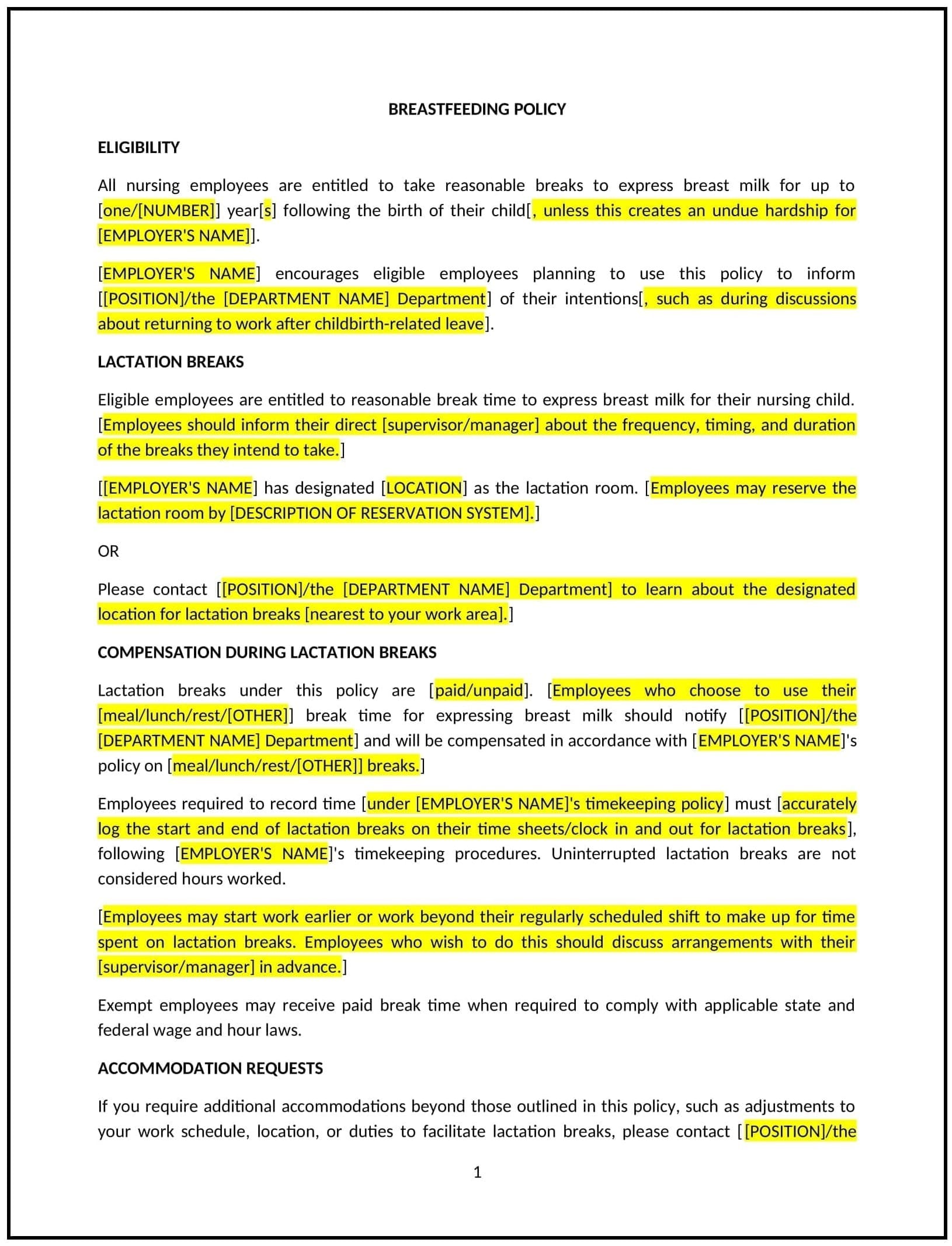
In California, a breastfeeding break policy provides businesses with guidelines for supporting employees who need time and space to express breast milk during work hours. This policy helps businesses comply with state and federal laws, including California Labor Code Section 1030, which requires employers to provide adequate break time and a private space for lactation.
This policy outlines employee rights, employer responsibilities, and procedures for requesting accommodations. By implementing this policy, California businesses can promote inclusivity, support working parents, and comply with legal obligations.
How to use this breastfeeding break policy (California)
- Provide break time: Allow employees reasonable break time to express breast milk, ensuring it aligns with California labor laws.
- Ensure privacy: Designate a private, non-bathroom space for lactation that is safe, clean, and free from intrusion.
- Communicate rights: Inform employees of their right to breastfeeding breaks and how to request accommodations.
- Address scheduling: Collaborate with employees to integrate lactation breaks into their work schedules without disrupting operations.
- Maintain confidentiality: Handle all lactation-related discussions and accommodations with respect for employee privacy.
Benefits of using this breastfeeding break policy (California)
This policy offers several advantages for California businesses:
- Supports compliance: Reflects California Labor Code Section 1030 and federal Fair Labor Standards Act (FLSA) requirements for lactation accommodations.
- Promotes inclusivity: Demonstrates the business’s commitment to supporting working parents and creating an equitable workplace.
- Enhances retention: Helps retain employees by providing necessary accommodations for new mothers.
- Reduces legal risks: Provides clear guidelines to prevent potential disputes related to lactation accommodations.
- Encourages employee well-being: Supports the health and comfort of breastfeeding employees, fostering morale and productivity.
Tips for using this breastfeeding break policy (California)
- Address California-specific considerations: Ensure the policy reflects state laws requiring lactation accommodation, including penalties for non-compliance.
- Train managers: Provide guidance on scheduling lactation breaks and addressing accommodation requests respectfully.
- Designate appropriate spaces: Create or identify private, clean, and safe lactation rooms to comply with California requirements.
- Document accommodations: Keep records of accommodation requests and actions taken to demonstrate compliance and accountability.
- Review regularly: Update the policy to reflect changes in California laws, employee needs, or workplace facilities.
Frequently asked questions (FAQs)
Similar templates
Where deals go from offer to paid
