Bring Your Own Device to Work policy (Nevada): Free template
Got contracts to review? While you're here for policies, let Cobrief make contract review effortless—start your free review now.
Customize this template for free
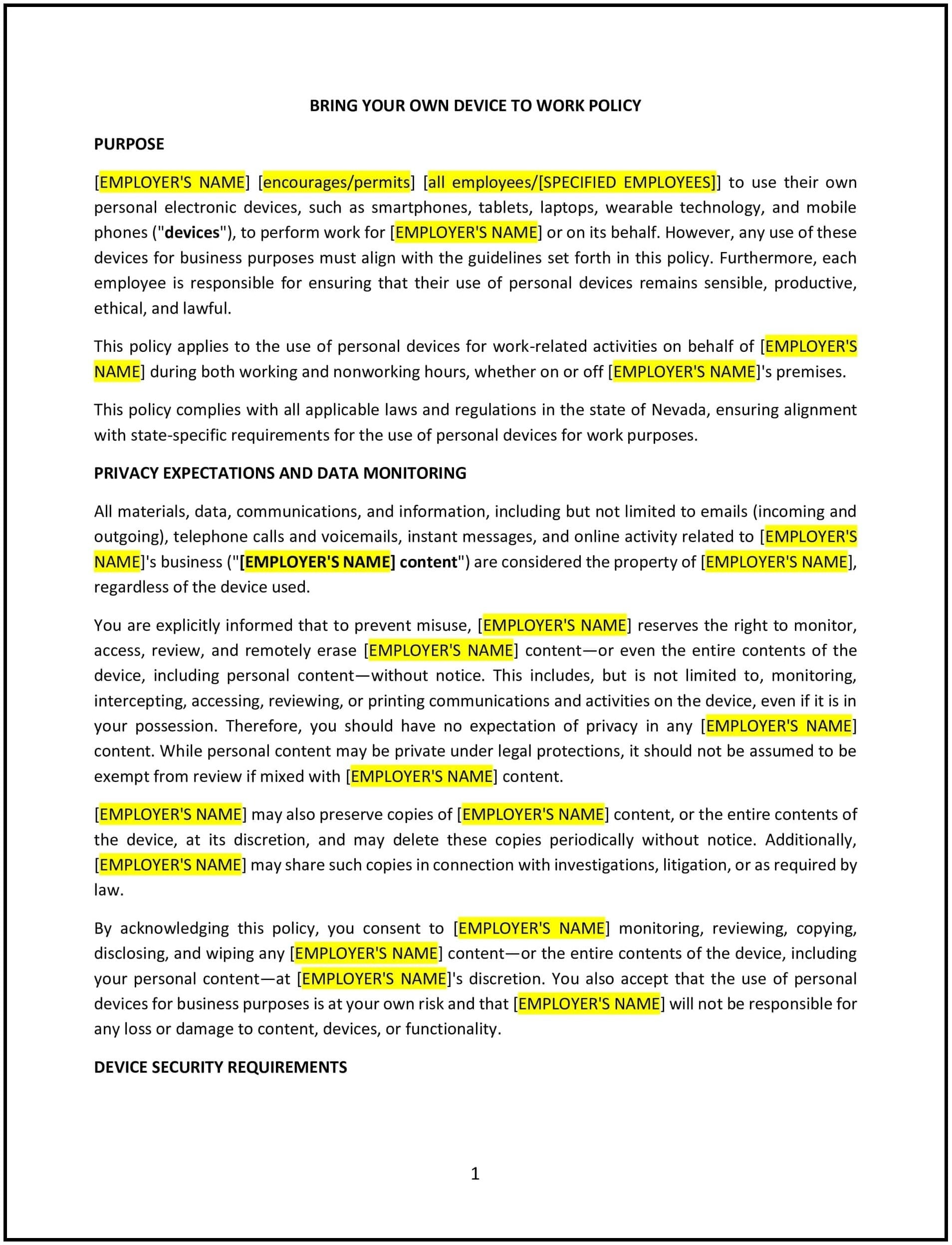
Bring Your Own Device to Work policy (Nevada)
This bring your own device (BYOD) policy is designed to help Nevada businesses manage the use of personal devices (smartphones, tablets, laptops, etc.) in the workplace. It establishes guidelines for employees who wish to use their personal devices for work purposes, ensuring security, productivity, and compliance with company standards.
By adopting this policy, businesses can support flexibility, reduce costs, and maintain control over the security of company data accessed on personal devices.
How to use this Bring Your Own Device to Work policy (Nevada)
- Define allowed devices: Specify the types of devices (e.g., smartphones, tablets, laptops) that can be used for work purposes and any limitations on certain models or operating systems.
- Set security requirements: Outline necessary security measures, such as the use of encryption, strong passwords, and multi-factor authentication, to protect company data accessed through personal devices.
- Establish acceptable use: Clearly define what constitutes acceptable use of personal devices, including which applications and data can be accessed and how work-related communication should be handled.
- Address device management: Specify whether the company will install management software on personal devices to monitor usage, enforce security protocols, or remotely wipe devices if lost or stolen.
- Define data privacy and protection: Ensure that employees understand the company’s expectations around the protection of confidential and sensitive data while using personal devices.
- Set guidelines for troubleshooting and support: Clarify the extent to which IT or support teams will assist with personal devices, including whether the company will provide support for technical issues related to personal devices.
- Include liability and ownership: Specify that employees are responsible for their own devices, and outline any potential liability for damage or loss of personal devices used for work.
Benefits of using this Bring Your Own Device to Work policy (Nevada)
This policy provides several key benefits for Nevada businesses:
- Increases flexibility: BYOD policies allow employees to use familiar devices, improving productivity and employee satisfaction.
- Reduces costs: By allowing employees to use their own devices, businesses can reduce the costs associated with providing company-owned devices.
- Enhances security: The policy sets clear guidelines for protecting company data accessed on personal devices, helping businesses maintain a secure network.
- Supports compliance: Ensures that employees are aware of and follow necessary security measures and data protection standards, supporting compliance with applicable regulations.
- Promotes work-life balance: Offering flexibility in device use can help employees better balance work and personal life, especially for remote work or after-hours communication.
Tips for using this Bring Your Own Device to Work policy (Nevada)
- Communicate the policy clearly: Ensure all employees are aware of the BYOD policy and understand the expectations around security and device use.
- Enforce security protocols: Regularly remind employees about security best practices, including using strong passwords, enabling device encryption, and keeping software up to date.
- Offer support where appropriate: Define the level of IT support the company will provide for personal devices and ensure employees know how to access support.
- Update the policy regularly: Review and update the policy as necessary to reflect new devices, security threats, or changes in company needs.
- Consider employee privacy: Be transparent about the monitoring or control that the company may have over personal devices used for work purposes, and ensure employees are aware of their privacy rights.