Business social media policy (Mississippi): Free template
Got contracts to review? While you're here for policies, let Cobrief make contract review effortless—start your free review now.
Customize this template for free
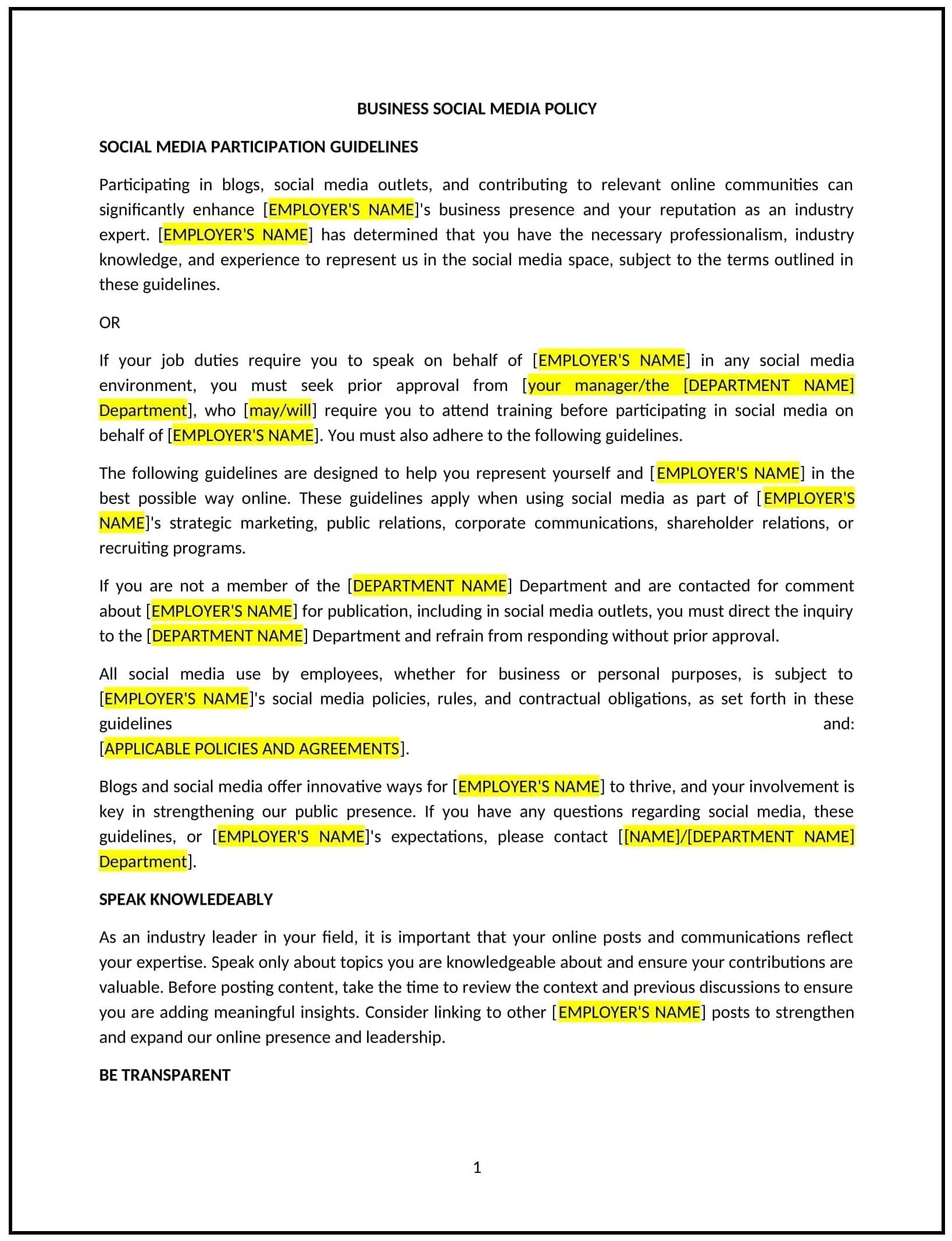
Business social media policy (Mississippi)
A business social media policy helps Mississippi businesses establish guidelines for employees when using social media platforms, both in a professional and personal capacity. This policy defines the company's expectations regarding the use of social media, the protection of company reputation, and the management of confidential or sensitive information.
By implementing this policy, businesses can protect their brand, maintain a consistent public image, and ensure that employees use social media responsibly while at work or outside of work.
How to use this business social media policy (Mississippi)
- Define acceptable social media use: Specify what is considered acceptable and unacceptable use of social media during work hours. For example, personal social media activity may be restricted during business hours unless it is work-related.
- Address company representation: Clarify that employees should not represent the company or express opinions on behalf of the business on personal social media profiles unless authorized. Establish guidelines for using company logos, trademarks, and content.
- Protect confidential information: Emphasize that employees must not share confidential or proprietary business information on social media platforms, including client data, financials, or internal processes.
- Set privacy expectations: Advise employees on the importance of maintaining personal privacy on social media, especially regarding company-related content or work situations.
- Explain consequences for misuse: Clearly state the consequences if employees misuse social media in ways that negatively impact the company’s reputation or violate company policies, such as disciplinary action or termination.
- Encourage responsible use: Promote responsible use of social media by encouraging employees to be mindful of how their posts may be perceived by others and the potential consequences for posting content that could reflect poorly on the business.
- Set guidelines for professional profiles: Encourage employees to keep their professional profiles (such as LinkedIn) up to date and aligned with the company’s values, while reminding them not to share sensitive or proprietary company details.
- Review and update: Regularly review and update the policy to account for changes in social media platforms, legal requirements, or business needs.
Benefits of using this business social media policy (Mississippi)
This policy provides several benefits for Mississippi businesses:
- Protects company reputation: A clear policy helps ensure that employees do not post content that could damage the business’s reputation or brand image.
- Reduces legal risks: By addressing the sharing of confidential information, businesses can minimize the risk of legal consequences related to the breach of confidentiality or intellectual property.
- Increases employee accountability: Establishing clear expectations for social media use holds employees accountable for their actions, ensuring that they represent the company in a professional manner.
- Promotes responsible social media use: The policy encourages employees to be mindful of their online presence and the impact it can have on their personal and professional lives.
- Ensures consistency: The policy helps ensure that all employees understand the company's stance on social media use, creating a consistent approach to managing online behavior across the organization.
Tips for using this business social media policy (Mississippi)
- Communicate the policy clearly: Ensure that all employees understand the social media policy and the importance of following it. Incorporate the policy into employee handbooks or provide training sessions to discuss expectations.
- Monitor social media activity: While respecting privacy, businesses should periodically monitor social media activity related to the company to ensure compliance with the policy and address any issues proactively.
- Respond to negative posts: Establish a procedure for addressing negative comments or reviews about the company on social media. Train employees on how to handle online criticism professionally and appropriately.
- Encourage employees to engage positively: While restricting certain types of content, encourage employees to engage in positive ways that enhance the company’s image, such as sharing company achievements or initiatives.
- Regularly update the policy: As social media platforms evolve, businesses should periodically review and update their social media policies to stay current with new trends and legal requirements.