Got contracts to review? While you're here for policies, let Cobrief make contract review effortless—start your free review now.
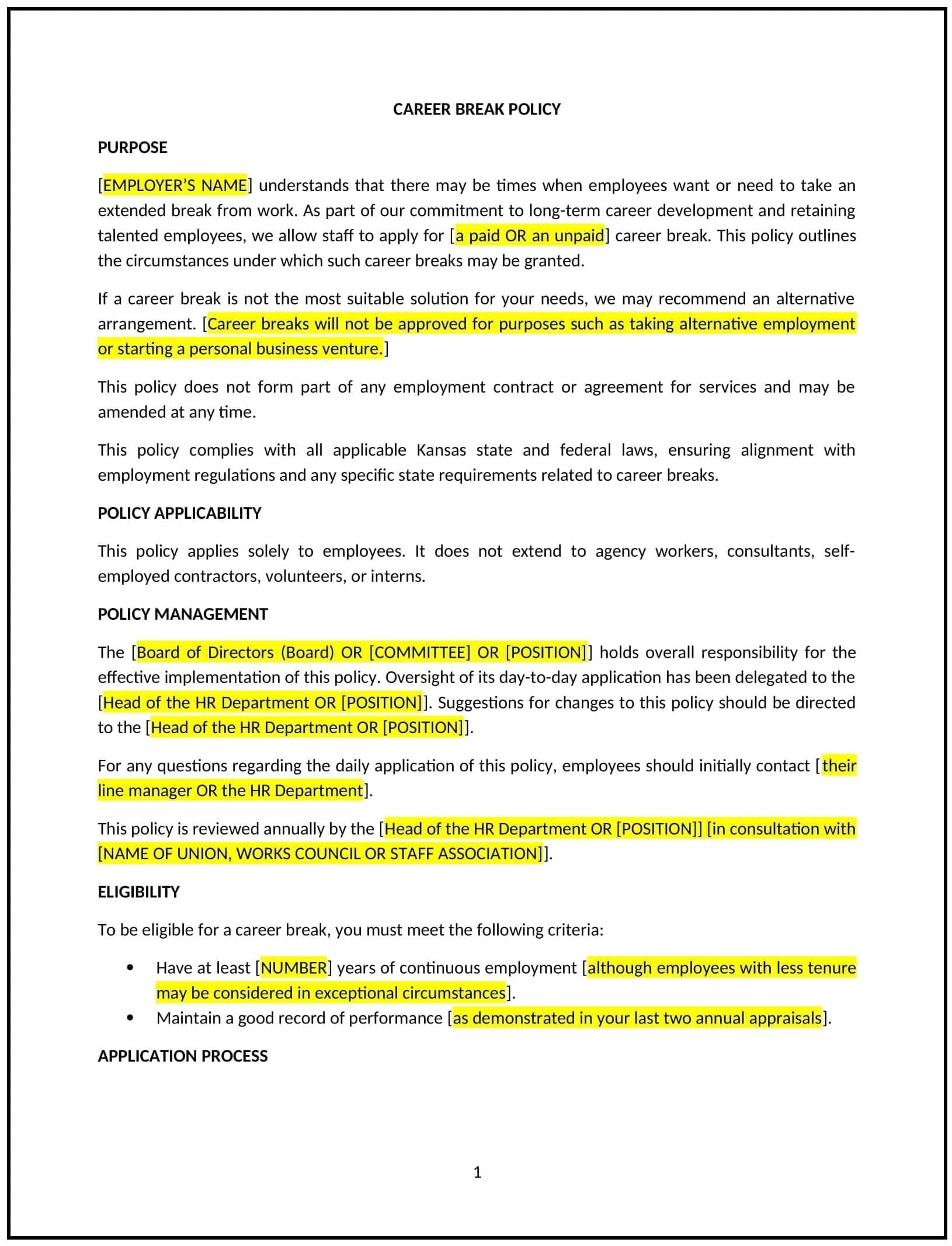
Customize this template for free
Career break policy (Kansas)
A career break policy helps Kansas businesses provide employees with the option to take an extended period of unpaid leave for personal, professional, or educational reasons. This policy outlines eligibility criteria, the application process, and expectations for returning to work while balancing employee needs with business operations.
By implementing this policy, businesses can support employee development, improve retention, and create a structured approach to managing extended leave requests.
How to use this career break policy (Kansas)
- Define eligibility criteria: Businesses should specify which employees qualify for a career break, including factors such as length of service and performance history.
- Establish the request process: Employees should be required to submit a formal request outlining the reason for the break, the intended duration, and any plans for maintaining professional development during their time away.
- Determine the length of career breaks: Businesses should set clear time limits for career breaks, such as a minimum and maximum duration, to ensure operational stability.
- Address job protection considerations: Businesses should clarify whether an employee’s position will be held open or if they will need to reapply for a similar role upon returning.
- Outline benefits and policies during the break: Businesses should specify whether employees will retain any benefits, such as healthcare coverage, or if they will need to make separate arrangements.
- Set return-to-work procedures: Businesses should require employees to notify management in advance of their planned return and outline any reintegration or retraining requirements.
- Review and update regularly: Businesses should periodically assess the policy to reflect workforce needs and industry best practices.
Benefits of using a career break policy (Kansas)
- Supports employee well-being: Provides flexibility for employees managing personal or professional transitions.
- Improves retention: Encourages employees to return after an extended break instead of seeking new employment.
- Enhances workforce planning: Helps businesses manage long-term leave requests in a structured manner.
- Promotes professional development: Allows employees to pursue further education or skill-building opportunities.
- Strengthens employer reputation: Demonstrates a commitment to employee growth and work-life balance.
- Encourages open communication: Establishes a clear process for employees to discuss extended leave options with management.
Tips for using this career break policy (Kansas)
- Communicate policy details clearly: Businesses should ensure employees understand the eligibility requirements and request procedures.
- Balance flexibility with business needs: Businesses should assess operational demands before approving extended leave requests.
- Establish realistic job return expectations: Employees should be informed about whether their previous role will be available upon their return.
- Encourage career planning discussions: Businesses should provide guidance on how employees can maintain skills and stay connected during their break.
- Document all agreements: Businesses should outline expectations in writing to avoid misunderstandings about leave terms and return conditions.
- Review workforce impact regularly: Businesses should evaluate how career breaks affect staffing and update policies accordingly.