Charitable contributions policy (Hawai'i): Free template
Got contracts to review? While you're here for policies, let Cobrief make contract review effortless—start your free review now.
Customize this template for free
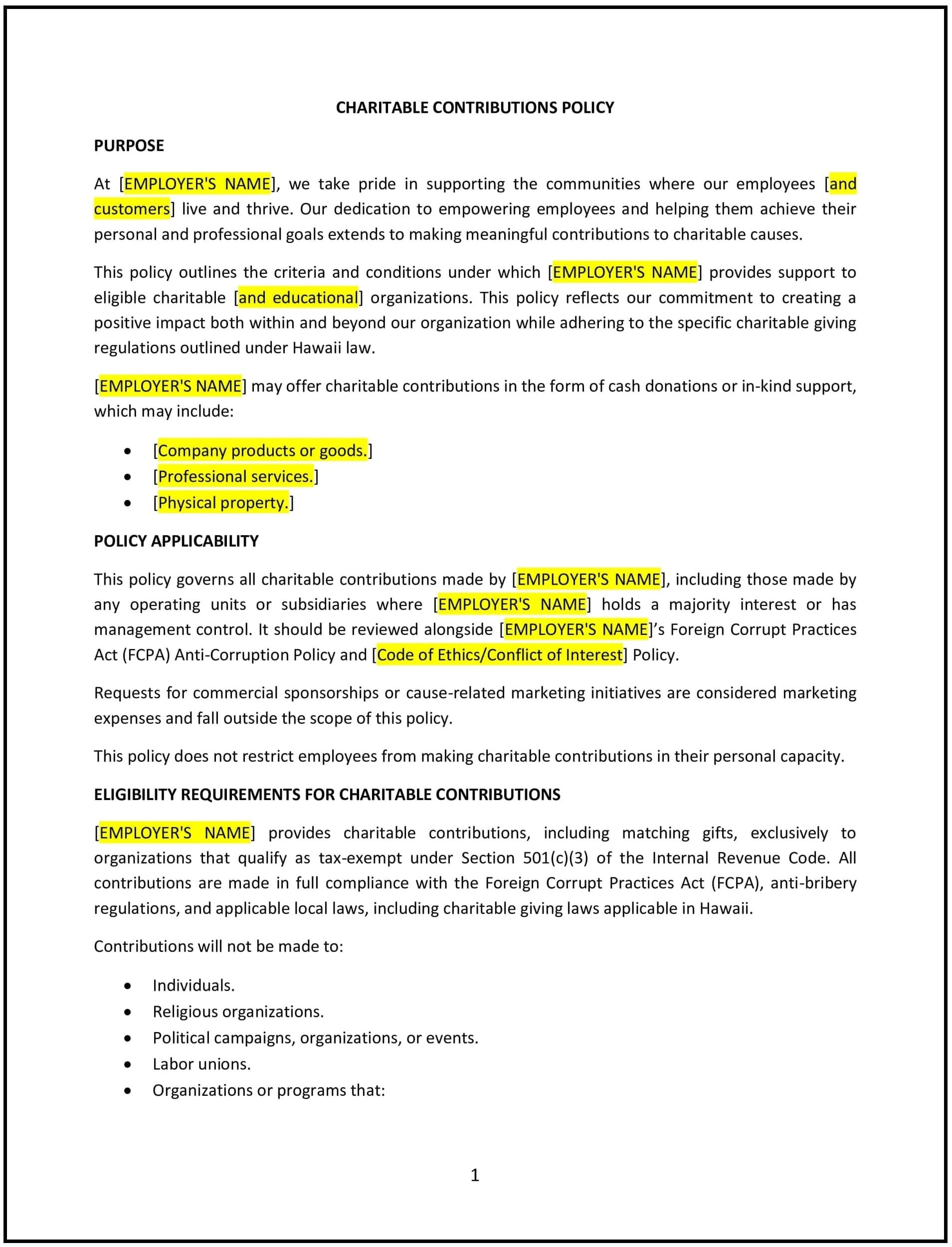
Charitable contributions policy (Hawaiʻi)
A charitable contributions policy helps Hawaiʻi businesses establish guidelines for donating to nonprofit organizations, community initiatives, or charitable causes. This policy outlines the types of contributions supported, approval processes, and criteria for selecting recipients. It is designed to align with Hawaiʻi’s unique cultural and community values, promote corporate social responsibility, and ensure transparency in charitable giving.
By implementing this policy, businesses in Hawaiʻi can strengthen community relationships, enhance their reputation, and contribute to meaningful causes that reflect their values.
How to use this charitable contributions policy (Hawaiʻi)
- Define the scope of contributions: Specify the types of contributions supported, such as monetary donations, in-kind gifts, or volunteer hours, and any limitations on amounts or frequency.
- Establish eligibility criteria: Outline the requirements for organizations or causes to qualify for contributions, such as nonprofit status, alignment with business values, or local impact.
- Create an approval process: Provide clear steps for employees or departments to request charitable contributions, including required documentation and approval authority.
- Prioritize local initiatives: Emphasize support for Hawaiʻi-based organizations or causes that address community needs, such as education, environmental conservation, or cultural preservation.
- Communicate the policy: Share the policy with employees, stakeholders, and the community to ensure transparency and awareness of the business’s charitable efforts.
- Track and report contributions: Maintain records of donations and their impact, and consider sharing this information in annual reports or public communications.
- Review and update the policy: Regularly assess the policy’s effectiveness and make adjustments as needed to reflect changes in community needs, business priorities, or legal requirements.
Benefits of using this charitable contributions policy (Hawaiʻi)
This policy offers several advantages for Hawaiʻi businesses:
- Strengthens community relationships: Supporting local organizations and initiatives fosters goodwill and strengthens ties with the community.
- Enhances corporate reputation: A commitment to charitable giving demonstrates social responsibility, improving the business’s reputation among customers, employees, and partners.
- Promotes employee engagement: Encouraging employees to participate in charitable activities can boost morale, teamwork, and job satisfaction.
- Aligns with cultural values: Prioritizing local and culturally relevant causes reflects Hawaiʻi’s community-oriented values and traditions.
- Provides tax benefits: Charitable contributions may qualify for tax deductions, offering financial advantages for the business.
- Encourages transparency: A clear policy ensures accountability and builds trust with stakeholders by demonstrating how contributions are allocated.
Tips for using this charitable contributions policy (Hawaiʻi)
- Communicate the policy effectively: Share the policy with employees, stakeholders, and the community through internal communications, websites, or public announcements.
- Prioritize local impact: Focus on supporting Hawaiʻi-based organizations or causes that address pressing community needs and align with the business’s values.
- Involve employees: Encourage employees to suggest charitable initiatives or participate in volunteer activities to foster engagement and teamwork.
- Track contributions: Maintain detailed records of donations, including amounts, recipients, and outcomes, to ensure transparency and measure impact.
- Be transparent: Share information about charitable contributions in annual reports, newsletters, or social media to build trust and demonstrate accountability.
- Review the policy periodically: Update the policy as needed to reflect changes in community needs, business priorities, or legal requirements.