Charitable contributions policy (Mississippi): Free template
Got contracts to review? While you're here for policies, let Cobrief make contract review effortless—start your free review now.
Customize this template for free
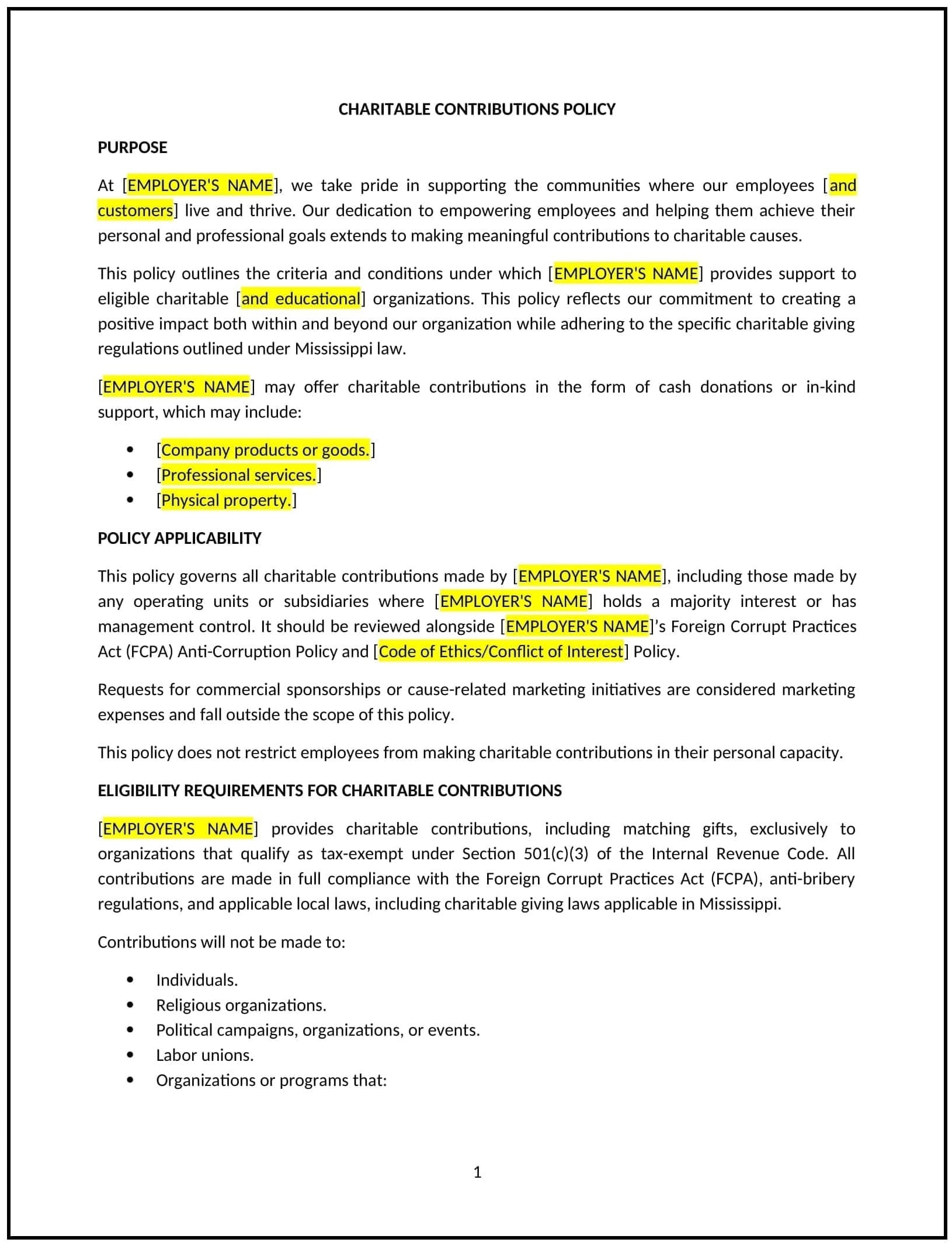
Charitable contributions policy (Mississippi)
A charitable contributions policy helps Mississippi businesses outline how they support charitable organizations through financial donations, employee volunteerism, or matching gift programs. This policy provides clear guidelines on the types of charities eligible for donations, the procedures for requesting and processing contributions, and the role of employees in supporting charitable initiatives.
By implementing this policy, businesses can strengthen community relations, enhance employee engagement, and demonstrate corporate social responsibility.
How to use this charitable contributions policy (Mississippi)
- Define eligible charities: Specify the types of organizations or causes that qualify for donations, such as educational institutions, health organizations, environmental causes, or local community programs.
- Set donation limits: Establish guidelines for the maximum amount the company will contribute annually or per employee. This may include individual donation limits or a total annual cap for corporate donations.
- Outline the donation process: Clarify the procedure for requesting donations, including how employees can nominate organizations, the approval process, and any required documentation or forms.
- Address employee involvement: Provide guidelines for employee participation in charitable activities, such as volunteering during work hours, organizing charity events, or participating in company-sponsored charity runs or drives.
- Include matching gift programs: If applicable, offer a matching gift program where the company matches an employee's donation to a qualifying charity up to a specified limit.
- Set expectations for transparency: Specify how employees will be informed of available charitable programs, how donations are tracked, and how businesses communicate their charitable initiatives to employees.
- Review and update the policy: Periodically review the policy to ensure it remains relevant, compliant with tax laws, and aligns with the company's values and community outreach goals.
Benefits of using this charitable contributions policy (Mississippi)
This policy provides several benefits for Mississippi businesses:
- Enhances corporate reputation: Engaging in charitable giving helps businesses build goodwill and strengthen their relationship with the community.
- Improves employee engagement: Offering opportunities for employees to give back through donations or volunteerism boosts morale, fosters a sense of purpose, and strengthens employee loyalty.
- Increases visibility: Being involved in charitable activities can enhance the company's public image and visibility, which may lead to new business opportunities.
- Provides tax benefits: Charitable donations may qualify for tax deductions, reducing the company’s taxable income and providing financial benefits.
- Aligns with company values: Demonstrating a commitment to charitable causes reflects the company's core values and supports its corporate social responsibility initiatives.
Tips for using this charitable contributions policy (Mississippi)
- Communicate the policy clearly: Ensure that all employees are aware of the charitable contributions policy and how they can participate in or benefit from it. This can be done through employee handbooks, orientations, or internal communications.
- Encourage employee involvement: Actively promote employee participation in charitable activities, such as offering paid time off for volunteering or organizing company-wide charity events.
- Track and monitor contributions: Maintain a record of all charitable contributions, including monetary donations, employee volunteer hours, and matched gifts, to ensure transparency and accountability.
- Foster partnerships with local organizations: Build relationships with local charities and organizations to maximize the impact of the company’s charitable efforts.
- Regularly assess the program: Review the charitable contributions policy and programs annually to ensure they are effective and align with employee interests and community needs.