Got contracts to review? While you're here for policies, let Cobrief make contract review effortless—start your free review now.
Customize this template for free
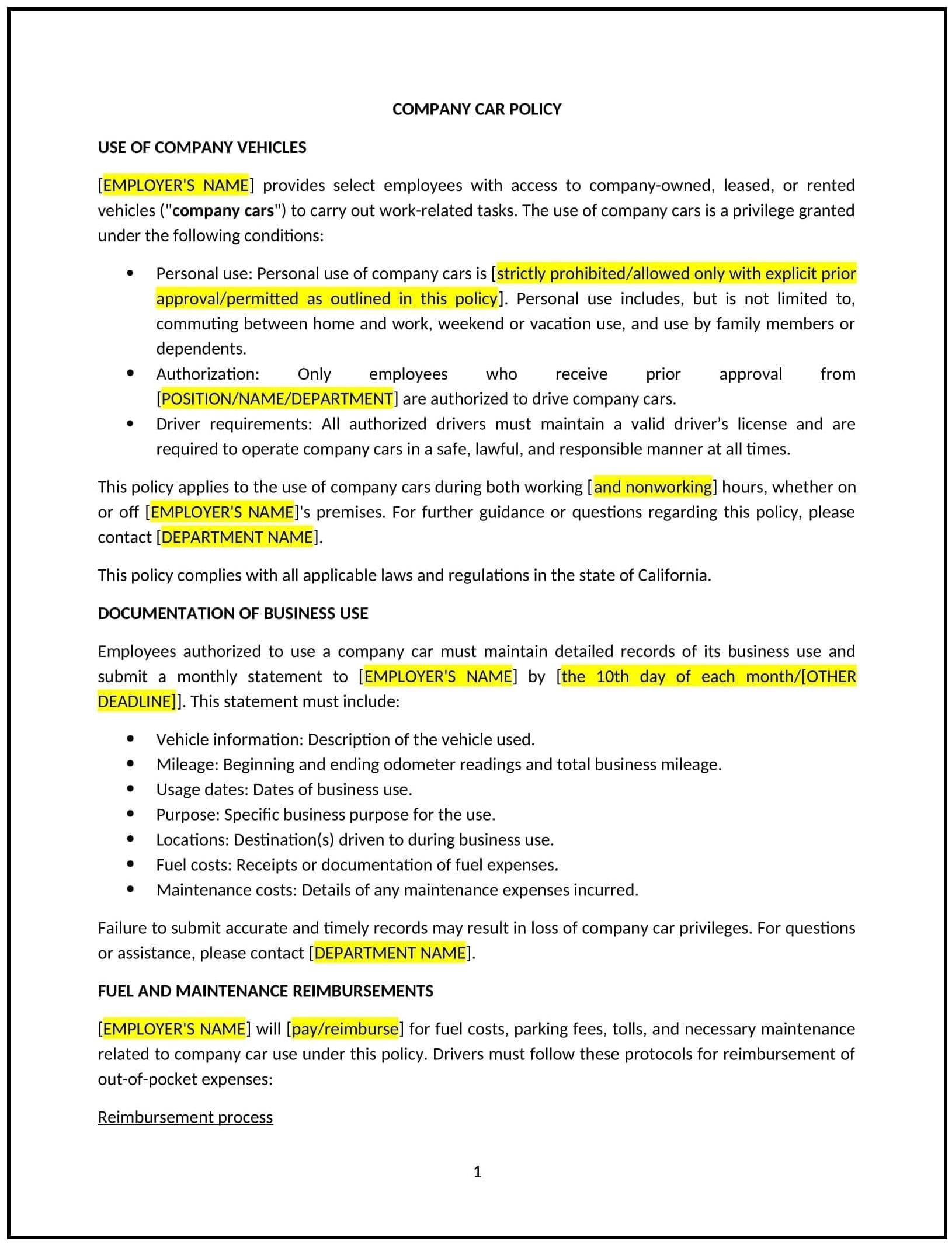
Company car policy (California)
In California, a company car policy provides businesses with guidelines for the proper use, management, and maintenance of company-provided vehicles. This policy ensures that employees using company cars understand their responsibilities while supporting compliance with California laws, including regulations related to vehicle safety and expense reimbursement.
This policy outlines eligibility, permitted uses, and procedures for reporting accidents or maintenance issues. By implementing this policy, California businesses can promote safe and efficient use of company vehicles while mitigating risks.
How to use this company car policy (California)
- Define eligibility: Specify which employees are eligible for company cars based on their roles, responsibilities, or business needs.
- Establish permitted uses: Outline acceptable uses of company vehicles, such as business travel, and clarify restrictions on personal use.
- Address maintenance responsibilities: Provide guidelines for vehicle upkeep, including routine maintenance and reporting any issues promptly.
- Include accident procedures: Specify steps employees must follow in the event of an accident, such as notifying authorities, documenting the incident, and reporting to the business.
- Communicate reimbursement policies: Clarify how fuel and other expenses will be reimbursed in alignment with California labor laws.
Benefits of using this company car policy (California)
This policy offers several advantages for California businesses:
- Supports compliance: Reflects California regulations regarding vehicle safety, insurance, and reimbursement.
- Promotes safety: Encourages employees to follow traffic laws and maintain vehicles properly, reducing accident risks.
- Enhances accountability: Provides clear guidelines for employees’ responsibilities when using company vehicles.
- Reduces liability: Establishes procedures for managing accidents or misuse of vehicles, minimizing risks to the business.
- Improves operational efficiency: Ensures vehicles are used appropriately and maintained to support business operations.
Tips for using this company car policy (California)
- Address California-specific laws: Reflect requirements for vehicle insurance, accident reporting, and expense reimbursement in the policy.
- Train employees: Provide training on safe driving practices and proper vehicle use to minimize risks.
- Maintain proper documentation: Keep records of vehicle assignments, maintenance schedules, and employee agreements to support transparency.
- Monitor usage: Use tools to track vehicle usage and identify potential issues, such as unauthorized use or excessive wear.
- Review regularly: Update the policy to reflect changes in California laws, fleet management practices, or business needs.