Got contracts to review? While you're here for policies, let Cobrief make contract review effortless—start your free review now.
Customize this template for free
Company car policy (Indiana): Free template
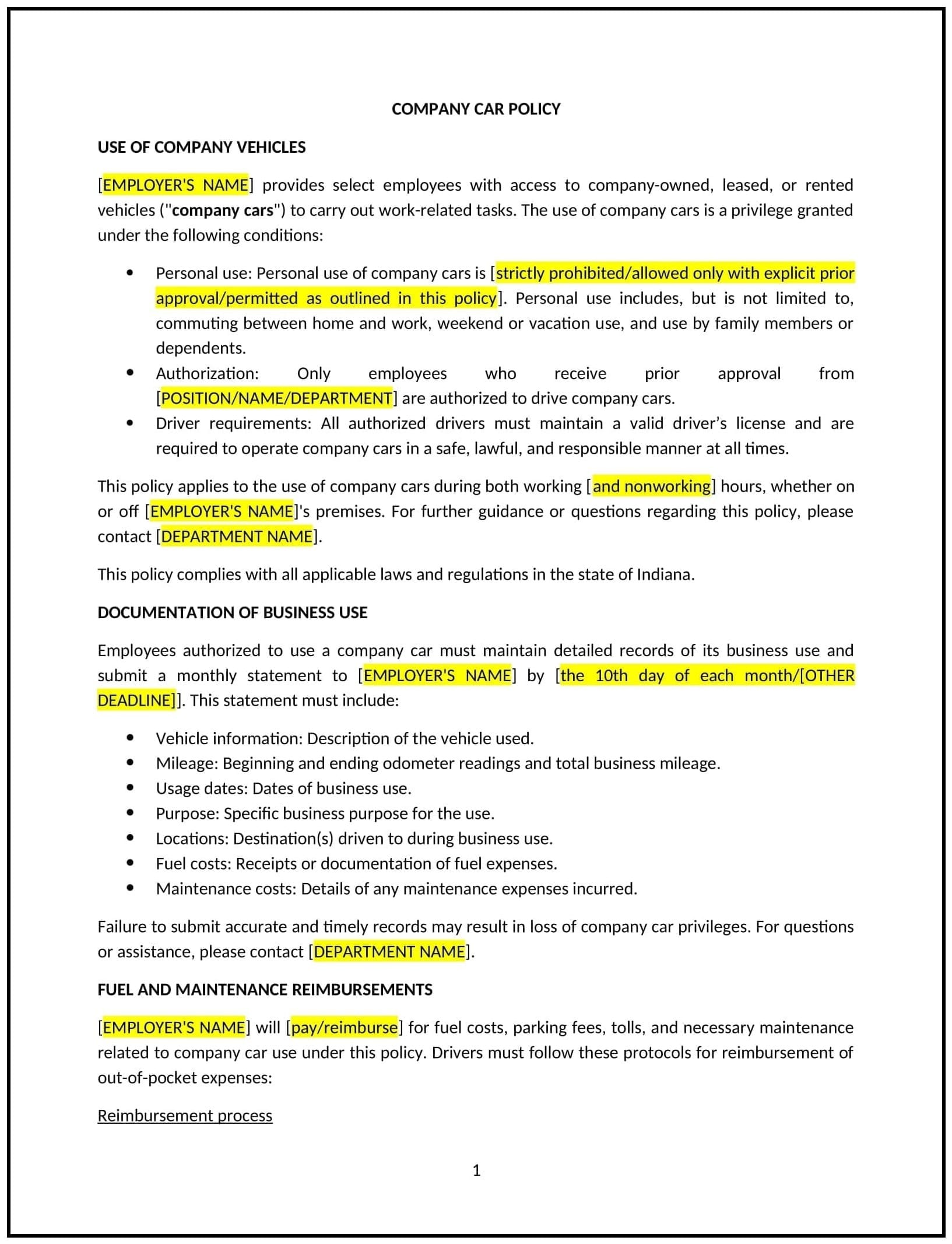
The company car policy helps Indiana businesses establish guidelines for employees who are provided with a company vehicle for work-related purposes. This policy outlines the usage, responsibilities, and expectations for employees who are assigned a company car. By using this template, businesses can ensure that company vehicles are used responsibly, maintained properly, and that employees understand their role in managing the vehicle.
By implementing this policy, Indiana businesses can promote the safe, efficient, and appropriate use of company cars, reducing liability, ensuring compliance with legal requirements, and protecting the company’s assets.
How to use this company car policy (Indiana)
- Define eligibility: Clearly specify which employees are eligible to receive a company car. This may include job roles that require frequent travel or transportation for business purposes. The policy should also address any requirements, such as length of employment or job performance.
- Outline allowed use: Clearly define the scope of acceptable use for the company car. This includes business-related use (e.g., commuting to work-related meetings or events) and personal use, if permitted. Specify any restrictions on personal use, such as geographical limits or non-business activities.
- Establish maintenance and care: Specify the responsibilities for maintaining the vehicle, including regular servicing, fueling, and upkeep. The policy should outline who is responsible for vehicle costs, including repairs, insurance, and fuel. Employees should also understand the process for reporting any damage or issues with the vehicle.
- Address safety and driving behavior: The policy should establish safety guidelines for operating the company car, including adhering to all traffic laws and ensuring that the vehicle is driven in a responsible manner. This includes not driving under the influence, wearing seat belts, and following speed limits.
- Detail insurance requirements: Outline the insurance coverage provided for the company car and the employee’s responsibilities in the event of an accident. Specify the coverage type (e.g., liability, collision, comprehensive) and how claims should be handled.
- Define vehicle return process: Clearly state the process for returning the company car, including any conditions for its return, such as during termination of employment, reassignment, or at the end of the lease term. This section should also clarify what happens if the vehicle is damaged upon return.
- Comply with legal requirements: Ensure the policy is in compliance with relevant Indiana state laws, including those related to vehicle registration, insurance, and employee driving regulations.
Benefits of using this company car policy (Indiana)
Implementing this policy provides several key benefits for Indiana businesses:
- Promotes responsible vehicle use: The policy helps ensure that company cars are used for legitimate business purposes and are well-maintained, reducing the risk of accidents and ensuring business continuity.
- Protects company assets: By outlining clear expectations for maintenance, usage, and return, businesses can prevent damage to company vehicles and ensure they are managed effectively.
- Reduces liability: A well-structured company car policy can help mitigate legal risks by ensuring that employees understand their responsibilities regarding safety, insurance, and compliance with traffic laws.
- Increases employee satisfaction: Providing company cars to employees can enhance job satisfaction, particularly for employees who need to travel for business purposes, as it reduces personal transportation costs.
- Improves cost control: By defining acceptable use and maintenance responsibilities, businesses can better manage the costs associated with company vehicles, ensuring that expenses are reasonable and consistent.
- Enhances company image: A well-maintained fleet of company vehicles can enhance the business’s professional image when employees travel to meet clients, attend meetings, or represent the company in other ways.
Tips for using this company car policy (Indiana)
- Communicate the policy clearly: Ensure that all employees who receive a company car are fully informed of the policy, including their responsibilities regarding usage, maintenance, and insurance. Include the policy in the employee handbook and review it with employees when they are assigned a vehicle.
- Monitor vehicle usage: Track company car usage to ensure compliance with the policy and to identify any potential issues, such as excessive personal use or failure to maintain the vehicle properly.
- Regularly maintain the fleet: Establish a regular maintenance schedule for company cars to ensure they remain in good condition. Regular checks can prevent unexpected repair costs and downtime.
- Review and update the policy periodically: The company car policy should be reviewed periodically to ensure it reflects any changes in legal requirements, business needs, or operational practices.