Compliance reporting policy (Alabama): Free template
Got contracts to review? While you're here for policies, let Cobrief make contract review effortless—start your free review now.
Customize this template for free
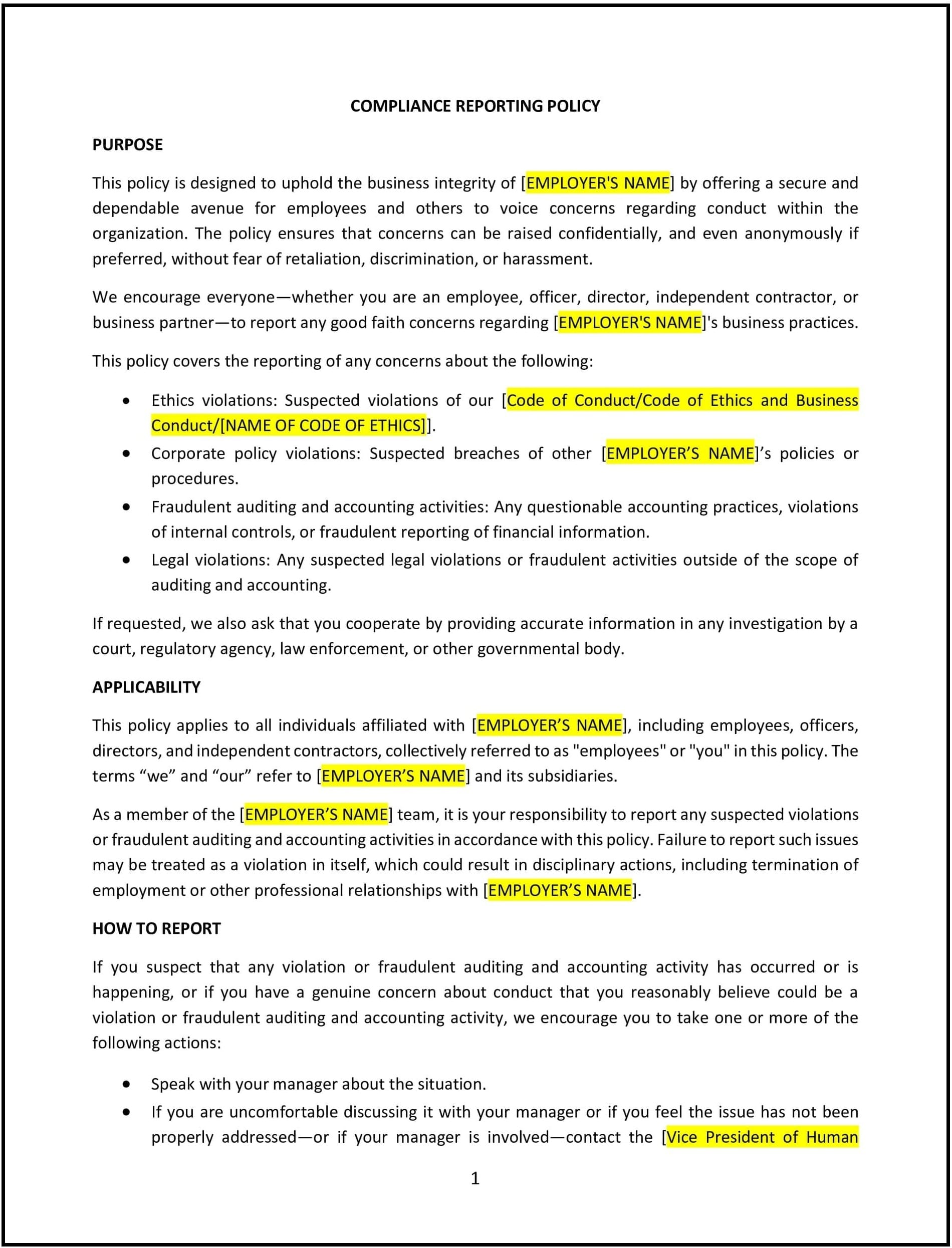
Compliance reporting policy (Alabama)
A compliance reporting policy provides employees and stakeholders with a secure and structured way to report concerns about misconduct, unethical behavior, or policy violations within the organization. For SMBs in Alabama, this policy helps ensure transparency, accountability, and adherence to legal and ethical standards. Tailoring this policy safeguards your business, protects whistleblowers, and promotes a culture of integrity.
How to use this compliance reporting policy (Alabama)
- Define the scope: Clearly outline the types of concerns that can be reported, such as fraud, harassment, or safety violations.
- Establish reporting channels: Provide multiple secure options for reporting, such as a dedicated hotline, email, or anonymous online form.
- Align with Alabama laws: Ensure the policy complies with state-specific regulations, including protections for whistleblowers.
- Communicate confidentiality: Reassure reporters that their identities will be protected to the fullest extent possible.
- Provide training: Educate employees on the importance of compliance reporting and how to use the provided channels responsibly.
Benefits of using a compliance reporting policy (Alabama)
A compliance reporting policy promotes accountability and protects your organization. Here's how it helps:
- Encourages transparency: Provides a structured process for addressing concerns, fostering trust within the organization.
- Ensures compliance: Helps your business adhere to Alabama laws and federal regulations regarding workplace conduct and reporting.
- Protects whistleblowers: Safeguards employees who report concerns from retaliation, promoting a safe reporting environment.
- Mitigates risks: Addresses potential issues before they escalate into legal or reputational crises.
- Builds a culture of integrity: Demonstrates your commitment to ethical and legal business practices.
Tips for implementing a compliance reporting policy (Alabama)
- Include multiple channels: Offer diverse reporting options to accommodate employees’ preferences, such as phone, email, or in-person discussions.
- Address industry-specific concerns: Tailor the policy to reflect risks common to Alabama industries, such as healthcare compliance or manufacturing safety.
- Clarify protection measures: Clearly outline how whistleblowers are safeguarded from retaliation and how reports are handled confidentially.
- Set response timelines: Commit to investigating and addressing reports promptly to maintain credibility and trust.
- Review regularly: Update the policy annually or as needed to reflect changes in Alabama laws or organizational priorities.