Compliance reporting policy (Colorado): Free template
Got contracts to review? While you're here for policies, let Cobrief make contract review effortless—start your free review now.
Customize this template for free
Compliance reporting policy (Colorado)
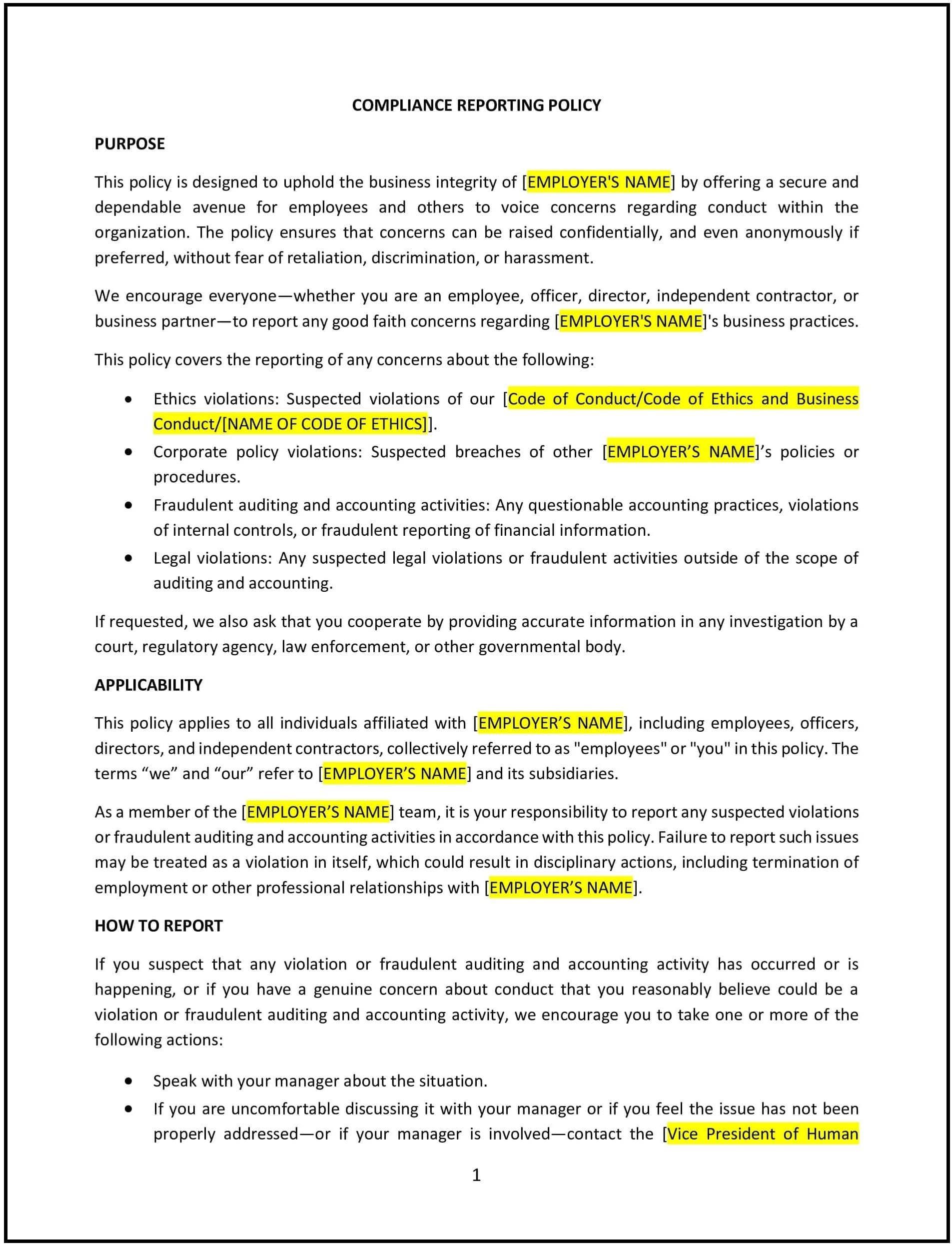
In Colorado, a compliance reporting policy provides businesses with guidelines for reporting violations of laws, regulations, or internal policies. This policy ensures that employees and stakeholders have a clear, confidential, and secure process for reporting potential compliance issues without fear of retaliation. The policy is designed to help businesses address concerns about legal or regulatory violations promptly and take corrective actions to maintain ethical and lawful business practices.
By implementing this policy, Colorado businesses can promote a culture of transparency, accountability, and legal compliance, while safeguarding the business from potential risks and penalties related to non-compliance.
How to use this compliance reporting policy (Colorado)
- Define compliance issues: Specify the types of violations that should be reported, such as breaches of legal requirements, unethical business practices, fraud, harassment, or violations of internal policies.
- Establish reporting channels: Provide clear, confidential reporting mechanisms for employees, including options for anonymous reporting to ensure that concerns can be raised without fear of retaliation.
- Protect whistleblowers: Ensure that employees who report violations are protected from retaliation, such as dismissal, demotion, or harassment, in line with Colorado's anti-retaliation laws.
- Outline investigation procedures: Clearly define the steps the business will take to investigate reports of non-compliance, including timelines, responsibilities, and the involvement of relevant authorities if needed.
- Address corrective actions: Explain the consequences of non-compliance and outline the steps the business will take to remedy any violations, including disciplinary actions, policy updates, or legal action.
Benefits of using this compliance reporting policy (Colorado)
This policy offers several advantages for Colorado businesses:
- Supports compliance: Ensures adherence to Colorado and federal laws by providing a clear, structured process for reporting potential violations.
- Promotes accountability: Encourages employees to report violations, knowing that their concerns will be taken seriously and investigated thoroughly.
- Reduces risks: Helps identify and address compliance issues early, reducing the likelihood of legal or financial penalties resulting from non-compliance.
- Enhances reputation: Demonstrates the company’s commitment to maintaining high ethical standards and compliance with applicable laws, which can enhance trust with customers, employees, and regulators.
- Protects employees: Provides a secure and non-retaliatory way for employees to raise concerns, contributing to a positive and safe work environment.
Tips for using this compliance reporting policy (Colorado)
- Reflect Colorado-specific laws: Ensure the policy complies with Colorado’s whistleblower protection laws and any state-specific reporting requirements.
- Communicate clearly: Ensure employees understand how to report violations, the importance of timely reporting, and the protection available to them under the policy.
- Provide training: Offer training to employees about compliance risks, reporting channels, and the consequences of failing to report violations.
- Ensure confidentiality: Guarantee that all reports are handled confidentially and that the reporting process is secure to encourage employees to raise concerns without fear.
- Review regularly: Update the policy to reflect changes in Colorado laws or business practices and to improve reporting mechanisms.