Compliance reporting policy (Connecticut): Free template
Got contracts to review? While you're here for policies, let Cobrief make contract review effortless—start your free review now.
Customize this template for free
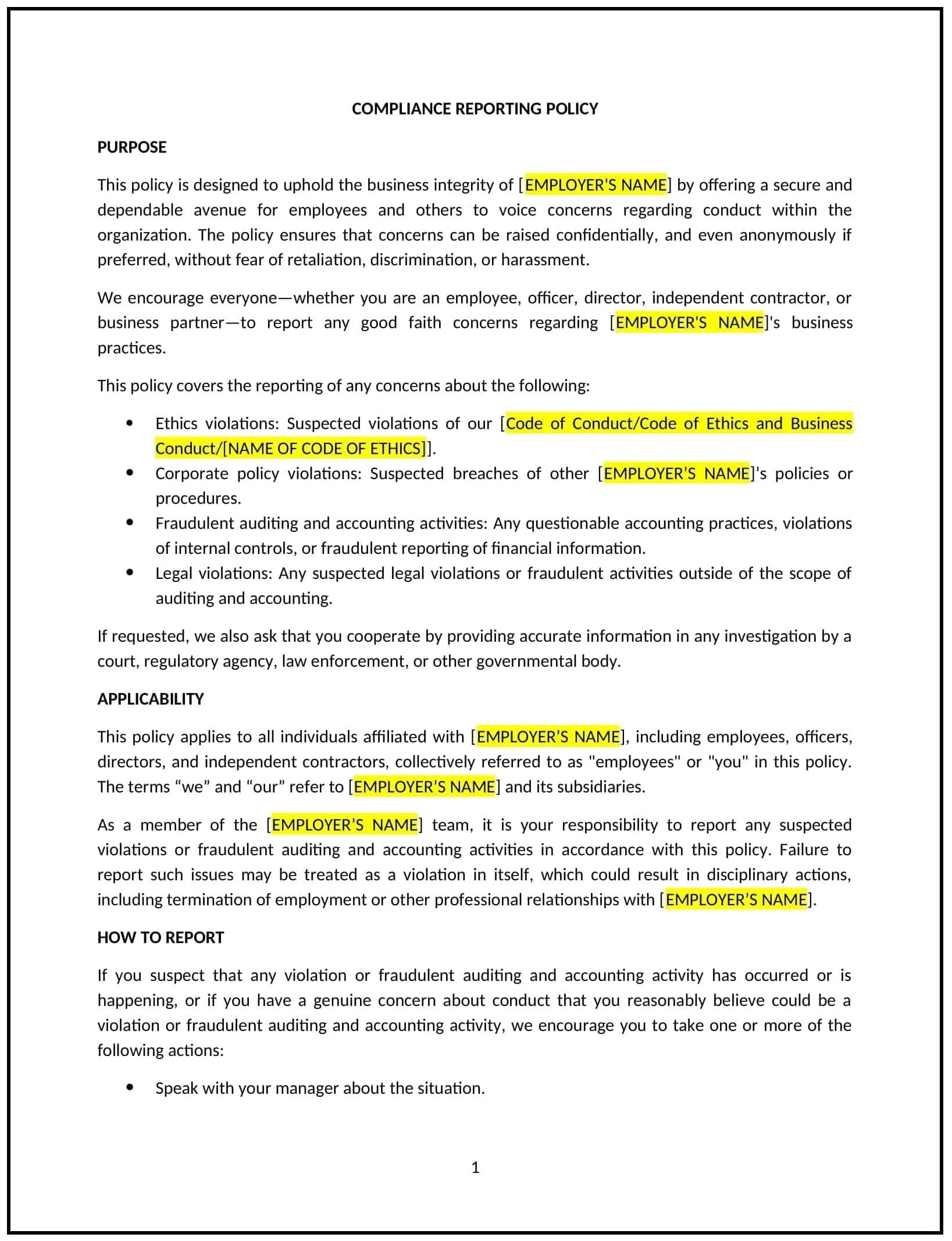
Compliance reporting policy (Connecticut)
A compliance reporting policy helps Connecticut businesses establish clear procedures for employees to report potential violations of laws, regulations, or internal policies. This policy outlines the channels for reporting concerns, the protection against retaliation for whistleblowers, and the procedures for investigating and addressing compliance issues.
By implementing this policy, businesses can foster a culture of accountability, ensure legal compliance, and mitigate the risks associated with non-compliance.
How to use this compliance reporting policy (Connecticut)
- Define reporting channels: Specify the various ways employees can report compliance concerns, such as through an internal hotline, email, or a designated compliance officer.
- Ensure confidentiality: Emphasize that all reports will be treated confidentially to the extent possible, and that employees will not face retaliation for reporting concerns in good faith.
- Outline reporting procedures: Provide clear instructions on how to report concerns, including what type of information is required and how employees can follow up on their reports.
- Investigate concerns: Establish a process for investigating compliance issues, ensuring that all reports are taken seriously and addressed in a timely and impartial manner.
- Take corrective action: Specify the steps the company will take if a compliance issue is confirmed, including the potential for disciplinary action, process improvements, or other necessary changes.
Benefits of using this compliance reporting policy (Connecticut)
This policy offers several benefits for Connecticut businesses:
- Promotes accountability: Encourages employees to act as active participants in maintaining compliance, helping prevent legal violations and policy breaches.
- Reduces risks: Helps the business identify and address compliance issues early, mitigating the risk of legal and financial penalties.
- Protects the company’s reputation: Demonstrates the business’s commitment to ethical practices and transparency, which can improve stakeholder trust.
- Safeguards employees: Ensures employees have a safe, confidential way to report concerns without fear of retaliation, fostering a more supportive work environment.
- Supports legal compliance: Helps the company comply with state and federal laws requiring reporting mechanisms for compliance and whistleblowing, reducing potential liabilities.
Tips for using this compliance reporting policy (Connecticut)
- Communicate the policy clearly: Ensure all employees are aware of the reporting channels and procedures, and understand their right to report issues without fear of retaliation.
- Offer training: Provide regular training to employees on the importance of compliance and the proper steps for reporting concerns.
- Establish a dedicated team: Designate a compliance officer or team to handle reports, ensuring that all concerns are addressed promptly and professionally.
- Monitor reports: Track compliance reports to identify trends and address any systemic issues that may arise.
- Review periodically: Update the policy regularly to reflect changes in Connecticut laws, business operations, or industry standards.