Compliance reporting policy (Indiana): Free template
Got contracts to review? While you're here for policies, let Cobrief make contract review effortless—start your free review now.
Customize this template for free
Compliance reporting policy (Indiana): Free template
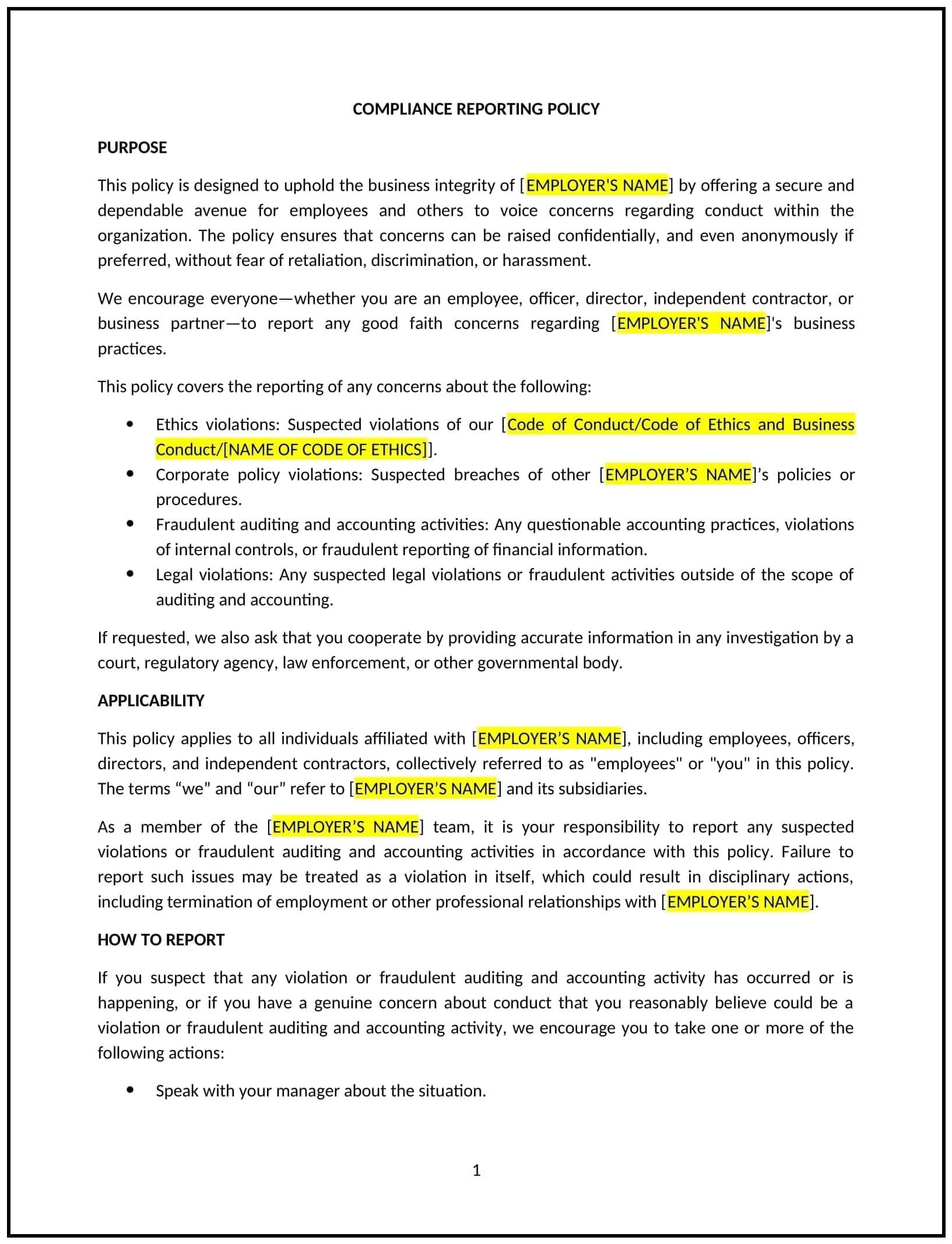
The compliance reporting policy helps Indiana businesses establish clear guidelines for reporting potential legal, regulatory, or ethical violations within the organization. This policy outlines the process for employees, contractors, and third parties to report any concerns about compliance issues, including violations of company policies, state or federal laws, or industry regulations. By using this template, businesses can promote transparency, reduce the risk of non-compliance, and maintain a culture of integrity and accountability.
By implementing this policy, Indiana businesses can strengthen their compliance programs, ensure timely reporting of issues, and mitigate the risk of legal penalties, financial loss, and reputational damage.
How to use this compliance reporting policy (Indiana)
- Define reporting channels: Clearly specify the available channels for reporting compliance issues. These may include anonymous reporting options, such as hotlines, emails, or online portals, as well as direct reporting to managers, compliance officers, or designated personnel.
- Outline what should be reported: Provide examples of the types of issues that should be reported, such as violations of company policies, breaches of state or federal laws, unethical behavior, fraud, or safety concerns. Clarify that reports should be made in good faith, based on reasonable grounds.
- Address anonymity and confidentiality: Specify whether reports can be made anonymously and how confidentiality will be maintained throughout the reporting and investigation process. Ensure that employees feel comfortable reporting issues without fear of retaliation.
- Specify protections against retaliation: The policy should make it clear that employees who report compliance issues in good faith will be protected from retaliation. Outline the steps the company will take to protect whistleblowers from any negative consequences, including termination, demotion, or harassment.
- Establish investigation procedures: Outline the steps that will be taken once a report is made, including how reports will be evaluated, investigated, and resolved. Specify the roles and responsibilities of compliance officers, legal teams, or external auditors in handling reports.
- Define corrective actions: If an issue is substantiated, the policy should define the potential corrective actions or disciplinary measures that will be taken, which may include remediation efforts, retraining, or legal action.
- Comply with legal requirements: Ensure that the policy complies with relevant Indiana state laws and federal regulations, including whistleblower protections and industry-specific compliance requirements.
Benefits of using this compliance reporting policy (Indiana)
Implementing this policy provides several key benefits for Indiana businesses:
- Strengthens the company’s compliance program: A clear compliance reporting policy helps businesses identify and address issues early, preventing violations that could result in legal penalties or financial loss.
- Fosters a culture of integrity: The policy promotes transparency and accountability within the organization, demonstrating the business’s commitment to ethical behavior and compliance with laws and regulations.
- Protects against legal and financial risks: By encouraging timely reporting of compliance issues, businesses can mitigate the risk of non-compliance and reduce the likelihood of costly fines, lawsuits, or reputational damage.
- Enhances employee trust: A well-communicated and effective reporting policy helps build trust with employees by ensuring that their concerns will be heard and addressed appropriately, without fear of retaliation.
- Promotes a proactive approach to compliance: Encouraging employees to report potential issues in real time helps the company stay ahead of compliance challenges and ensures the organization is continually improving its practices.
- Improves organizational transparency: The policy helps ensure that all compliance issues are addressed in an open, fair, and consistent manner, which improves overall organizational transparency and decision-making.
Tips for using this compliance reporting policy (Indiana)
- Communicate the policy effectively: Ensure that the compliance reporting policy is clearly communicated to all employees, contractors, and relevant third parties. Include the policy in employee handbooks, orientation materials, and on the company intranet.
- Train employees on the policy: Conduct regular training sessions to educate employees on the importance of compliance reporting, how to report issues, and how to identify potential compliance risks. This helps employees feel confident in using the reporting channels.
- Encourage a supportive reporting environment: Create a work environment where employees feel safe and supported when raising compliance concerns. Encourage open dialogue and emphasize the company’s commitment to handling reports respectfully and confidentially.
- Monitor compliance reports: Regularly monitor the compliance reporting channels and review any concerns raised. Ensure that reports are acted upon promptly, and that corrective actions are implemented as needed.
- Review and update the policy regularly: Periodically review the compliance reporting policy to ensure it remains in line with legal requirements, company values, and best practices. Update the policy as needed to reflect any changes in regulations or reporting processes.