Got contracts to review? While you're here for policies, let Cobrief make contract review effortless—start your free review now.
Customize this template for free
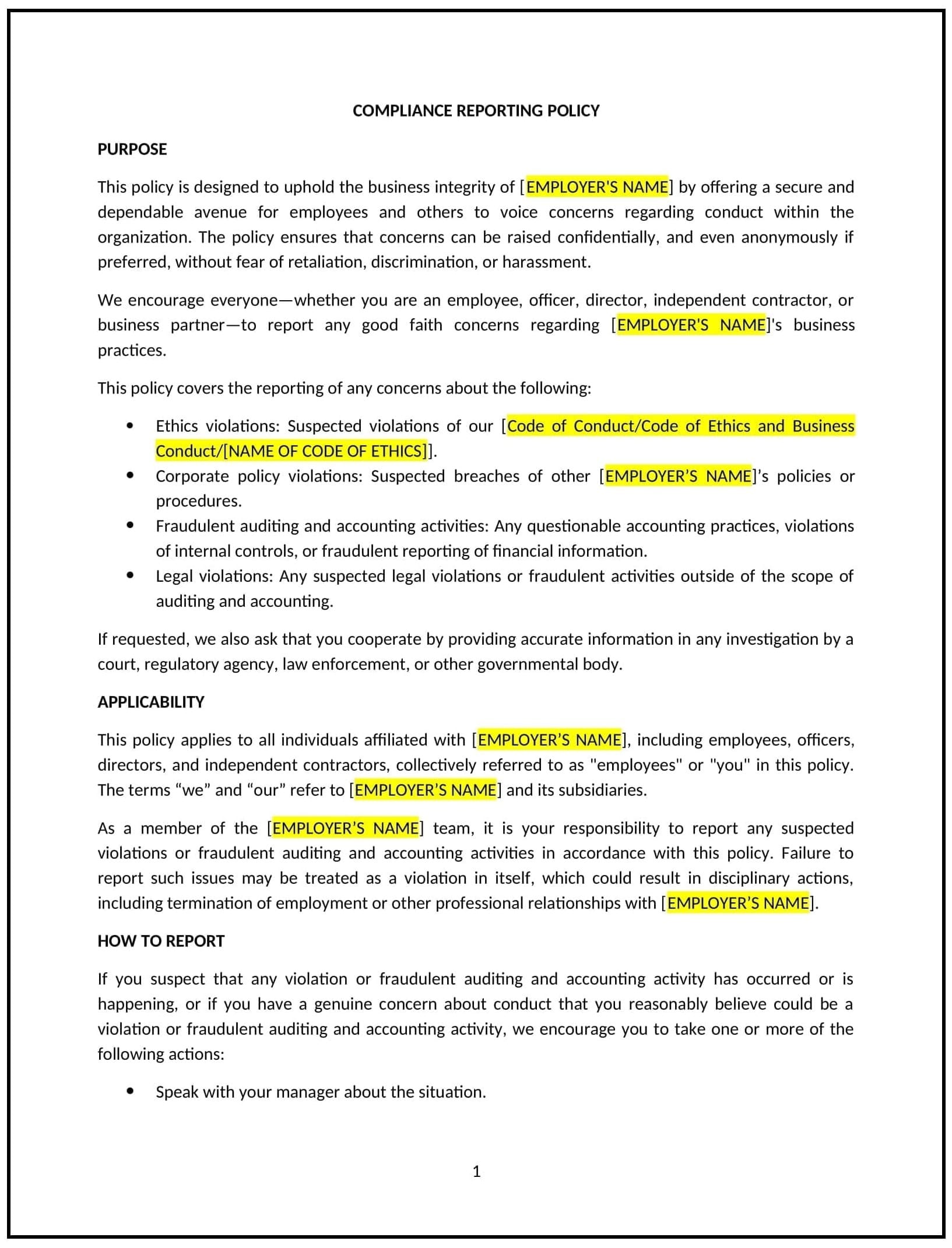
Compliance reporting policy (Iowa)
A compliance reporting policy helps Iowa businesses establish a structured approach for employees to report concerns related to legal, regulatory, and ethical issues within the workplace. By providing clear reporting channels and protections, businesses can encourage transparency, prevent misconduct, and address risks before they escalate.
This policy outlines reporting procedures, confidentiality protections, and investigation processes. It helps businesses promote accountability while ensuring employees feel secure when raising concerns about workplace practices.
By implementing this policy, businesses in Iowa can foster a culture of integrity, reduce risks associated with non-compliance, and support ethical business operations.
How to use this compliance reporting policy (Iowa)
- Define reportable issues: Clarify which types of concerns employees should report, including legal violations, workplace misconduct, or unethical behavior.
- Establish reporting channels: Provide employees with multiple options for reporting concerns, such as direct supervisors, HR representatives, or anonymous hotlines.
- Outline confidentiality protections: Assure employees that reports will be handled discreetly and that their identities will be protected when possible.
- Prohibit retaliation: Communicate that employees who report concerns in good faith will not face retaliation.
- Set investigation procedures: Define how compliance concerns will be reviewed, including timelines, responsible personnel, and follow-up actions.
- Require documentation: Establish guidelines for recording and tracking compliance reports to ensure consistent handling.
- Train employees and managers: Provide education on recognizing compliance risks and properly responding to concerns.
- Review and update: Regularly assess the policy to reflect changes in Iowa regulations and workplace needs.
Benefits of using this compliance reporting policy (Iowa)
This policy offers several advantages for Iowa businesses:
- Encourages ethical business practices: Promotes transparency and accountability.
- Reduces legal and financial risks: Helps businesses address potential violations before they become serious issues.
- Protects employees: Provides a secure process for reporting concerns without fear of retaliation.
- Strengthens business reputation: Demonstrates a commitment to integrity and responsible operations.
- Improves workplace culture: Fosters trust by encouraging open communication.
- Supports regulatory adherence: Helps businesses stay aligned with applicable laws and industry standards.
Tips for using this compliance reporting policy (Iowa)
- Provide multiple reporting options: Businesses should offer various channels, such as anonymous reporting hotlines, to accommodate employee concerns.
- Communicate non-retaliation commitments: Businesses should assure employees that they are protected when making reports in good faith.
- Train employees on reporting procedures: Businesses should educate staff on recognizing compliance issues and how to report them properly.
- Document all reports: Businesses should maintain detailed records of reported concerns and follow-up actions for accountability.
- Conduct prompt investigations: Businesses should establish a structured process for reviewing compliance reports and taking corrective action.
- Review policy effectiveness: Businesses should periodically assess whether the reporting process is accessible and effective.