Compliance reporting policy (Kansas): Free template
Got contracts to review? While you're here for policies, let Cobrief make contract review effortless—start your free review now.
Customize this template for free
Compliance reporting policy (Kansas)
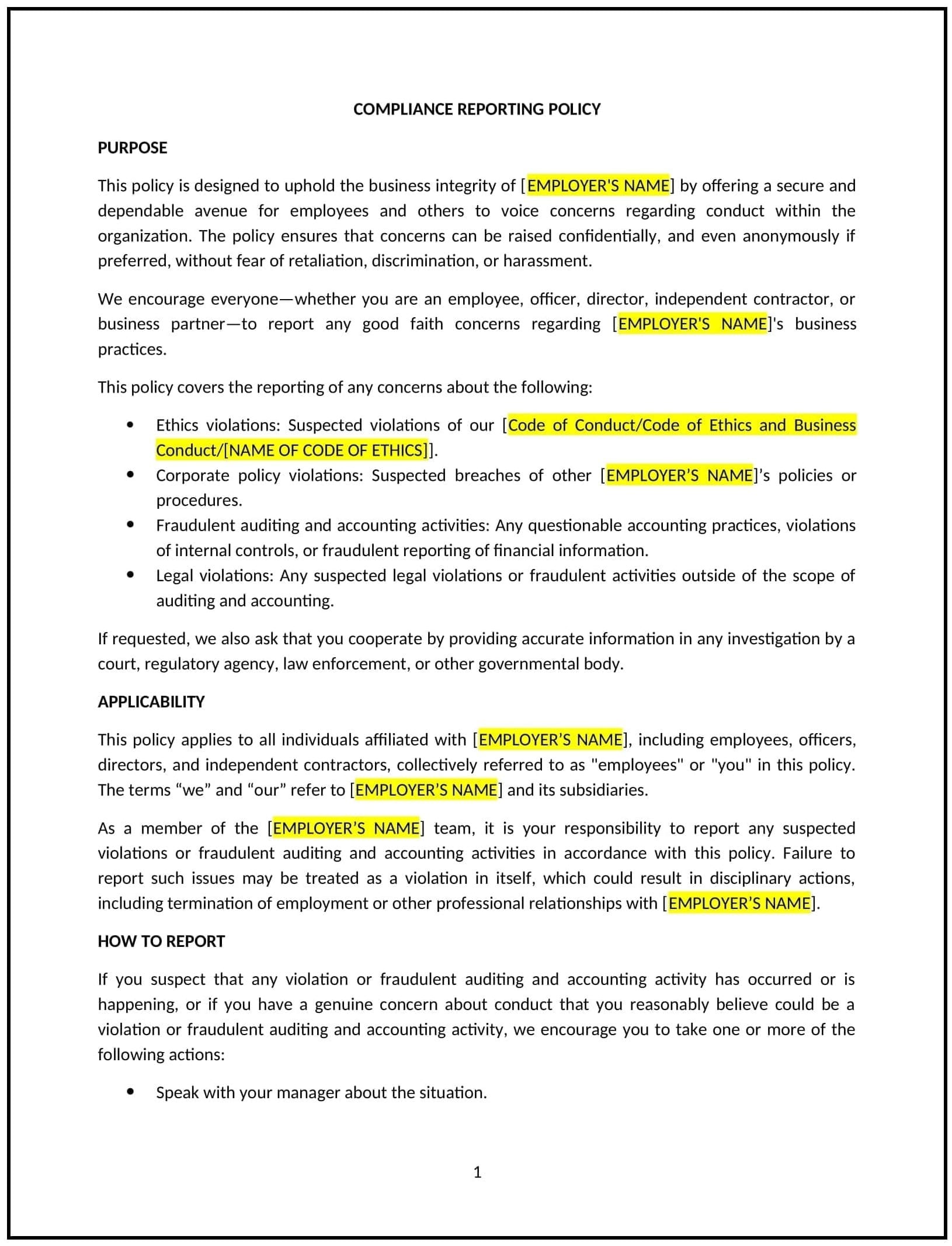
A compliance reporting policy helps Kansas businesses establish clear procedures for identifying, reporting, and addressing regulatory or ethical concerns in the workplace. This policy provides employees with structured reporting channels, outlines protection against retaliation, and defines the process for handling reported issues.
By implementing this policy, businesses can promote transparency, encourage ethical conduct, and strengthen risk management efforts.
How to use this compliance reporting policy (Kansas)
- Define reportable issues: Businesses should specify what types of concerns employees should report, such as regulatory violations, ethical misconduct, workplace harassment, fraud, or conflicts of interest.
- Establish reporting procedures: Businesses should provide multiple reporting options, including direct reporting to supervisors, anonymous reporting channels, and third-party hotlines.
- Outline confidentiality protections: Employees should have confidence that reports will be handled discreetly and that their identity will be protected when possible.
- Address investigation processes: Businesses should establish a clear framework for reviewing and resolving compliance concerns, including response timelines and responsible parties.
- Prohibit retaliation: Employees who report concerns in good faith should be protected from adverse treatment, including demotion, termination, or harassment.
- Communicate employee and management responsibilities: Businesses should clarify expectations for employees, supervisors, and compliance teams in handling reports.
- Review and update regularly: Businesses should assess reporting mechanisms and policy effectiveness periodically to maintain a strong compliance culture.
Benefits of using a compliance reporting policy (Kansas)
- Encourages ethical behavior: Helps employees feel comfortable reporting issues without fear of retaliation.
- Reduces business risks: Allows businesses to address compliance concerns proactively before they escalate.
- Strengthens workplace accountability: Reinforces a culture of responsibility and adherence to ethical standards.
- Protects against legal and financial consequences: Helps businesses detect and resolve potential violations before they lead to penalties.
- Improves internal transparency: Provides a structured way to document and track compliance concerns.
- Enhances employee trust: Shows a commitment to integrity and fair treatment of workplace concerns.
Tips for using this compliance reporting policy (Kansas)
- Communicate reporting options clearly: Businesses should ensure employees know how and where to report compliance concerns.
- Offer anonymous reporting channels: Providing confidential reporting options can encourage employees to come forward without fear.
- Train managers on handling reports: Businesses should educate supervisors on responding to compliance concerns professionally and impartially.
- Establish clear investigation protocols: Businesses should document the process for reviewing reports, conducting investigations, and resolving issues.
- Encourage open communication: Employees should feel comfortable discussing concerns without fear of retaliation or negative consequences.
- Monitor and improve reporting systems: Businesses should regularly assess the effectiveness of reporting channels and make adjustments as needed.