Compliance reporting policy (Kentucky): Free template
Got contracts to review? While you're here for policies, let Cobrief make contract review effortless—start your free review now.
Customize this template for free
Compliance reporting policy (Kentucky)
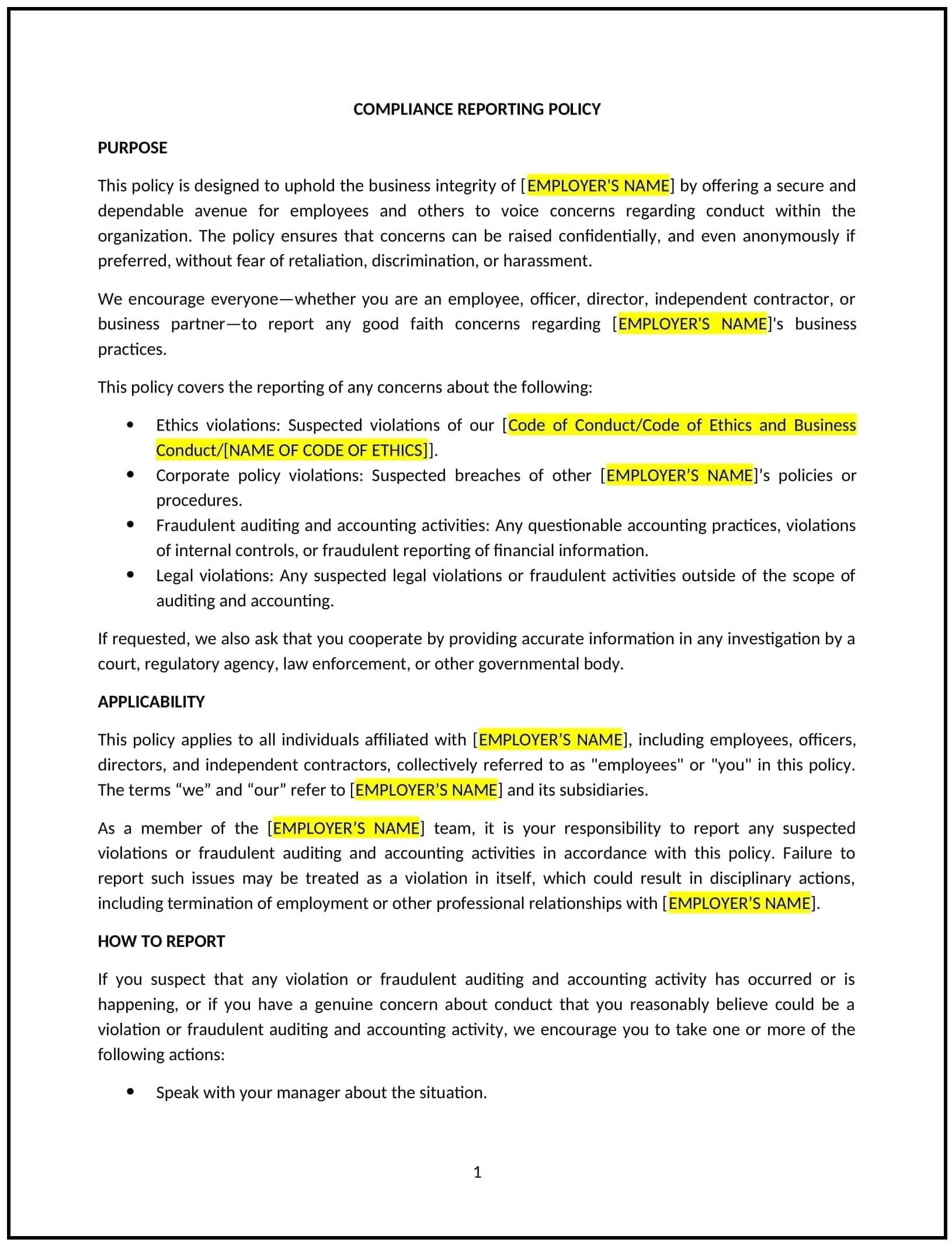
A compliance reporting policy establishes the procedures for Kentucky businesses to identify, report, and address non-compliance with laws, regulations, or internal policies. This policy provides clear guidelines for employees to report concerns, outlines the organization’s commitment to investigating issues, and ensures appropriate corrective actions are taken.
By implementing this policy, businesses can promote transparency, reduce risks, and demonstrate their dedication to ethical practices and regulatory compliance.
How to use this compliance reporting policy (Kentucky)
- Define reportable issues: Clearly specify the types of non-compliance employees should report, such as violations of laws, regulations, or company policies.
- Outline reporting procedures: Provide step-by-step instructions for reporting concerns, including available channels such as a hotline, email, or direct communication with a compliance officer.
- Emphasize confidentiality: Assure employees that their reports will be handled discreetly, with confidentiality maintained to the fullest extent possible.
- Prohibit retaliation: Clearly state that employees who report concerns in good faith are protected from retaliation and disciplinary action.
- Detail investigation steps: Explain how the business will investigate reported issues, including timelines, responsible parties, and how outcomes will be communicated.
- Address corrective actions: Describe the possible measures the company may take to resolve non-compliance, such as additional training, policy updates, or disciplinary actions.
- Include management responsibilities: Highlight the role of managers in fostering a culture of compliance and supporting employees who report concerns.
Benefits of using this compliance reporting policy (Kentucky)
This policy offers several advantages for Kentucky businesses:
- Promotes transparency: Encourages employees to report issues, helping businesses identify and address problems early.
- Reduces risks: Supports compliance with laws and regulations, minimizing the potential for fines or reputational damage.
- Builds trust: Demonstrates the business’s commitment to ethical practices and a safe reporting environment.
- Strengthens accountability: Establishes clear expectations for employees and management in maintaining compliance.
- Enhances operational integrity: Ensures that issues are investigated and resolved effectively, improving overall organizational performance.
Tips for using this compliance reporting policy (Kentucky)
- Communicate the policy clearly: Share the policy with employees during onboarding and provide regular reminders about the reporting process.
- Train employees and managers: Offer training on identifying non-compliance, using reporting channels, and maintaining confidentiality.
- Monitor reporting systems: Regularly review the effectiveness of reporting channels to ensure accessibility and reliability.
- Foster a culture of openness: Encourage employees to report concerns without fear of retaliation or negative consequences.
- Review and update regularly: Adjust the policy to reflect changes in Kentucky laws, industry standards, or company practices.