Compliance reporting policy (Minnesota): Free template
Got contracts to review? While you're here for policies, let Cobrief make contract review effortless—start your free review now.
Customize this template for free
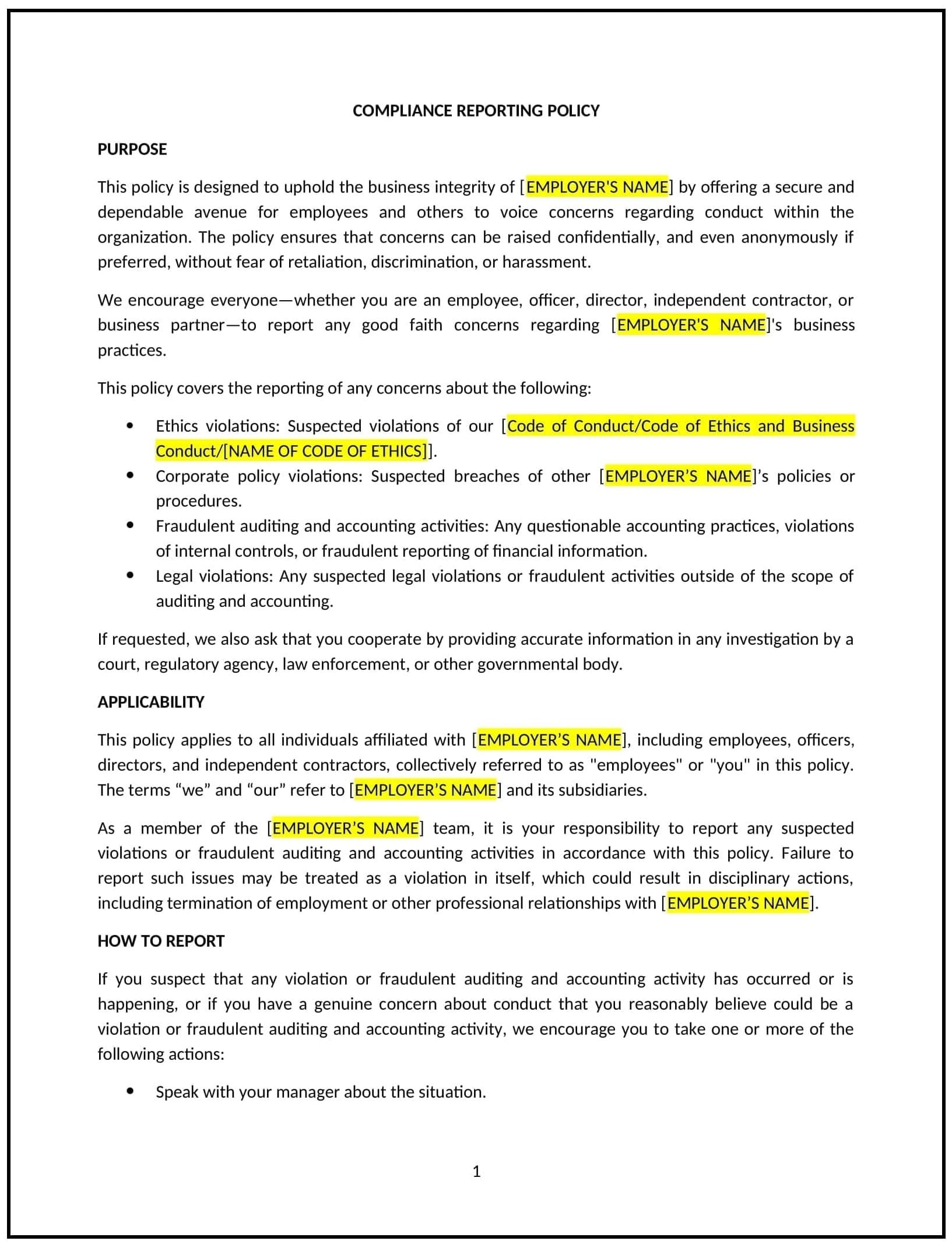
Compliance reporting policy (Minnesota)
This compliance reporting policy is designed to help Minnesota businesses establish clear procedures for employees to report violations of company policies, ethical standards, or legal requirements. It outlines the steps employees should follow to report concerns, protects whistleblowers from retaliation, and ensures that reported issues are addressed promptly and fairly.
By implementing this policy, businesses can promote transparency, ethical conduct, and a culture of accountability while minimizing legal and reputational risks.
How to use this compliance reporting policy (Minnesota)
- Define what constitutes a compliance violation: Clearly explain the types of violations employees should report, such as breaches of legal regulations, company policies, or unethical behavior.
- Outline the reporting process: Specify how employees should report concerns, whether through an anonymous hotline, HR, or a designated compliance officer.
- Ensure confidentiality: Establish measures to protect the confidentiality of the person reporting the violation, especially in sensitive cases.
- Address retaliation: Clearly state that retaliation against employees who report violations is prohibited and will result in disciplinary action.
- Specify investigation procedures: Define how reports will be handled, investigated, and resolved, and how employees will be kept informed throughout the process.
- Encourage timely reporting: Emphasize the importance of reporting violations as soon as they are noticed to prevent further issues and reduce risk.
Benefits of using a compliance reporting policy (Minnesota)
Implementing this policy provides several advantages for Minnesota businesses:
- Promotes ethical behavior: Encourages employees to act responsibly and report unethical or illegal actions within the company.
- Reduces legal risks: Helps the company address violations early, preventing more severe legal consequences later.
- Protects employees: Safeguards whistleblowers from retaliation, ensuring they feel safe reporting issues without fear of job loss or harassment.
- Enhances accountability: Establishes clear channels for reporting violations and ensures accountability at all levels of the organization.
- Reflects Minnesota-specific considerations: Adapts the policy to comply with local workplace practices, legal standards, and cultural expectations in Minnesota.
Tips for using this compliance reporting policy (Minnesota)
- Communicate clearly: Ensure that all employees are aware of the policy, how to report concerns, and the protections they have under the policy.
- Provide training: Offer regular training on identifying compliance violations and how to report them effectively and confidentially.
- Create accessible reporting channels: Make sure employees know how to use the reporting tools available, such as hotlines or online forms, and can do so easily.
- Foster a supportive environment: Encourage a culture of openness where employees feel safe discussing concerns with management without fear of retaliation.
- Review and act on reports: Take timely and appropriate action to investigate all reported issues and resolve them in accordance with company policies and legal requirements.