Compliance reporting policy (Mississippi): Free template
Got contracts to review? While you're here for policies, let Cobrief make contract review effortless—start your free review now.
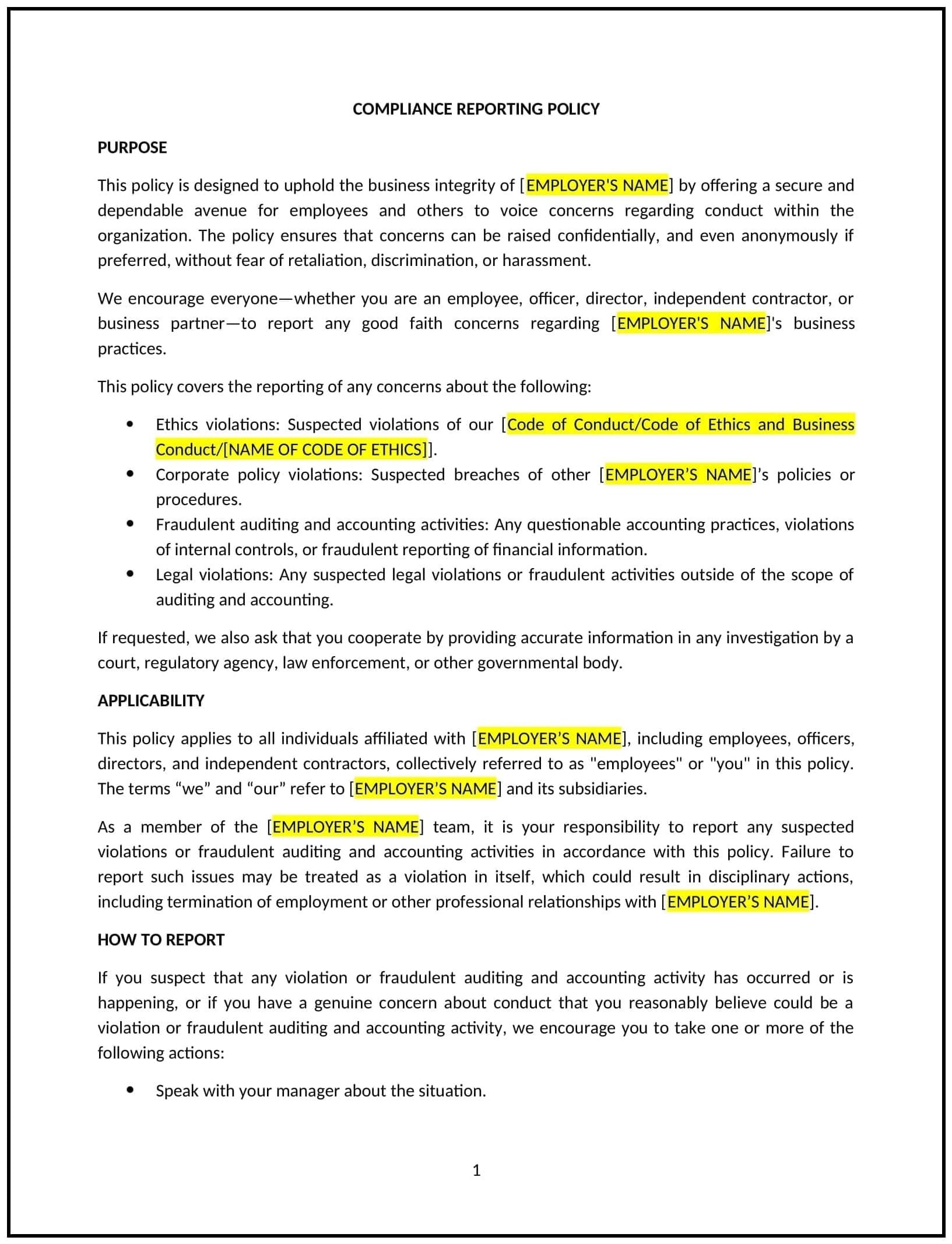
Customize this template for free
Compliance reporting policy (Mississippi)
A compliance reporting policy helps Mississippi businesses establish clear procedures for reporting violations of company policies, laws, or regulations. This policy outlines how employees can report compliance concerns or misconduct and ensures that these reports are handled confidentially and without fear of retaliation.
By implementing this policy, businesses can promote transparency, maintain ethical standards, and mitigate risks associated with legal or regulatory violations.
How to use this compliance reporting policy (Mississippi)
- Define the scope of reporting: Specify what types of violations, misconduct, or compliance issues employees should report, including legal violations, ethical breaches, fraud, discrimination, and safety concerns.
- Establish reporting channels: Provide employees with multiple confidential reporting channels, such as an anonymous hotline, email, or direct reporting to HR or compliance officers. The policy should ensure that employees can report concerns in a manner they feel comfortable with.
- Protect whistleblowers: Assure employees that they will not face retaliation for making a report in good faith. The policy should emphasize the company's commitment to protecting whistleblowers and the consequences for retaliating against those who report violations.
- Clarify the reporting process: Outline the steps employees need to take when submitting a report, including how to provide details of the issue, the timeline for reporting, and how the company will handle and investigate the concerns raised.
- Define investigation procedures: Specify how the company will investigate reported issues, who will be responsible for the investigation, and what actions will be taken to resolve the matter.
- Ensure confidentiality: Make it clear that all reports will be treated confidentially to protect the privacy of the individuals involved and encourage employees to come forward without fear.
- Establish consequences for non-compliance: Outline the potential consequences for employees who fail to report compliance issues or violations as required by company policy.
- Review and update the policy: Regularly review and update the policy to ensure it reflects any changes in legal requirements or industry standards and remains effective in promoting compliance.
Benefits of using this compliance reporting policy (Mississippi)
This policy provides several benefits for Mississippi businesses:
- Promotes ethical behavior: By setting clear expectations for reporting violations, businesses can foster a culture of integrity and accountability.
- Reduces legal and financial risks: A clear reporting policy helps businesses identify and address potential compliance issues early, reducing the likelihood of fines, penalties, or legal consequences.
- Encourages transparency: The policy encourages employees to report any concerns they may have, ensuring that potential issues are brought to light and addressed proactively.
- Protects the company’s reputation: Addressing compliance issues promptly can help protect the company’s reputation and maintain trust with customers, stakeholders, and regulatory bodies.
- Enhances employee trust: When employees feel that they can report concerns without fear of retaliation, it fosters trust and improves morale.
Tips for using this compliance reporting policy (Mississippi)
- Communicate the policy clearly: Ensure that all employees are aware of the compliance reporting policy and understand the importance of reporting any violations or misconduct.
- Provide training: Offer training sessions on how to report compliance issues, the channels available, and how employees can contribute to maintaining a compliant workplace.
- Reinforce confidentiality: Regularly remind employees that their reports will be kept confidential and that there will be no retaliation for reporting concerns in good faith.
- Follow up on reports: Ensure that the company investigates all reports promptly and follows up with the individuals who reported concerns to keep them informed of the resolution process.
- Encourage an open-door culture: Create an environment where employees feel comfortable speaking up and raising concerns directly to management or HR without fearing negative consequences.
- Regularly review the policy: The policy should be reviewed regularly to ensure it is still relevant and in line with the company’s compliance objectives and any changing laws.