Confidential information policy (Arizona): Free template
Got contracts to review? While you're here for policies, let Cobrief make contract review effortless—start your free review now.
Customize this template for free
Confidential information policy (Arizona)
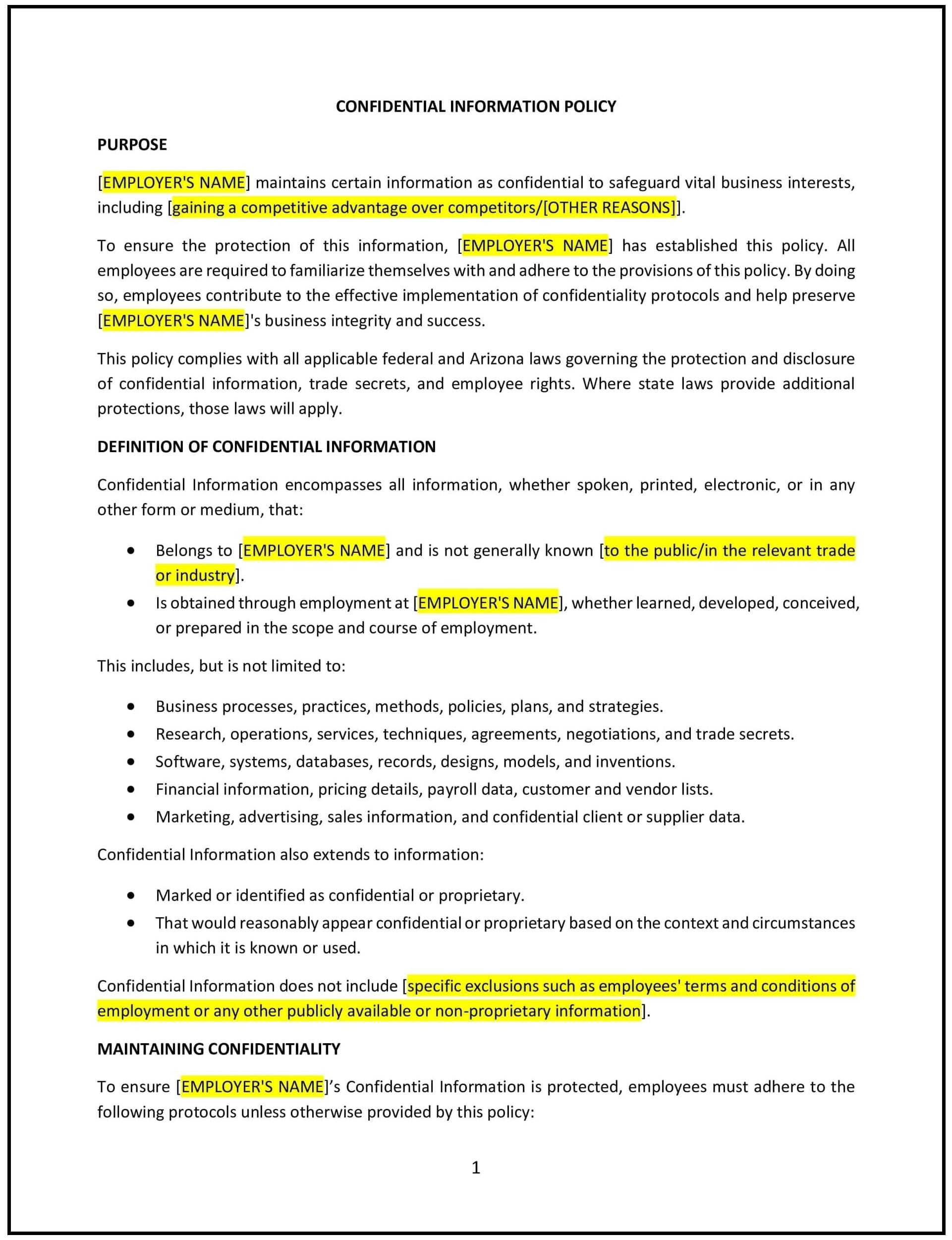
In Arizona, a confidential information policy provides businesses with guidelines for protecting sensitive data and ensuring employees understand their responsibilities in handling and safeguarding confidential information. This policy is essential for maintaining the organization’s competitive advantage, complying with legal requirements, and preventing data breaches.
This policy defines what constitutes confidential information, outlines employee obligations, and establishes procedures for reporting unauthorized disclosures. By implementing this policy, Arizona businesses can protect their assets and foster a culture of trust and accountability.
How to use this confidential information policy (Arizona)
- Define confidential information: Clearly outline what is considered confidential, such as trade secrets, client data, financial records, or proprietary business strategies.
- Specify employee responsibilities: Require employees to handle confidential information carefully, avoid unauthorized sharing, and report any potential breaches immediately.
- Include access controls: Restrict access to confidential information based on job roles and implement security measures like passwords or encryption.
- Address third-party interactions: Establish guidelines for sharing confidential information with vendors, contractors, or partners, including the use of nondisclosure agreements (NDAs).
- Provide breach reporting procedures: Outline steps employees must follow to report unauthorized disclosures or suspected breaches.
Benefits of using a confidential information policy (Arizona)
This policy offers significant benefits for Arizona businesses:
- Protects intellectual property: Safeguards trade secrets and proprietary information, ensuring the company maintains its competitive advantage.
- Enhances compliance: Aligns with Arizona and federal data protection laws, minimizing legal risks and penalties.
- Promotes accountability: Clarifies employee responsibilities for handling sensitive information, reducing the likelihood of accidental disclosures.
- Strengthens trust: Reassures clients, partners, and employees that the organization prioritizes confidentiality and data security.
- Mitigates risks: Reduces the impact of potential data breaches or unauthorized disclosures through clear protocols and preventive measures.
Tips for using a confidential information policy (Arizona)
- Address Arizona-specific laws: Ensure the policy complies with state regulations, particularly those related to privacy and data protection in industries like healthcare or finance.
- Provide employee training: Educate staff on identifying confidential information and implementing best practices for safeguarding it.
- Monitor access: Regularly review access controls to ensure only authorized personnel can handle sensitive information.
- Use NDAs effectively: Require third parties to sign nondisclosure agreements before accessing company information to prevent unauthorized sharing.
- Review regularly: Update the policy periodically to reflect changes in technology, regulations, or business practices.