Confidential information policy (California): Free template
Got contracts to review? While you're here for policies, let Cobrief make contract review effortless—start your free review now.
Customize this template for free
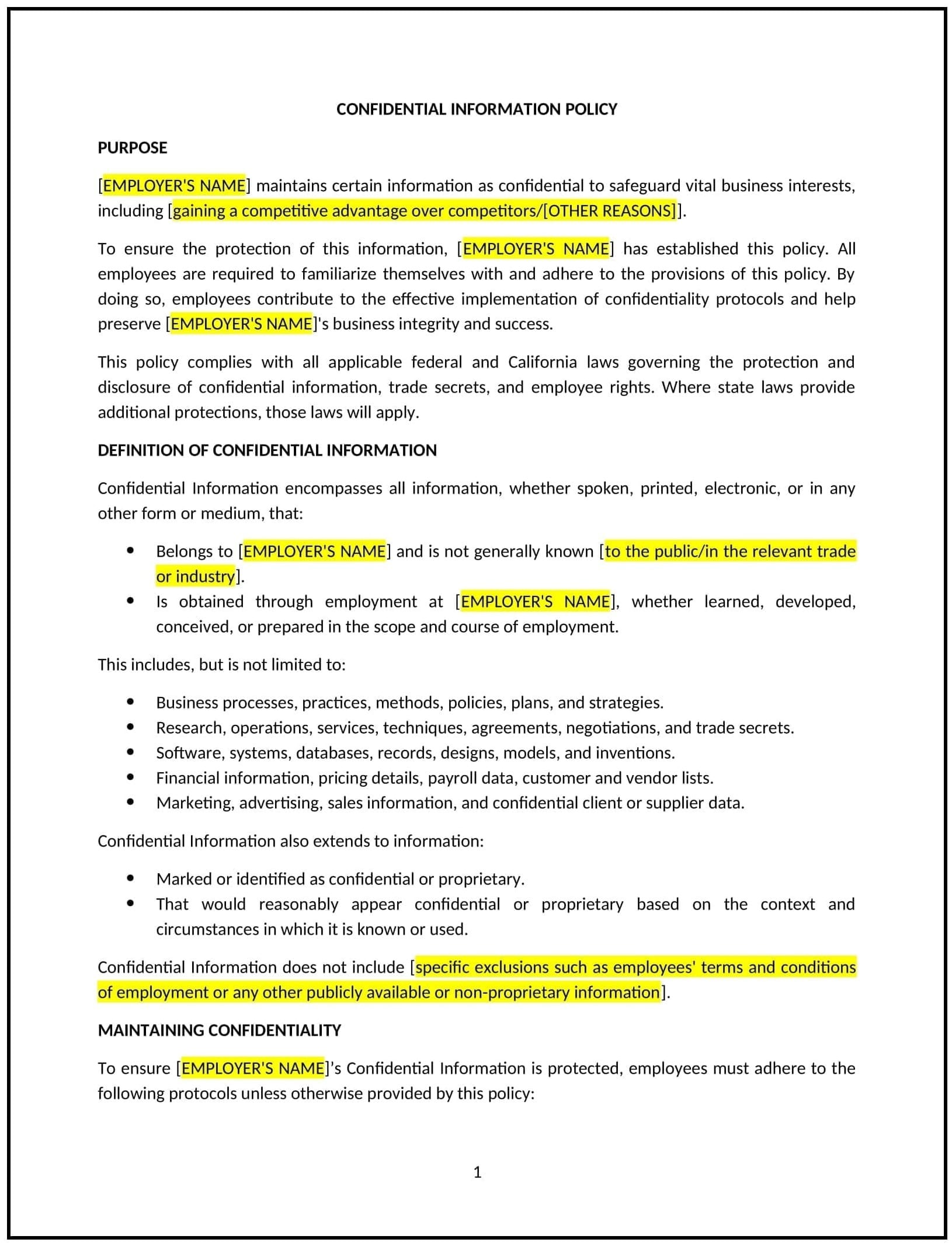
Confidential information policy (California)
In California, a confidential information policy provides businesses with guidelines for protecting sensitive information from unauthorized access, use, or disclosure. This policy ensures that employees understand their responsibilities in safeguarding business assets, proprietary data, and personal information in compliance with California privacy laws, including the California Consumer Privacy Act (CCPA).
This policy outlines the types of confidential information, acceptable use practices, and the consequences of unauthorized disclosures. By implementing this policy, California businesses can minimize risks and support a culture of security and trust.
How to use this confidential information policy (California)
- Define confidential information: Clearly outline what qualifies as confidential, including trade secrets, client data, and internal business strategies.
- Establish usage guidelines: Specify how employees should handle and protect confidential information, such as secure storage and restricted sharing.
- Address legal obligations: Include references to California privacy laws, such as the CCPA, to ensure compliance with data protection standards.
- Outline reporting procedures: Provide steps for employees to report potential breaches or unauthorized access to confidential information.
- Communicate consequences: Clarify disciplinary actions for violations of the policy, such as termination or legal action.
Benefits of using this confidential information policy (California)
This policy offers several advantages for California businesses:
- Supports compliance: Reflects California privacy laws and industry standards for handling sensitive information.
- Enhances security: Protects business assets and minimizes risks of data breaches or intellectual property theft.
- Builds trust: Demonstrates the business’s commitment to safeguarding client and employee information.
- Encourages accountability: Provides employees with clear guidelines for managing confidential information responsibly.
- Reduces risks: Helps prevent financial losses, reputational harm, and legal disputes caused by unauthorized disclosures.
Tips for using this confidential information policy (California)
- Address California-specific laws: Reflect the requirements of the CCPA and other state regulations in the policy.
- Train employees: Educate staff on best practices for protecting confidential information and the consequences of policy violations.
- Use secure tools: Implement systems and tools to safeguard sensitive information, such as encryption and access controls.
- Monitor compliance: Regularly review information handling practices to identify and address potential risks.
- Review regularly: Update the policy to reflect changes in California laws, workplace technologies, or business needs.