Confidential information policy (Connecticut): Free template
Got contracts to review? While you're here for policies, let Cobrief make contract review effortless—start your free review now.
Customize this template for free
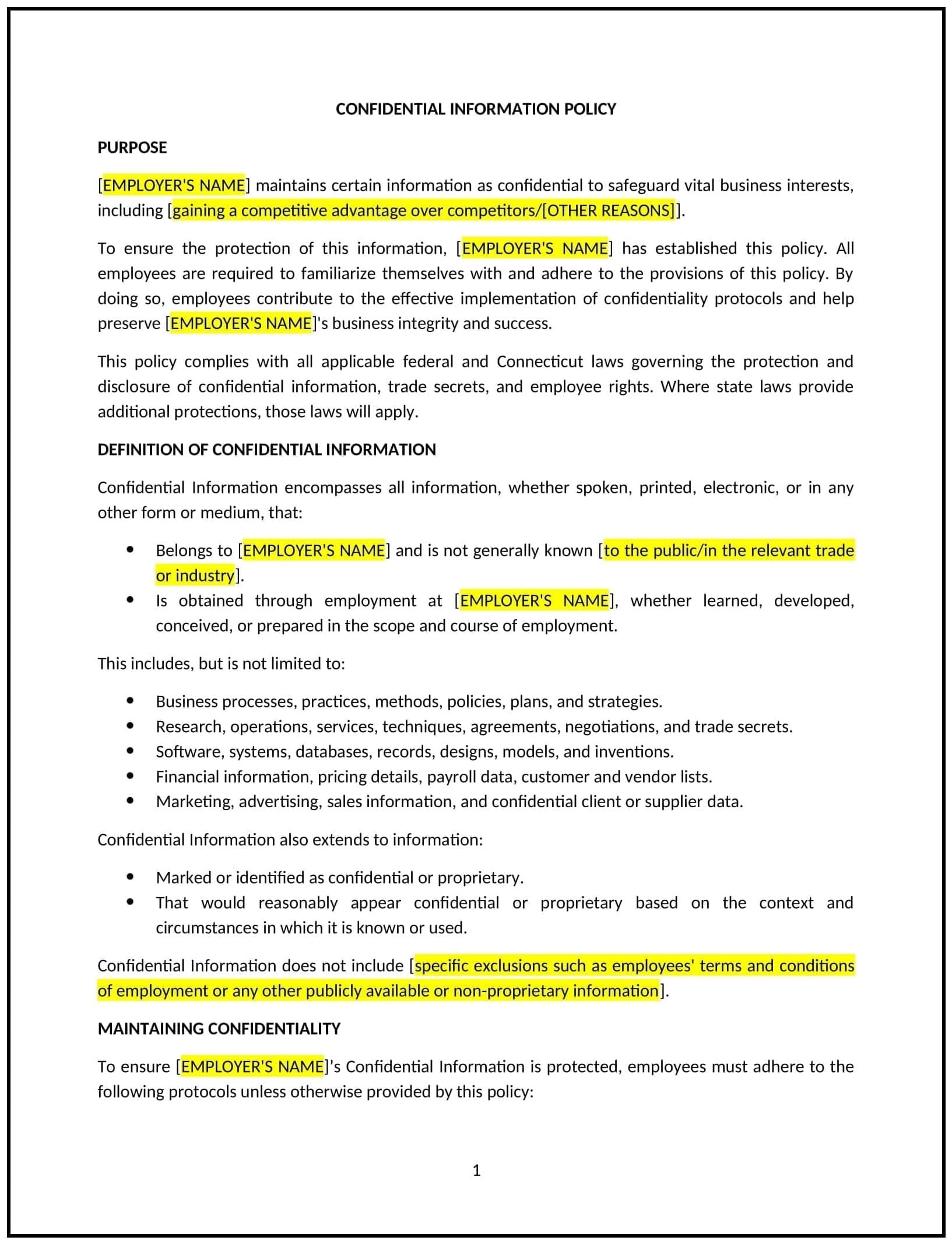
Confidential information policy (Connecticut)
A confidential information policy helps Connecticut businesses protect sensitive company information by establishing guidelines for handling, sharing, and safeguarding confidential data. This policy defines what constitutes confidential information, the responsibilities of employees to protect it, and the consequences of unauthorized disclosure.
By implementing this policy, businesses can protect intellectual property, customer data, and other sensitive information while maintaining trust and compliance with state and federal regulations.
How to use this confidential information policy (Connecticut)
- Define confidential information: Clearly outline what constitutes confidential information, including proprietary business data, client details, financial information, and any other sensitive company materials.
- Establish access controls: Specify who is authorized to access confidential information and the procedures for handling and sharing it within the company.
- Implement security measures: Outline the steps employees must take to protect confidential information, such as using secure passwords, encrypting files, and locking physical documents.
- Address disclosure: Set clear guidelines for when, how, and to whom confidential information can be disclosed, ensuring compliance with legal and regulatory requirements.
- Define consequences for violation: Explain the disciplinary actions that may be taken if an employee violates the policy, including termination, legal action, or fines.
Benefits of using this confidential information policy (Connecticut)
This policy offers several benefits for Connecticut businesses:
- Protects sensitive data: Helps safeguard company secrets, intellectual property, and personal information to prevent leaks or breaches.
- Mitigates legal risks: Ensures compliance with Connecticut’s data protection laws and federal regulations, such as the General Data Protection Regulation (GDPR) and the Health Insurance Portability and Accountability Act (HIPAA).
- Enhances business reputation: Demonstrates the company’s commitment to safeguarding customer and employee information, fostering trust with stakeholders.
- Reduces liability: Limits the risk of financial loss or damage to the company’s reputation due to data breaches or misuse of confidential information.
- Supports operational integrity: Encourages a culture of responsibility, accountability, and professionalism within the organization.
Tips for using this confidential information policy (Connecticut)
- Communicate clearly: Ensure all employees understand what constitutes confidential information, how to protect it, and the potential consequences of unauthorized disclosure.
- Provide training: Offer regular training on data security practices, confidentiality requirements, and the importance of protecting sensitive information.
- Implement monitoring: Use tracking tools to monitor access to confidential information and detect potential violations.
- Secure data access: Use secure systems for storing and sharing confidential information, and limit access to authorized individuals only.
- Review periodically: Regularly review and update the policy to reflect changes in Connecticut laws, industry standards, or the company’s operations.