Confidential information policy (Iowa): Free template
Got contracts to review? While you're here for policies, let Cobrief make contract review effortless—start your free review now.
Customize this template for free
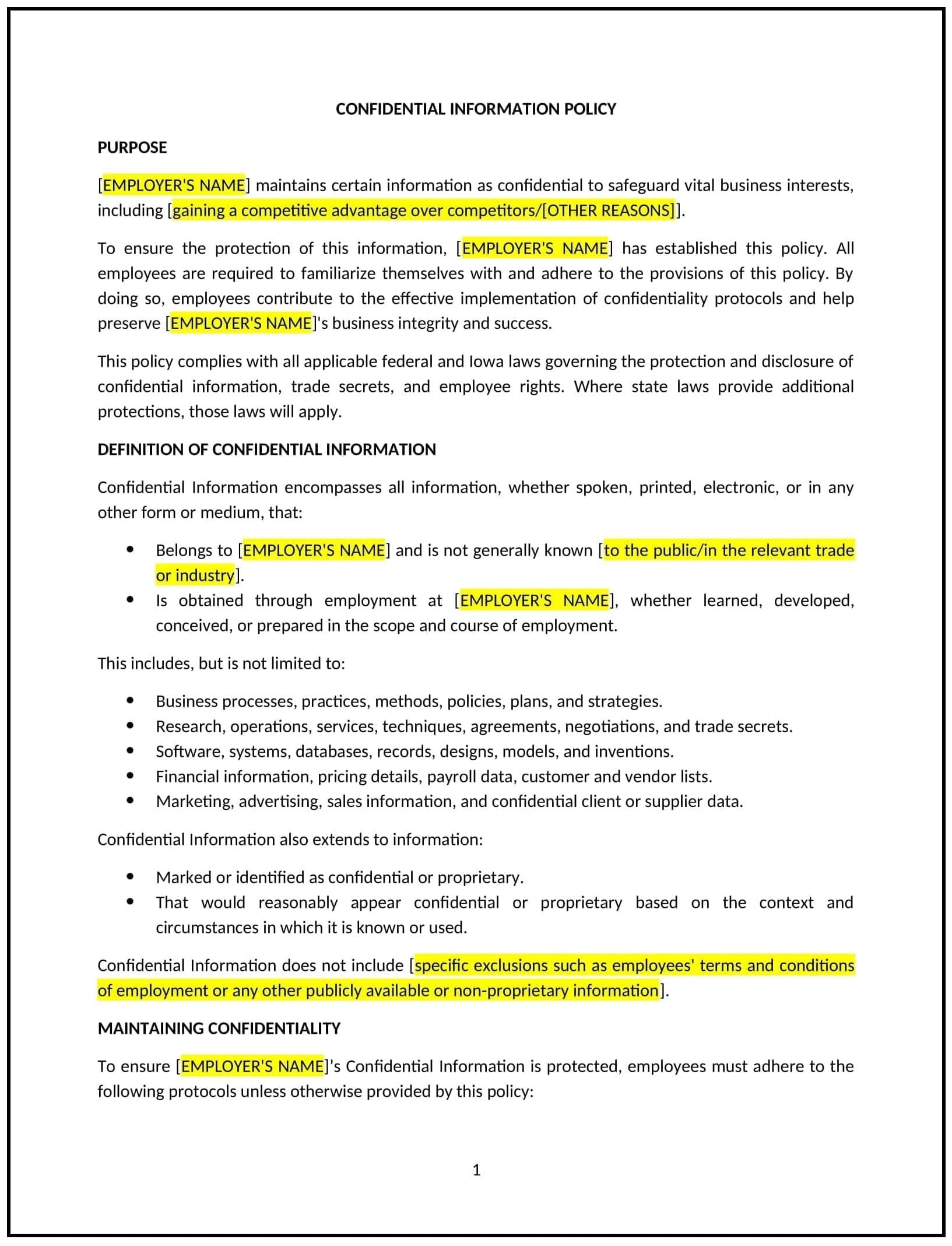
Confidential information policy (Iowa)
A confidential information policy helps Iowa businesses establish clear guidelines for handling sensitive business data, trade secrets, and proprietary information. Protecting confidential information is essential to maintaining a competitive advantage, safeguarding employee and customer data, and preventing unauthorized disclosures.
This policy outlines the types of confidential information, employee responsibilities, and best practices for securing business data. It helps businesses reduce the risk of information leaks while promoting responsible data management.
By implementing this policy, businesses in Iowa can protect valuable information, reduce security risks, and maintain trust with employees, customers, and partners.
How to use this confidential information policy (Iowa)
- Define confidential information: Identify what constitutes confidential data, including financial records, client details, trade secrets, and internal communications.
- Establish access controls: Limit access to confidential information based on employee roles and responsibilities.
- Require confidentiality agreements: Have employees and contractors sign nondisclosure agreements (NDAs) before handling sensitive information.
- Implement data protection measures: Use encryption, password protection, and secure storage for electronic and physical documents.
- Outline information-sharing guidelines: Specify when and how confidential information can be shared internally and externally.
- Address remote work security: Require employees to follow secure practices when accessing company data from remote locations.
- Set reporting procedures for breaches: Establish steps for reporting suspected leaks or unauthorized disclosures.
- Review and update: Regularly assess the policy to reflect changes in business operations and legal requirements.
Benefits of using this confidential information policy (Iowa)
This policy offers several advantages for Iowa businesses:
- Protects business assets: Safeguards trade secrets, client data, and proprietary information.
- Reduces security risks: Establishes clear protocols for handling confidential data.
- Strengthens customer and partner trust: Demonstrates a commitment to responsible information management.
- Supports legal risk management: Helps businesses prevent unauthorized disclosures and potential legal disputes.
- Encourages responsible data handling: Provides employees with clear expectations for managing sensitive information.
- Enhances operational security: Reduces the likelihood of internal and external data breaches.
Tips for using this confidential information policy (Iowa)
- Define confidential information categories: Businesses should specify different types of protected data, such as financial records, contracts, and employee details.
- Establish secure access protocols: Businesses should limit confidential data access to employees with a legitimate need.
- Require NDAs for sensitive roles: Businesses should have employees and contractors sign confidentiality agreements before accessing protected information.
- Provide employee training: Businesses should educate employees on best practices for handling and sharing confidential data.
- Monitor and audit data security: Businesses should conduct periodic reviews to ensure confidential information remains protected.
- Respond promptly to data breaches: Businesses should implement a clear process for investigating and mitigating unauthorized disclosures.