Confidential information policy (Kentucky): Free template
Got contracts to review? While you're here for policies, let Cobrief make contract review effortless—start your free review now.
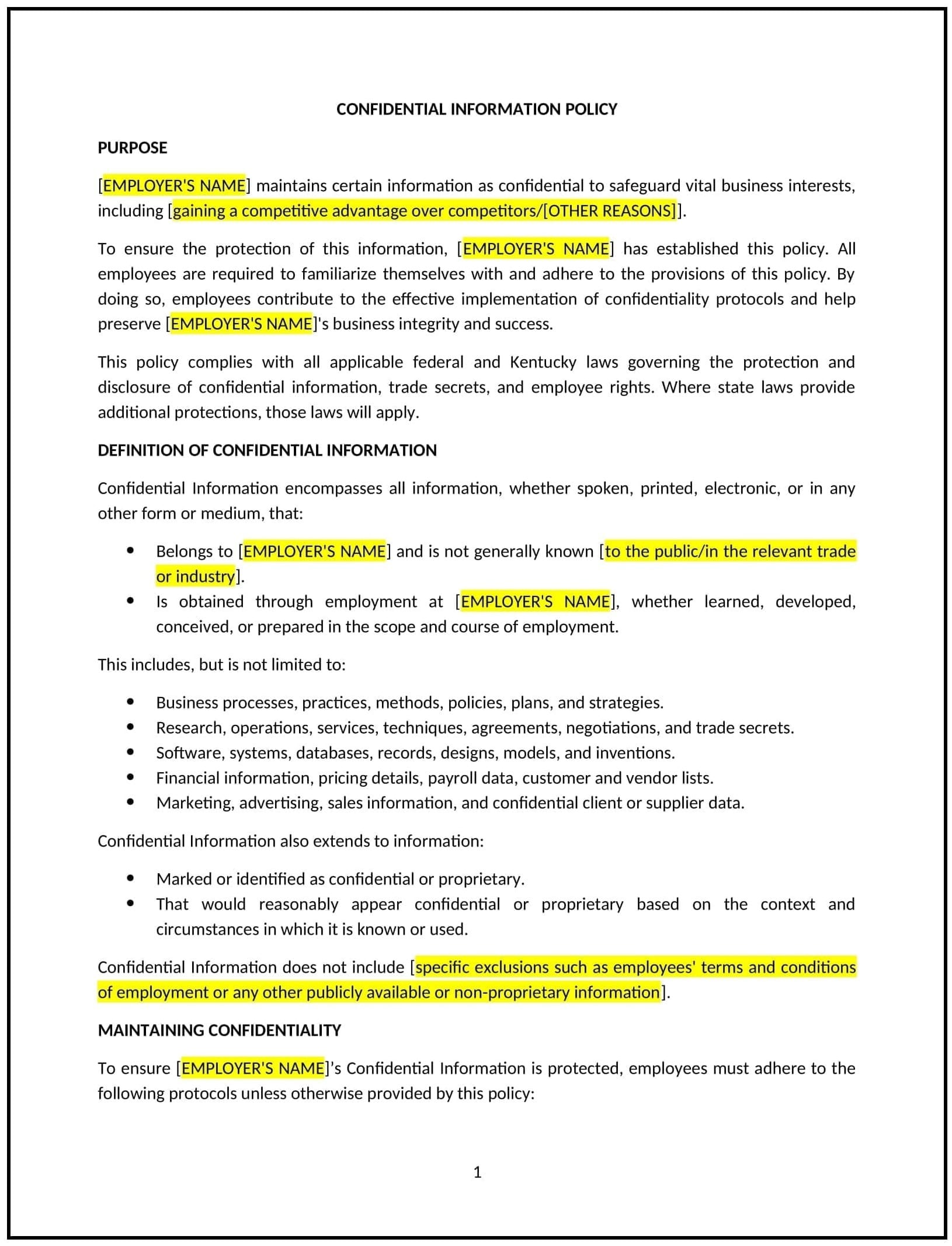
Customize this template for free
Confidential information policy (Kentucky)
A confidential information policy provides Kentucky businesses with guidelines to safeguard sensitive data and ensure it is accessed, shared, and stored responsibly. This policy outlines the types of information considered confidential, the responsibilities of employees, and measures to prevent unauthorized disclosure or misuse.
By adopting this policy, businesses can protect proprietary information, maintain trust with stakeholders, and reduce risks of data breaches or legal exposure.
How to use this confidential information policy (Kentucky)
- Define confidential information: Clearly outline what is considered confidential, such as trade secrets, customer data, financial records, and proprietary business processes.
- Explain employee responsibilities: Provide guidelines for accessing, using, and sharing confidential information, emphasizing the importance of maintaining privacy and security.
- Outline access controls: Specify who can access confidential information and under what circumstances, with measures such as password protection or restricted areas.
- Address third-party agreements: Require confidentiality agreements with vendors, contractors, or other third parties who have access to sensitive information.
- Include reporting procedures: Detail how employees should report suspected breaches or unauthorized disclosures, including designated points of contact.
- Establish consequences for violations: Clearly state the disciplinary actions for unauthorized access, use, or disclosure of confidential information.
- Promote training and awareness: Offer regular training to employees on best practices for handling confidential information and recognizing potential risks.
Benefits of using this confidential information policy (Kentucky)
This policy provides several benefits for Kentucky businesses:
- Protects sensitive data: Reduces the risk of unauthorized access, use, or disclosure of proprietary and personal information.
- Enhances trust: Builds confidence among clients, employees, and stakeholders by demonstrating a commitment to safeguarding their information.
- Reduces legal risks: Helps businesses comply with data privacy regulations and avoid penalties or litigation.
- Promotes accountability: Establishes clear expectations for employees’ roles in protecting confidential information.
- Strengthens security: Encourages proactive measures to prevent data breaches and other security threats.
Tips for using this confidential information policy (Kentucky)
- Communicate the policy effectively: Share the policy with employees during onboarding and provide regular updates to ensure compliance.
- Use confidentiality agreements: Require employees and third parties to sign agreements acknowledging their responsibilities under the policy.
- Monitor data security practices: Regularly review access controls and implement updates to address emerging risks.
- Encourage a culture of security: Promote awareness of the importance of confidentiality and best practices for data protection.
- Review periodically: Update the policy to reflect changes in Kentucky laws, industry standards, or organizational needs.