Confidential information policy (Maryland): Free template
Customize it in Cobrief and get sign-off from employees, contractors, or partners in one place.
Customize this template for free
TL;DR
A confidential information policy tailored for Maryland businesses to protect sensitive data such as trade secrets and employee records. It outlines guidelines for handling, storing, and sharing confidential information, ensuring compliance with local laws while promoting accountability and trust among employees and clients.
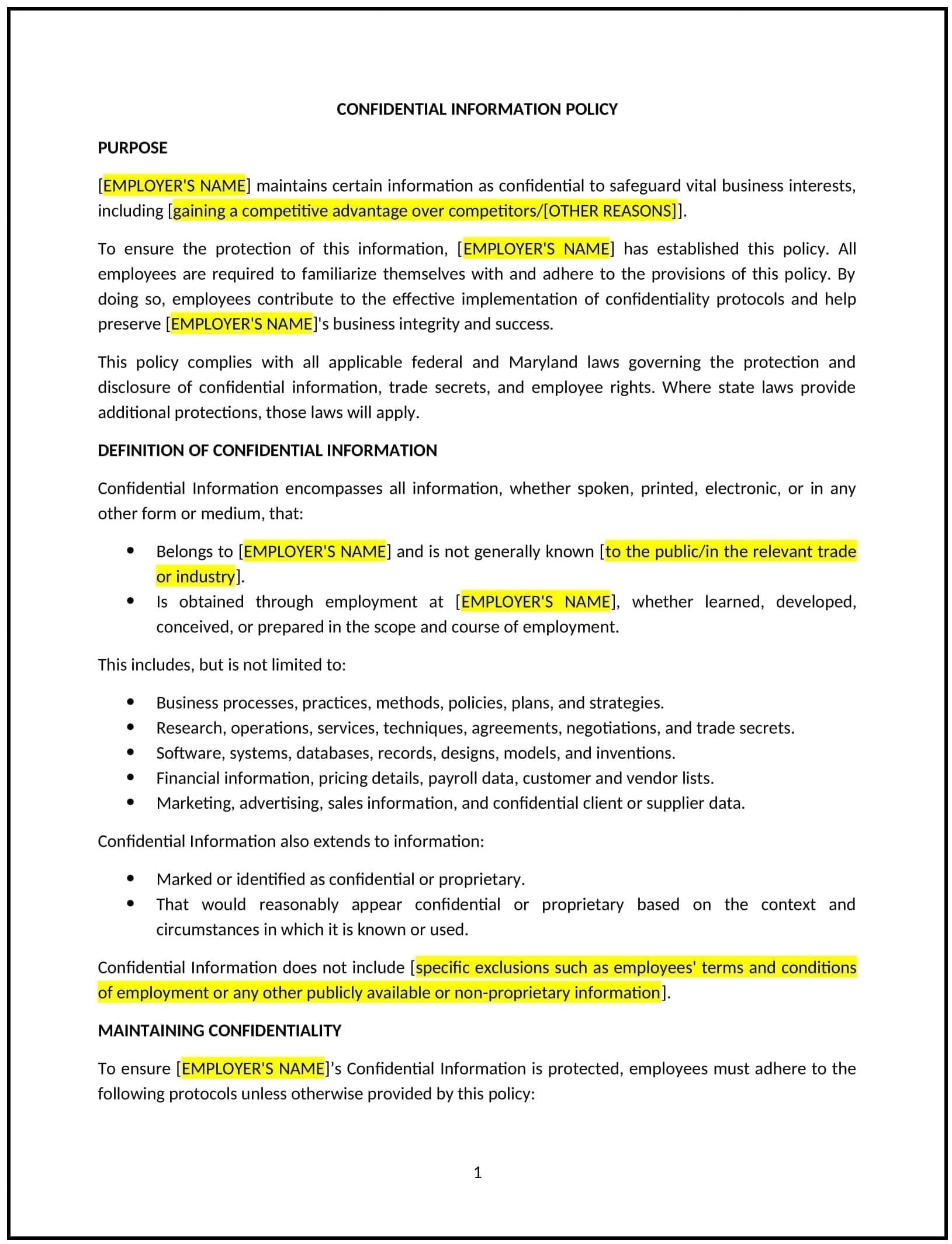
Confidential information policy (Maryland)
This confidential information policy is designed to help Maryland businesses protect sensitive data, including trade secrets, employee records, client information, and proprietary business practices. It establishes guidelines for handling, storing, and sharing confidential information to prevent unauthorized access or disclosure.
By adopting this policy, Maryland businesses can safeguard valuable information, promote accountability, and maintain trust with employees, clients, and partners.
How to use this confidential information policy (Maryland)
- Define confidential information: Clearly specify what qualifies as confidential, such as financial data, client lists, intellectual property, or internal communications.
- Set handling guidelines: Provide instructions for properly storing, accessing, and sharing confidential information, including the use of passwords or encryption.
- Outline employee responsibilities: Detail the expectations for employees in safeguarding sensitive information, such as not sharing it with unauthorized parties.
- Include non-disclosure agreements (NDAs): Require employees and contractors to sign NDAs as a condition of access to confidential information.
- Prohibit unauthorized use: State that confidential information cannot be used for personal gain or shared outside the organization without approval.
- Establish reporting procedures: Specify how employees should report potential breaches or unauthorized disclosures.
- Address Maryland-specific considerations: Incorporate relevant Maryland laws governing data privacy and protection to ensure the policy aligns with local requirements.
Benefits of using this confidential information policy (Maryland)
Implementing this policy provides Maryland businesses with several advantages:
- Protects valuable assets: Safeguards sensitive business data and intellectual property.
- Enhances trust: Reassures clients, partners, and employees that their information is handled responsibly.
- Reduces risk: Minimizes the likelihood of data breaches or unauthorized disclosures.
- Promotes accountability: Encourages employees to take responsibility for handling confidential information securely.
- Supports legal compliance: Aligns with Maryland-specific data protection laws and industry standards.
Tips for using this confidential information policy (Maryland)
- Train employees: Provide regular training on identifying and protecting confidential information.
- Use secure systems: Implement technology solutions like encryption and access controls to safeguard sensitive data.
- Monitor compliance: Regularly audit how confidential information is handled and address any gaps.
- Review NDAs: Ensure non-disclosure agreements are updated and signed by employees, contractors, and vendors.
- Stay informed: Keep up with Maryland data protection laws and adjust the policy to reflect any updates.
Frequently asked questions (FAQs)
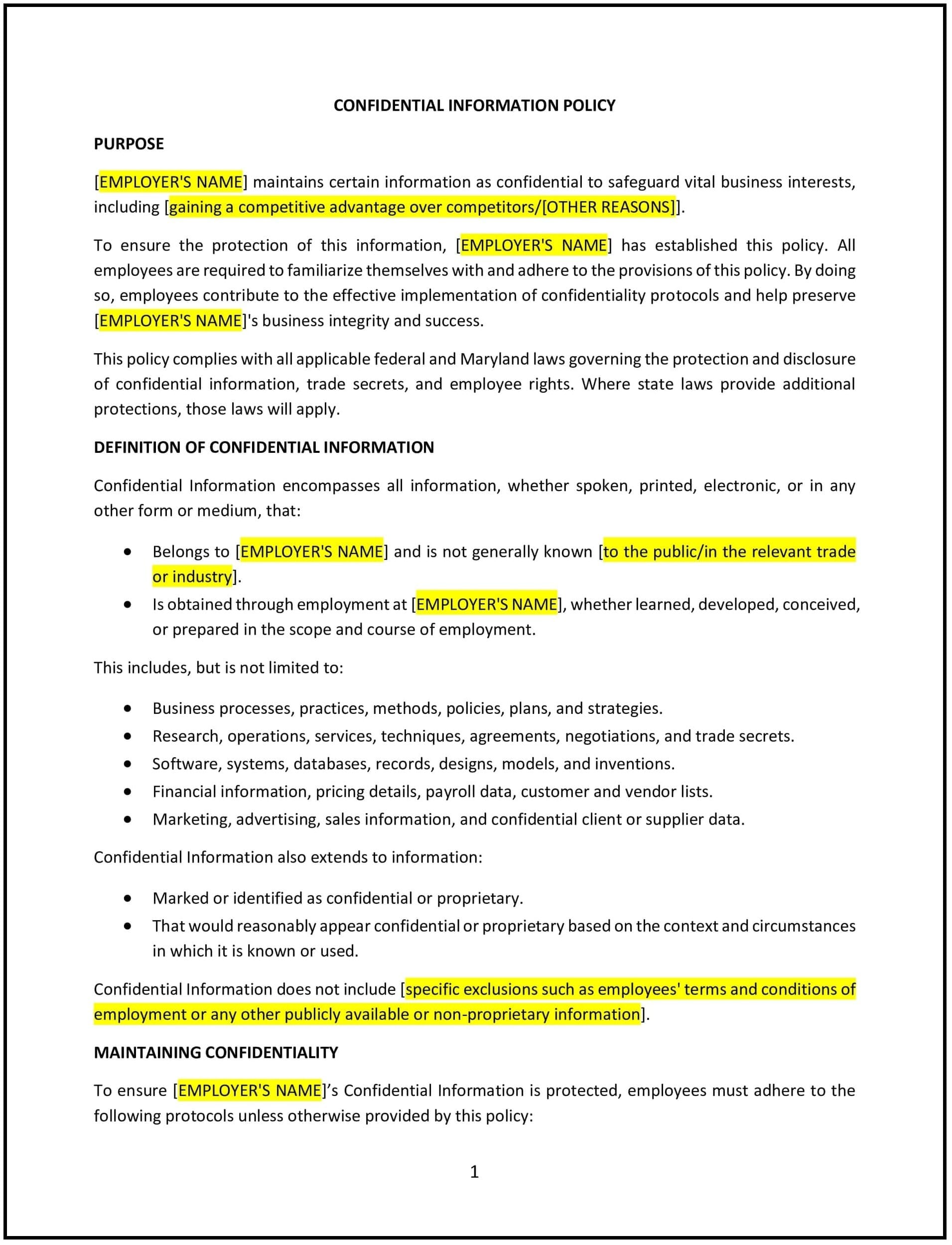
Protects sensitive company and employee data from unauthorized access, use, or disclosure.
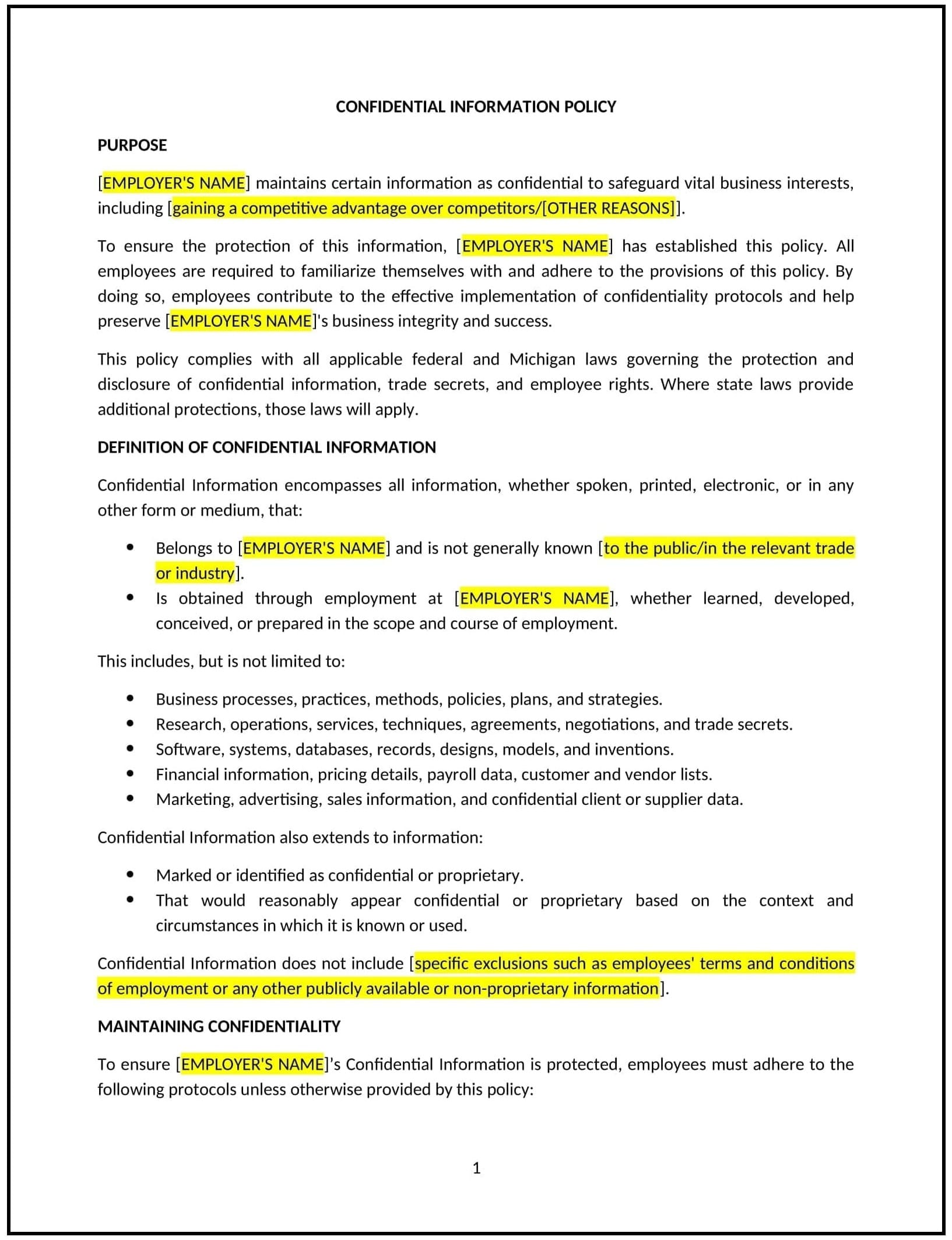
Protects sensitive business, employee, and client information from unauthorized disclosure or misuse.
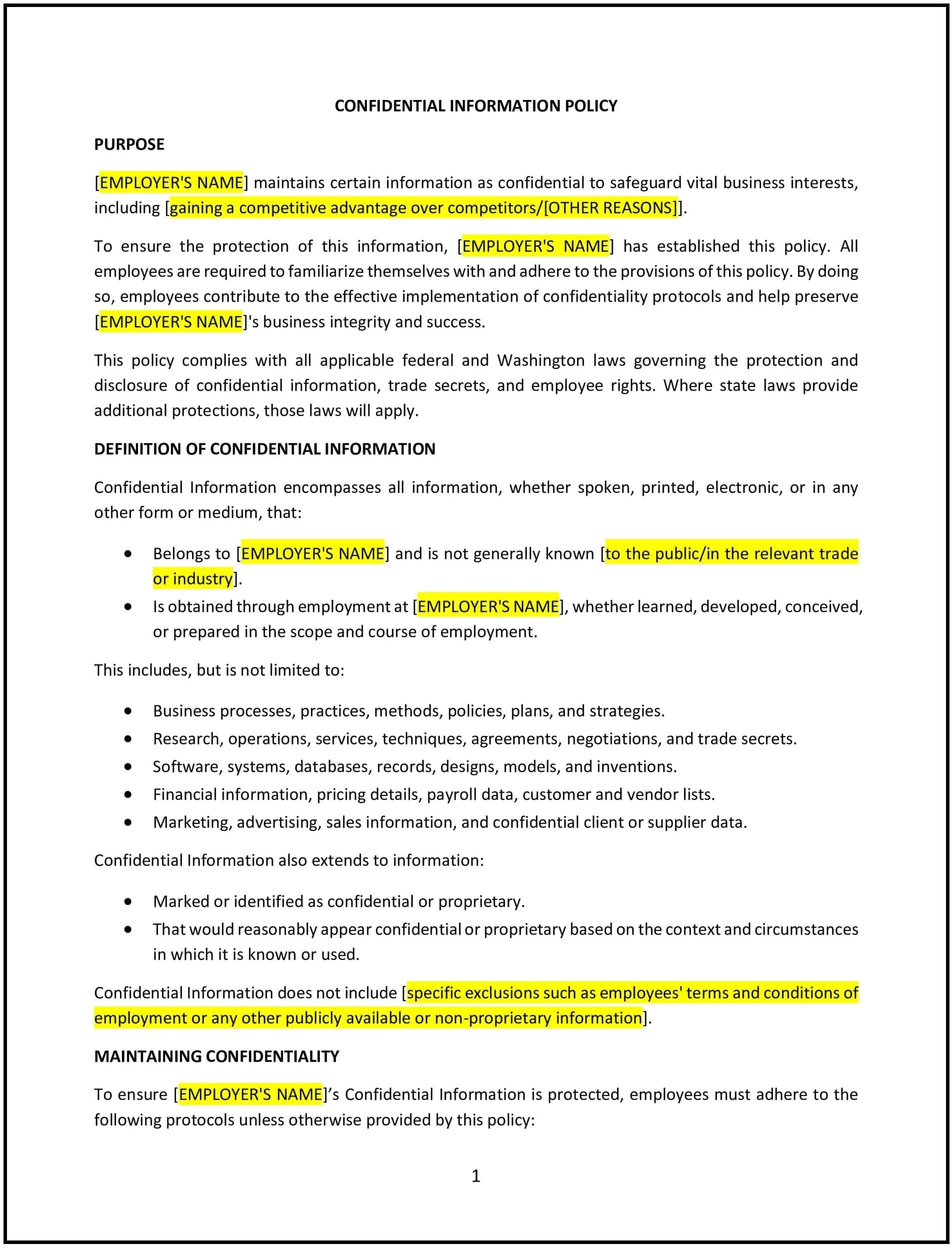
Defines how sensitive information should be handled, shared, and protected within the organization.
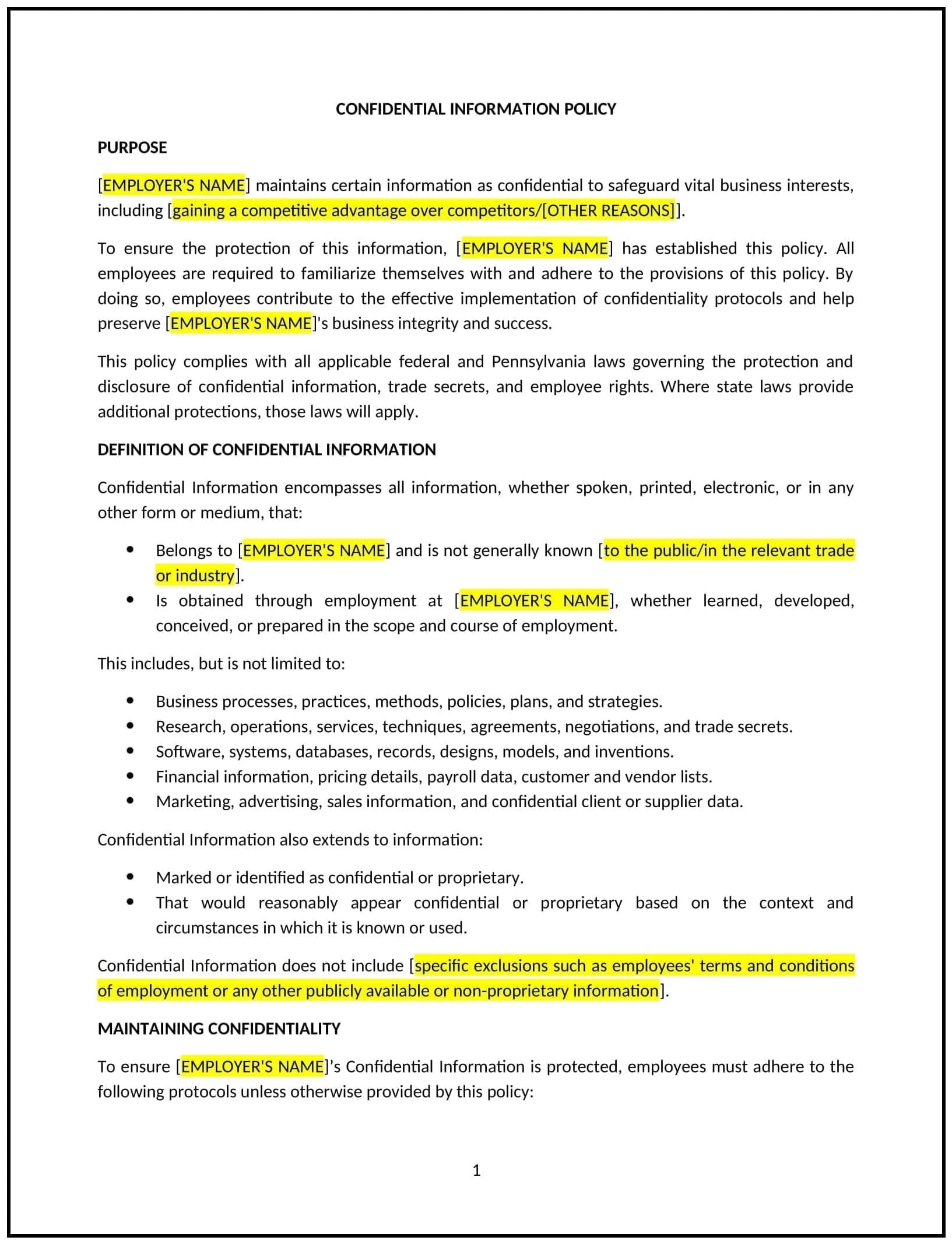
Safeguards sensitive business and employee information through clear handling and disclosure rules.
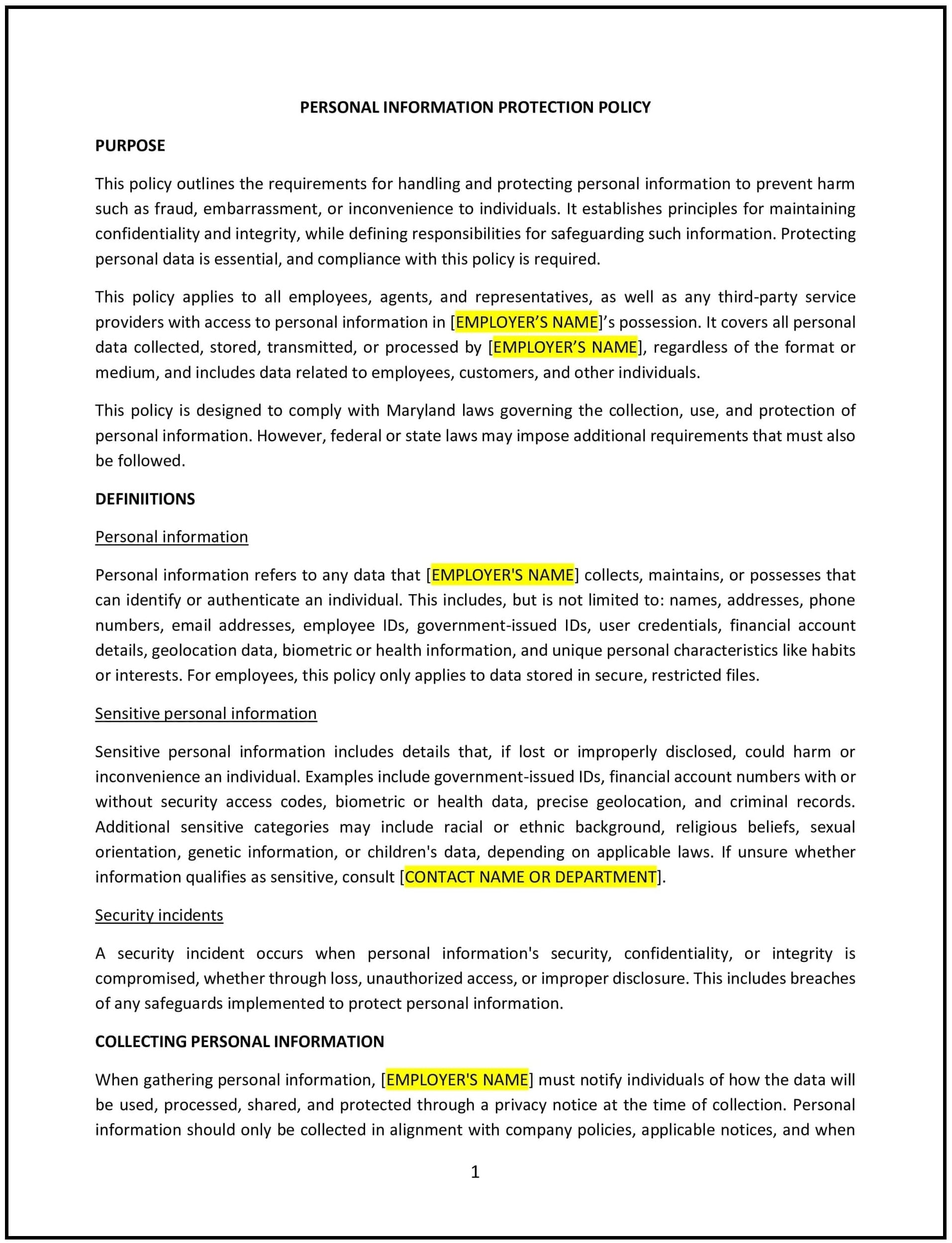
Safeguards employee and customer data, ensuring privacy and compliance with applicable data protection laws.