Confidential information policy (Minnesota): Free template
Got contracts to review? While you're here for policies, let Cobrief make contract review effortless—start your free review now.
Customize this template for free
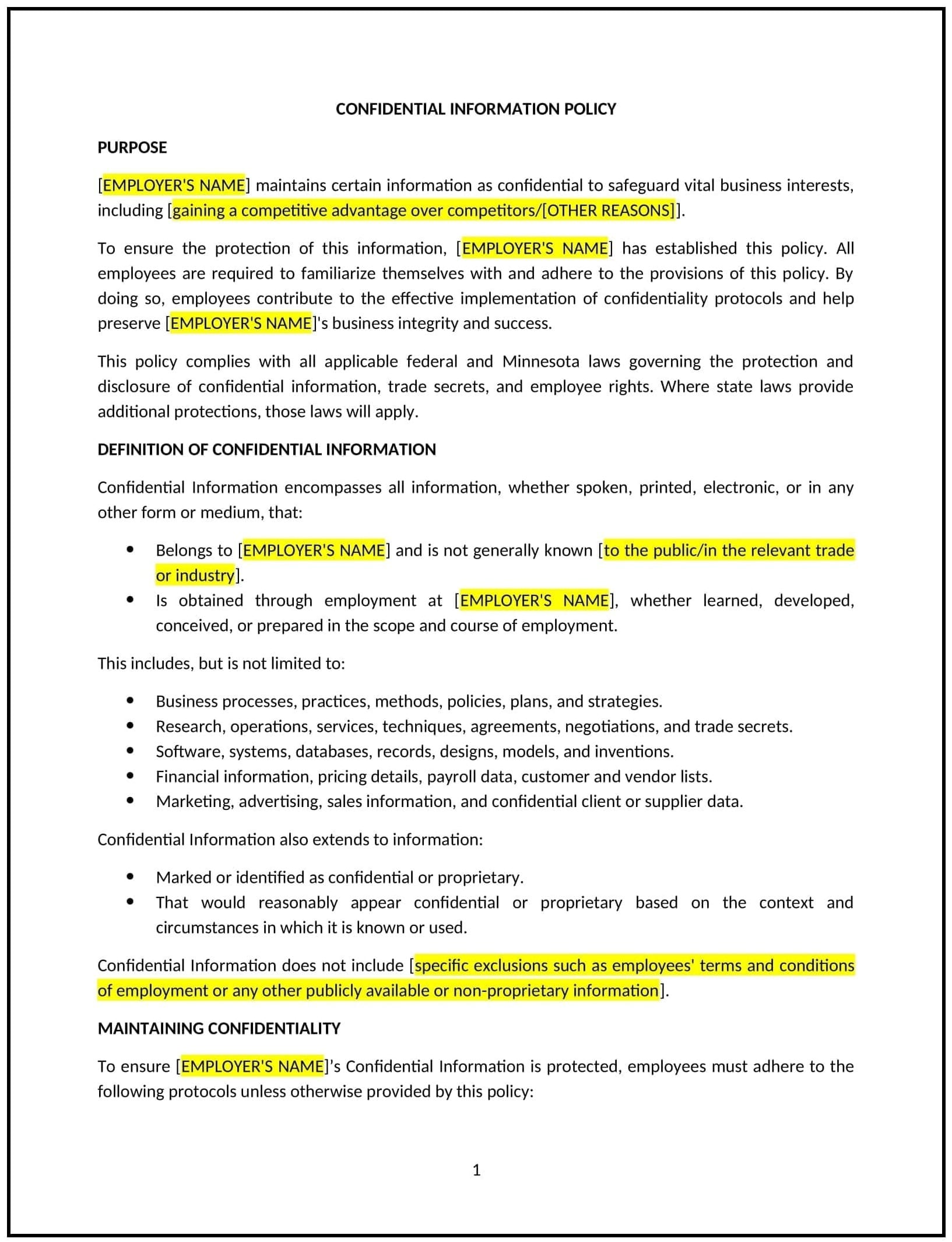
Confidential information policy (Minnesota)
This confidential information policy is designed to help Minnesota businesses safeguard sensitive data, including proprietary information, trade secrets, client details, and employee records. It outlines the procedures for handling, storing, and sharing confidential information within the organization, as well as the steps for protecting this information from unauthorized access or disclosure.
By implementing this policy, businesses can protect their intellectual property, maintain trust with clients and employees, and mitigate the risks associated with data breaches.
How to use this confidential information policy (Minnesota)
- Define confidential information: Clearly define what constitutes confidential information, including customer data, financial records, trade secrets, employee records, and any other sensitive business information.
- Specify employee responsibilities: Outline the obligations of employees regarding handling, protecting, and sharing confidential information, including guidelines for maintaining confidentiality both during and after employment.
- Set data protection protocols: Provide clear instructions on how confidential information should be stored, transmitted, and disposed of to prevent unauthorized access.
- Address third-party access: Detail the procedures for sharing confidential information with third parties, including the use of non-disclosure agreements (NDAs) and ensuring third parties follow the same confidentiality standards.
- Define breach procedures: Specify the steps employees should take if they suspect a breach of confidentiality, and outline the company’s response to potential breaches, including investigation and corrective actions.
- Provide training: Ensure employees are regularly trained on the importance of confidentiality and the proper handling of sensitive information.
Benefits of using a confidential information policy (Minnesota)
Implementing this policy provides several advantages for Minnesota businesses:
- Protects company assets: Safeguards sensitive information that is critical to the company's competitive edge, intellectual property, and operations.
- Maintains trust: Demonstrates the company’s commitment to protecting clients' and employees’ confidential data, which is essential for maintaining strong business relationships.
- Reduces risk: Helps prevent data breaches, leaks, or unauthorized disclosures that could result in financial losses, legal penalties, or reputational damage.
- Enhances employee accountability: Clearly defines the expectations around confidentiality, ensuring employees understand their role in protecting sensitive information.
- Reflects Minnesota-specific considerations: Tailors the policy to align with state-specific regulations, business practices, and industry standards in Minnesota.
Tips for using this confidential information policy (Minnesota)
- Communicate clearly: Ensure that all employees are fully aware of the company’s expectations regarding confidentiality and their responsibility to protect sensitive information.
- Monitor compliance: Regularly review and audit systems for storing, sharing, and accessing confidential information to ensure compliance with the policy.
- Use technology: Implement secure systems, encryption, and access controls to protect sensitive data both in physical and digital formats.
- Set clear consequences: Clearly outline the consequences of breaching confidentiality, including disciplinary action or termination, to reinforce the importance of compliance.
- Update regularly: Reassess and update the policy periodically to reflect changes in data protection laws, business operations, or industry standards.