Confidential information policy (Missouri): Free template
Got contracts to review? While you're here for policies, let Cobrief make contract review effortless—start your free review now.
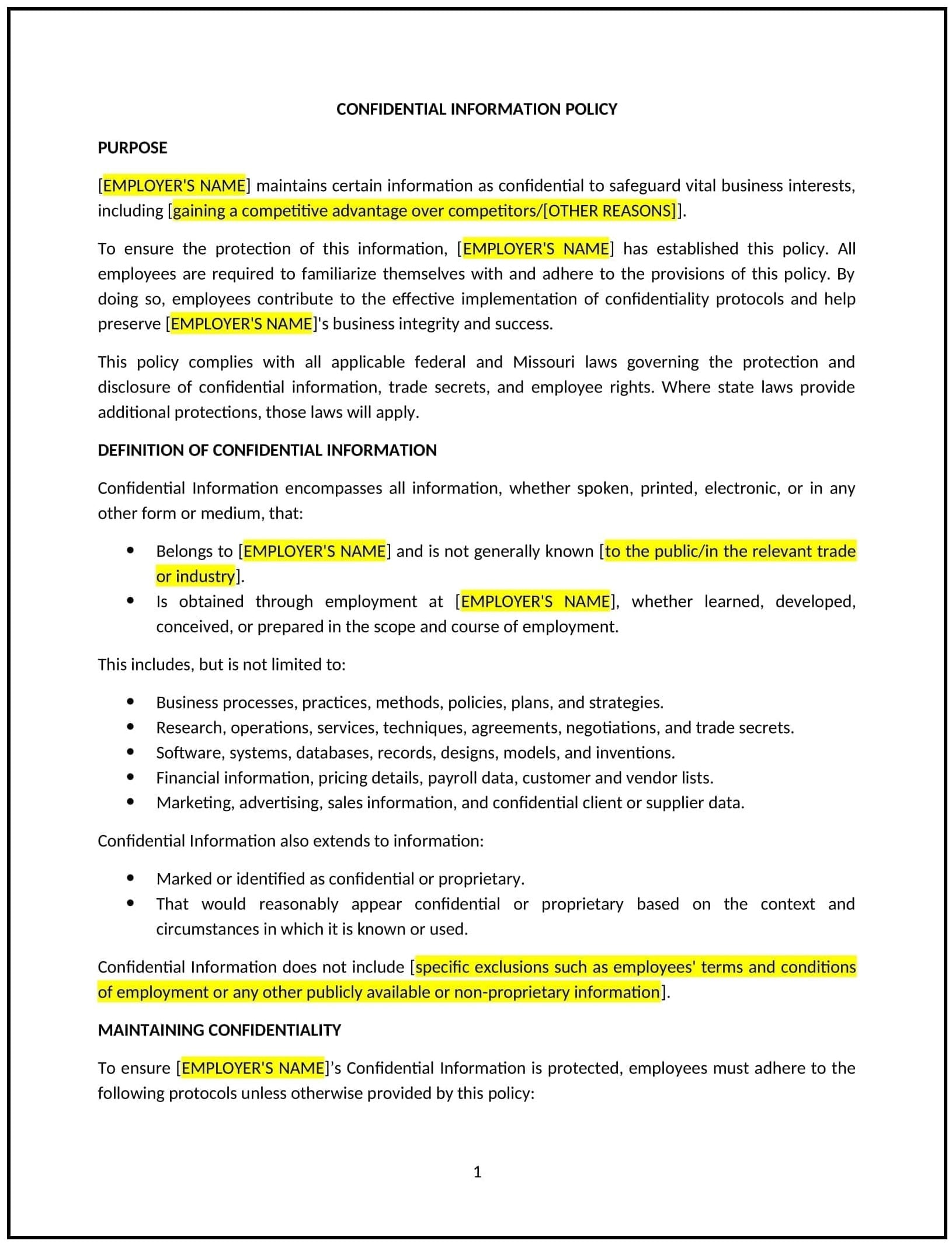
Customize this template for free
Confidential information policy (Missouri)
A confidential information policy helps businesses in Missouri protect sensitive company data and proprietary information. This policy outlines the guidelines for handling, storing, and sharing confidential information within the company and with third parties. It is designed to prevent unauthorized access, protect intellectual property, and ensure that employees understand their responsibilities in maintaining confidentiality.
By adopting this policy, businesses in Missouri can safeguard their intellectual property, build trust with clients and stakeholders, and reduce the risk of data breaches.
How to use this confidential information policy (Missouri)
- Define confidential information: Clearly define what constitutes confidential information, including trade secrets, business plans, financial data, client information, and employee records.
- Set access controls: Specify who within the company is authorized to access confidential information and under what circumstances, ensuring that only those with a legitimate need have access.
- Outline data protection practices: Establish guidelines for how confidential information should be stored, transmitted, and disposed of, including encryption, secure storage, and document shredding.
- Address third-party disclosures: Set rules for sharing confidential information with third parties, including non-disclosure agreements (NDAs) and other protective measures to prevent unauthorized access.
- Clarify employee responsibilities: Outline employees’ roles in maintaining confidentiality, including the duty to report any suspected breaches or potential risks to company data security.
- Implement training: Provide regular training on handling confidential information to ensure employees are aware of the policy, how to protect sensitive data, and the consequences of breaches.
- Address consequences of breaches: Specify the disciplinary actions for employees who violate the confidentiality policy, including potential termination, legal action, and financial penalties.
- Review regularly: Periodically review the policy to ensure it remains relevant and effective, especially in light of changes in Missouri law, business practices, or technological advancements.
Benefits of using this confidential information policy (Missouri)
This policy provides several benefits for businesses in Missouri:
- Protects sensitive data: Establishing clear guidelines helps protect confidential information from unauthorized access, reducing the risk of data breaches.
- Strengthens business relationships: By safeguarding client and business information, companies can build trust with customers, partners, and investors.
- Reduces legal risks: A well-defined confidentiality policy helps businesses meet legal requirements and avoid liability for improper disclosure or mishandling of confidential information.
- Enhances employee accountability: Clear responsibilities for employees help ensure that everyone understands their role in protecting company data, fostering a culture of security and responsibility.
- Prevents financial losses: By protecting intellectual property and confidential business strategies, businesses can prevent financial harm from competitors or data theft.
- Aligns with Missouri business practices: This policy reflects Missouri’s emphasis on protecting proprietary information and ensuring the ethical handling of business data.
Tips for using this confidential information policy (Missouri)
- Communicate the policy clearly: Ensure all employees are aware of the policy and understand the importance of protecting confidential information from day one, through onboarding and training.
- Set clear boundaries: Clearly define what is considered confidential information and ensure employees understand the potential consequences of mishandling it.
- Provide training: Regularly offer training on the handling, storage, and sharing of confidential information to help employees stay informed and compliant.
- Monitor and enforce: Regularly monitor access to confidential data and address any potential security risks promptly, enforcing the policy fairly across the organization.
- Require NDAs: When sharing sensitive information with third parties, ensure non-disclosure agreements are in place to protect both the company and its partners.
- Review the policy periodically: Regularly review and update the policy to keep it aligned with changes in business practices, Missouri laws, or data protection standards.