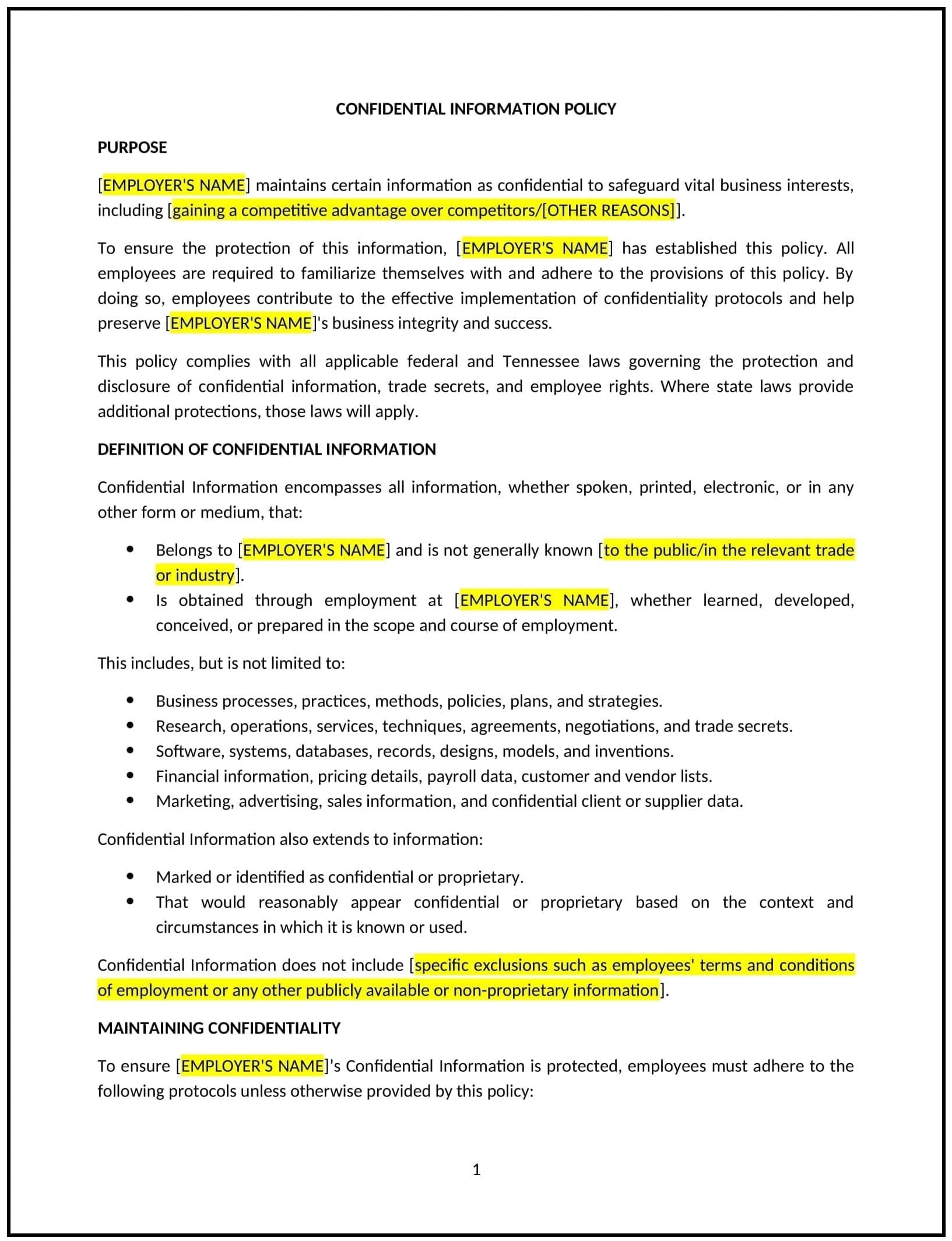
Confidential information policy (Tennessee): Free template
Defines how sensitive business and employee information must be handled, stored, and protected.
- Policies
- Tennessee
Confidential information policy (Tennessee)
This confidential information policy is designed to help Tennessee businesses create guidelines for protecting sensitive information, such as trade secrets, customer data, and employee records. It outlines procedures for handling, storing, and sharing confidential information.
By adopting this policy, businesses can safeguard sensitive data, reduce the risk of breaches, and maintain trust with stakeholders.
How to use this confidential information policy (Tennessee)
- Define confidential information: Clarify what constitutes confidential information, such as financial data, customer lists, or proprietary processes.
- Set handling procedures: Provide guidelines for accessing, storing, and sharing confidential information, including password protection and encryption.
- Address employee responsibilities: Explain employees’ obligations to protect confidential information and report potential breaches.
- Establish consequences: Specify the consequences for violating the policy, such as warnings, suspension, or termination.
- Train employees: Educate employees on handling confidential information and recognizing potential security risks.
- Review and update: Assess the policy annually to ensure it aligns with evolving business needs and legal requirements.
Benefits of using this confidential information policy (Tennessee)
This policy offers several advantages for Tennessee businesses:
- Safeguards sensitive data: Reduces the risk of breaches or unauthorized access to confidential information.
- Maintains trust: Builds confidence with customers, partners, and stakeholders by protecting their information.
- Reduces legal risks: Helps businesses comply with data protection laws and avoid legal disputes.
- Enhances accountability: Encourages employees to take responsibility for protecting confidential information.
- Aligns with best practices: Provides a structured approach to managing sensitive data.
Tips for using this confidential information policy (Tennessee)
- Communicate the policy: Share the policy with employees and include it in the employee handbook.
- Provide training: Educate employees on handling confidential information and recognizing potential security risks.
- Monitor compliance: Regularly review data handling practices to ensure adherence to the policy.
- Address issues promptly: Take corrective action if confidential information is mishandled or breached.
- Update regularly: Assess the policy annually to ensure it aligns with evolving business needs and legal requirements.
Frequently asked questions (FAQs)
Similar templates
Where deals go from offer to paid
