Got contracts to review? While you're here for policies, let Cobrief make contract review effortless—start your free review now.
Customize this template for free
Consumer complaints policy (Hawaiʻi)
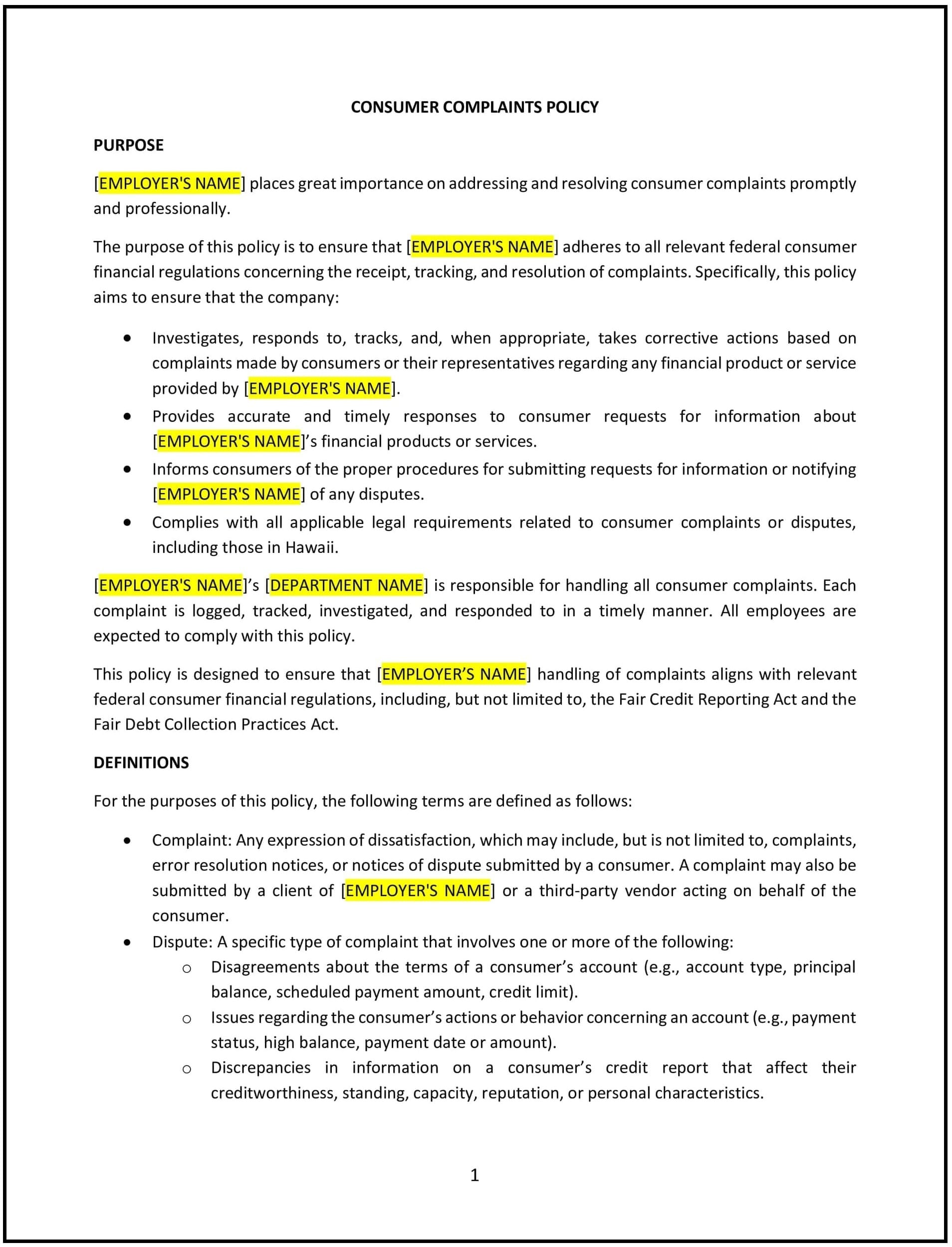
A consumer complaints policy helps Hawaiʻi businesses establish a structured process for addressing and resolving customer concerns effectively. This policy outlines procedures for receiving, documenting, and resolving complaints, while addressing Hawaiʻi-specific legal and cultural considerations. It is designed to improve customer satisfaction, build trust, and maintain a positive reputation in the community.
By implementing this policy, businesses in Hawaiʻi can demonstrate their commitment to customer service, reduce the risk of disputes, and foster long-term relationships with clients.
How to use this consumer complaints policy (Hawaiʻi)
- Define the scope: Specify the types of complaints covered by the policy, such as product quality, service issues, billing disputes, or delivery problems.
- Establish a complaint intake process: Provide clear instructions for customers to submit complaints, including multiple channels such as phone, email, or in-person submissions.
- Document complaints: Require staff to record all complaints in a centralized system, including details such as the customer’s name, contact information, and nature of the issue.
- Set response timelines: Outline expected timeframes for acknowledging and resolving complaints, such as responding within 24 hours and resolving issues within 5 business days.
- Train employees: Educate staff on how to handle complaints professionally, empathetically, and in alignment with the business’s values.
- Escalate complex issues: Provide a process for escalating complaints that cannot be resolved at the initial point of contact, including involvement of senior management or specialized teams.
- Follow up with customers: After resolving a complaint, contact the customer to ensure their satisfaction and document the outcome.
- Analyze trends: Regularly review complaint data to identify recurring issues and implement improvements to prevent future problems.
- Communicate the policy: Share the policy with customers through websites, receipts, or signage to demonstrate transparency and accessibility.
- Review and update the policy: Regularly assess the policy’s effectiveness and make adjustments as needed to reflect changes in customer expectations, business operations, or legal requirements.
Benefits of using this consumer complaints policy (Hawaiʻi)
This policy offers several advantages for Hawaiʻi businesses:
- Improves customer satisfaction: A structured process for resolving complaints helps address customer concerns quickly and effectively.
- Builds trust: Demonstrating a commitment to resolving issues fosters trust and loyalty among customers.
- Reduces disputes: Clear procedures and timely responses can prevent minor complaints from escalating into major disputes.
- Enhances reputation: A positive approach to handling complaints can improve the business’s reputation in the community.
- Identifies areas for improvement: Analyzing complaint data helps businesses identify and address recurring issues, improving products or services.
- Aligns with legal requirements: The policy helps businesses comply with Hawaiʻi consumer protection laws and federal regulations.
- Promotes accountability: Employees understand their responsibilities for handling complaints, ensuring consistency and professionalism.
Tips for using this consumer complaints policy (Hawaiʻi)
- Communicate the policy effectively: Share the policy with customers through websites, receipts, or signage to demonstrate transparency and accessibility.
- Train employees: Educate staff on how to handle complaints professionally, empathetically, and in alignment with the business’s values.
- Be responsive: Acknowledge complaints promptly and provide regular updates to customers until the issue is resolved.
- Document everything: Maintain detailed records of complaints, including the steps taken to resolve them, to ensure accountability and track trends.
- Follow up: Contact customers after resolving their complaints to ensure their satisfaction and build goodwill.
- Analyze data: Regularly review complaint data to identify patterns and implement improvements to prevent future issues.
- Review the policy periodically: Update the policy as needed to reflect changes in customer expectations, business operations, or legal requirements.