Consumer complaints policy (Indiana): Free template
Got contracts to review? While you're here for policies, let Cobrief make contract review effortless—start your free review now.
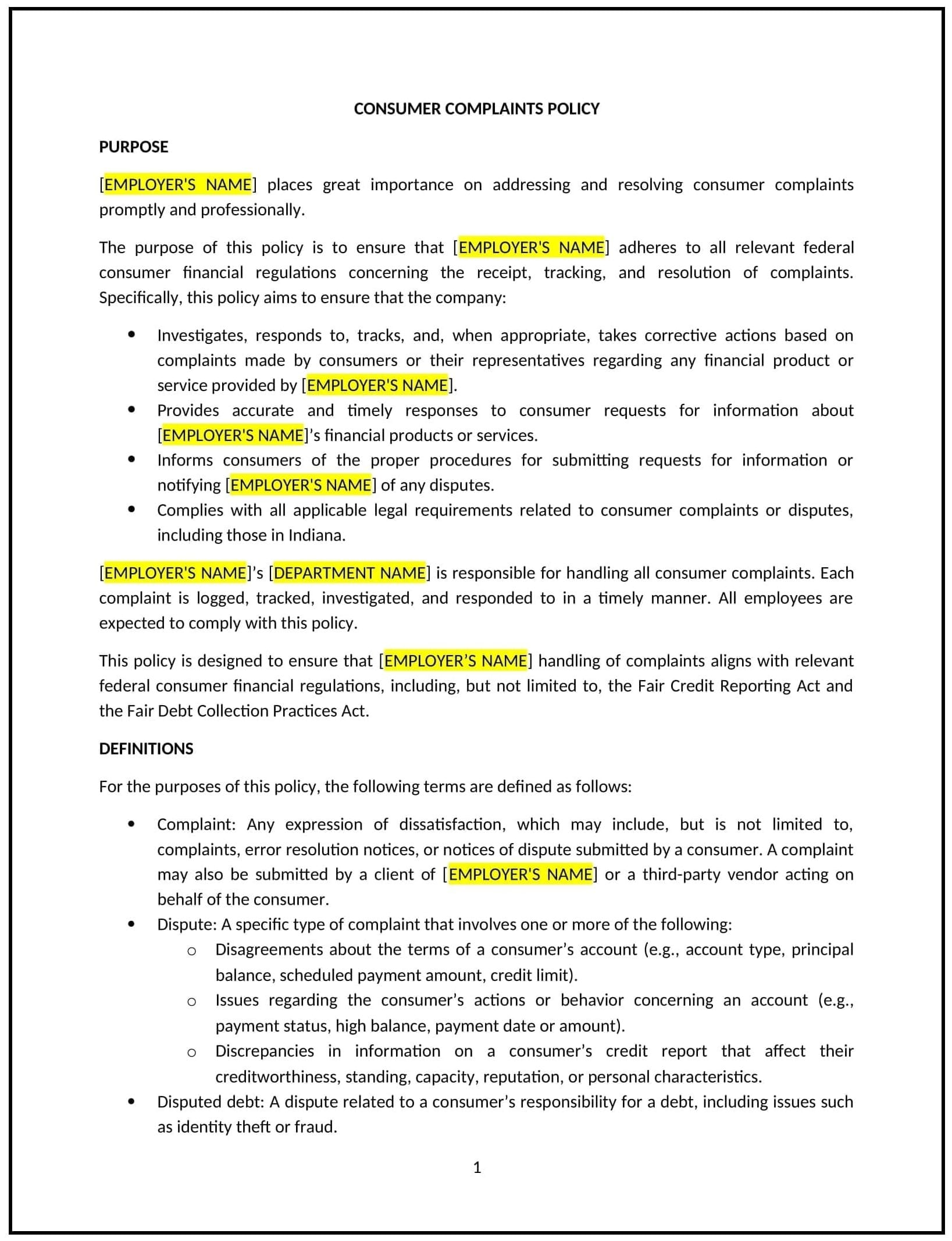
Customize this template for free
Consumer complaints policy (Indiana): Free template
The consumer complaints policy helps Indiana businesses address and resolve complaints from customers or consumers in a timely, fair, and consistent manner. This policy outlines the process for consumers to submit complaints, the steps businesses will take to investigate and resolve the complaints, and the measures in place to ensure consumer satisfaction. By using this template, businesses can enhance customer service, strengthen consumer trust, and reduce the risk of legal disputes.
By implementing this policy, Indiana businesses can demonstrate a commitment to consumer satisfaction, transparency, and ethical business practices while mitigating reputational risks and improving overall customer experience.
How to use this consumer complaints policy (Indiana)
- Define the scope of complaints: Clearly outline the types of complaints that the business will address, such as issues with product quality, service delivery, billing errors, or misleading advertising. The policy should specify any exclusions (e.g., complaints related to third-party products or services).
- Establish a submission process: Provide clear instructions on how consumers can submit complaints. This may include contact information (e.g., phone number, email, online form) and any required details (e.g., nature of the complaint, supporting documentation). The policy should specify whether complaints can be submitted anonymously.
- Set response timelines: Define the maximum time frame within which the business will acknowledge receipt of a complaint and resolve it. The policy should aim for quick resolution and set expectations for consumers regarding response and resolution times.
- Address investigation procedures: Outline the steps the business will take to investigate complaints. This includes gathering relevant information, interviewing involved parties (e.g., staff, customers), and assessing the complaint’s validity. The policy should ensure impartiality and thoroughness in the investigation process.
- Define resolution options: Specify the potential outcomes or actions that the business can take to resolve complaints, such as offering a refund, replacement, discount, or other corrective measures. The policy should aim to resolve complaints in a way that is satisfactory to the consumer while maintaining fairness to the business.
- Protect consumer privacy: Ensure that consumer information is protected throughout the complaint process. The policy should specify how consumer data will be handled, stored, and used, including compliance with relevant data protection regulations.
- Outline escalation procedures: If a complaint cannot be resolved at the initial level, outline the process for escalating the issue to higher management or third-party mediators. This ensures that unresolved issues are handled appropriately.
- Comply with legal and regulatory requirements: Ensure the policy complies with any relevant Indiana state laws and federal regulations regarding consumer protection and complaint handling. The policy should align with industry standards and consumer rights laws.
Benefits of using this consumer complaints policy (Indiana)
Implementing this policy provides several key benefits for Indiana businesses:
- Enhances customer satisfaction: A clear and effective consumer complaints policy helps businesses address consumer issues quickly, increasing customer satisfaction and fostering loyalty.
- Reduces legal risks: By addressing complaints promptly and fairly, businesses can reduce the likelihood of disputes escalating into legal issues, such as lawsuits or regulatory penalties.
- Improves reputation: A transparent and responsive approach to consumer complaints demonstrates that the business values customer feedback and is committed to resolving issues, which improves the business’s reputation.
- Strengthens consumer trust: A well-managed complaints process builds trust with consumers, showing that the business is accountable, transparent, and willing to take action when necessary.
- Drives continuous improvement: Analyzing consumer complaints and feedback provides valuable insights into areas for improvement in products, services, or business operations, helping businesses enhance their offerings and prevent recurring issues.
- Complies with consumer protection laws: The policy ensures that the business meets legal and regulatory requirements related to consumer complaints, avoiding fines or penalties for non-compliance.
Tips for using this consumer complaints policy (Indiana)
- Communicate the policy clearly: Ensure that all consumers are aware of the complaints process by displaying the policy on your website, in-store, or in relevant customer-facing communications. Include clear instructions on how to submit complaints.
- Train staff on complaint handling: All employees, particularly customer service representatives, should be trained to handle complaints effectively and empathetically. Staff should understand the importance of resolving issues promptly and following the policy guidelines.
- Acknowledge complaints quickly: Promptly acknowledge receipt of consumer complaints, even if the resolution process takes longer. This helps reassure the consumer that their issue is being addressed.
- Monitor complaint trends: Regularly track and analyze consumer complaints to identify patterns, recurring issues, or areas for improvement. Use this information to make informed decisions about business improvements.
- Review and update the policy regularly: Periodically review the consumer complaints policy to ensure it remains aligned with changes in business practices, customer expectations, and legal requirements.