Got contracts to review? While you're here for policies, let Cobrief make contract review effortless—start your free review now.
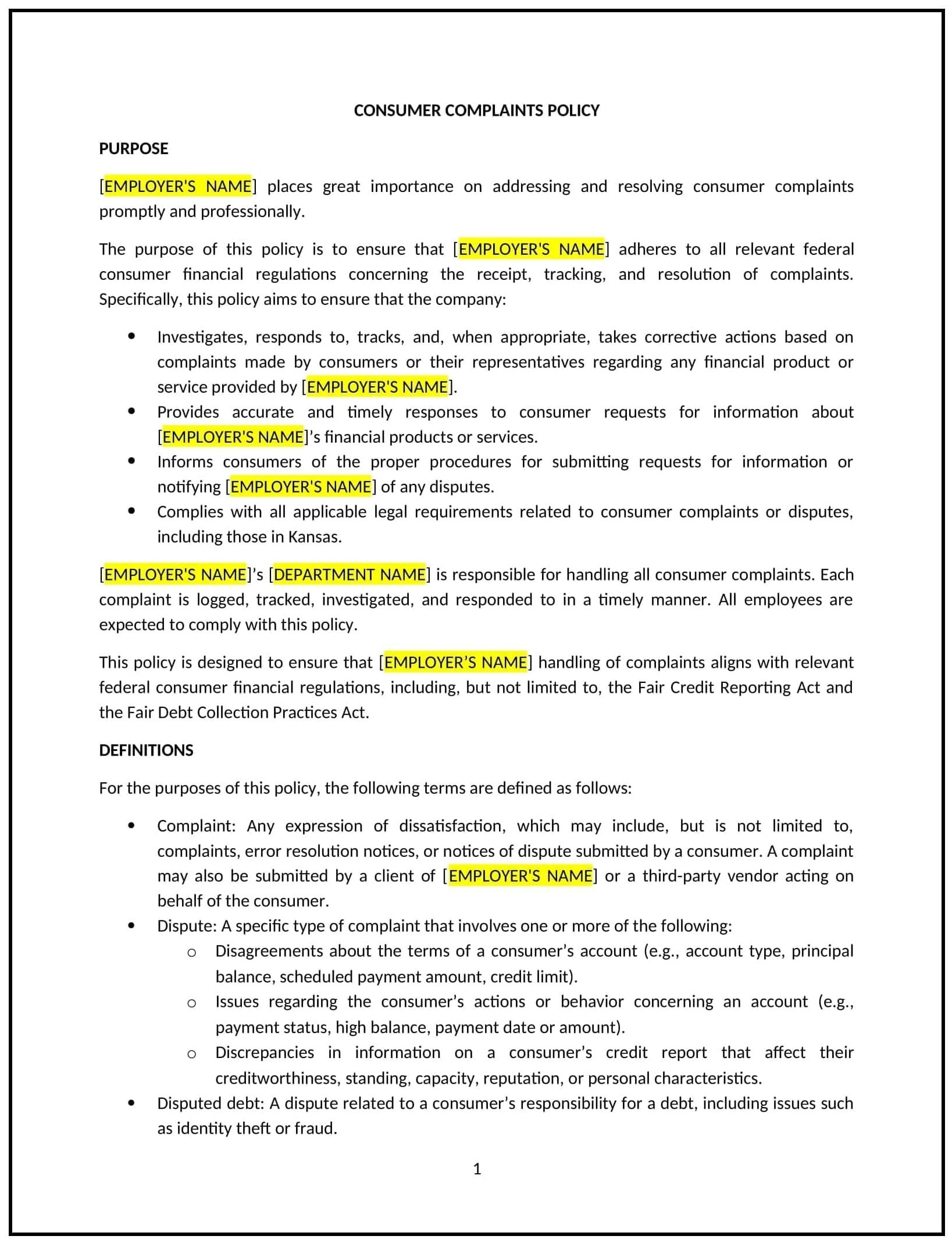
Customize this template for free
Consumer complaints policy (Kansas)
A consumer complaints policy helps Kansas businesses establish a clear process for handling customer concerns, resolving issues efficiently, and maintaining strong customer relationships. This policy outlines how complaints should be received, documented, and addressed while promoting fairness and professionalism.
By implementing this policy, businesses can improve customer satisfaction, strengthen brand reputation, and create a structured approach to resolving complaints.
How to use this consumer complaints policy (Kansas)
- Define complaint categories: Businesses should specify the types of complaints covered by the policy, such as product defects, service issues, billing disputes, or customer service concerns.
- Establish reporting procedures: Businesses should provide multiple ways for consumers to submit complaints, including in-person, online, by phone, or via email.
- Outline response timelines: Businesses should set clear expectations for acknowledging and resolving complaints within a reasonable timeframe.
- Document all complaints: Businesses should require employees to log complaint details, resolutions, and follow-up actions to track trends and improve service.
- Implement resolution processes: Businesses should outline how complaints will be reviewed, investigated, and resolved fairly.
- Communicate escalation procedures: Consumers should have a clear path for escalating unresolved complaints to management or designated review teams.
- Review and update regularly: Businesses should periodically assess complaint trends and policy effectiveness to improve customer service.
Benefits of using a consumer complaints policy (Kansas)
- Enhances customer satisfaction: Provides a structured approach to resolving concerns quickly and fairly.
- Strengthens brand reputation: Demonstrates a commitment to high-quality service and customer care.
- Reduces potential disputes: Helps prevent complaints from escalating into formal legal or regulatory issues.
- Improves business operations: Identifies recurring customer concerns that may require process improvements.
- Encourages transparency: Establishes clear communication between businesses and consumers regarding complaint handling.
- Promotes fairness and consistency: Ensures all complaints are handled professionally and impartially.
Tips for using this consumer complaints policy (Kansas)
- Train employees on complaint handling: Businesses should ensure staff members understand how to respond to complaints professionally and efficiently.
- Offer multiple complaint channels: Businesses should provide customers with convenient ways to submit concerns.
- Acknowledge complaints promptly: Businesses should confirm receipt of complaints and provide an estimated resolution timeframe.
- Maintain clear and respectful communication: Businesses should ensure all customer interactions remain professional, even in difficult situations.
- Track complaint trends: Businesses should analyze complaint data to identify areas for operational or service improvements.
- Follow up with customers: Businesses should check in with customers after a complaint is resolved to ensure satisfaction.