Consumer complaints policy (Minnesota): Free template
Got contracts to review? While you're here for policies, let Cobrief make contract review effortless—start your free review now.
Customize this template for free
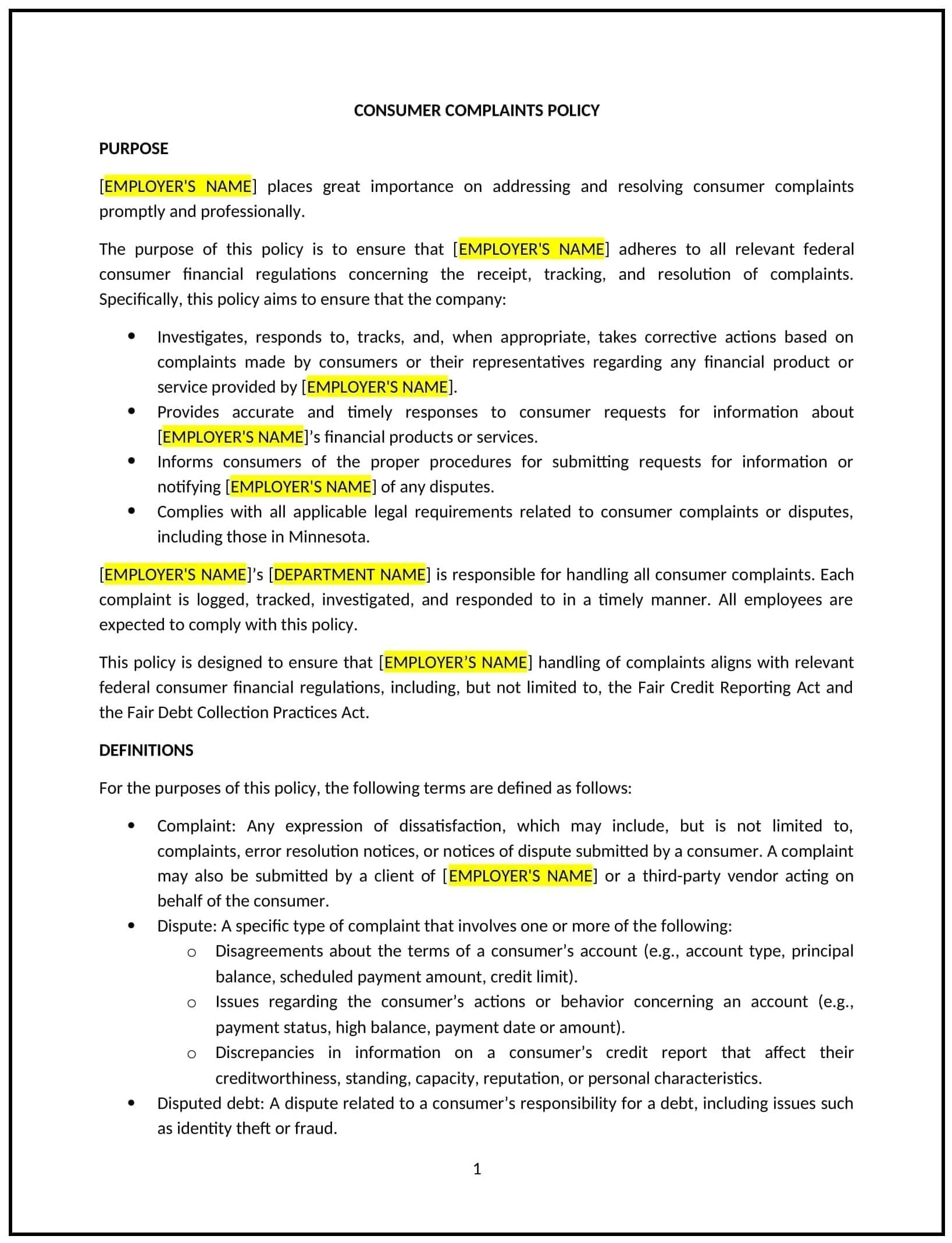
Consumer complaints policy (Minnesota)
This consumer complaints policy is designed to help Minnesota businesses effectively manage and address consumer complaints. It outlines the process for consumers to file complaints, the steps the business will take to resolve issues, and the expected timelines for responding to complaints. By implementing this policy, businesses can enhance customer satisfaction, resolve disputes efficiently, and foster positive consumer relationships.
How to use this consumer complaints policy (Minnesota)
- Define the scope of complaints: Specify the types of complaints covered under the policy, including product defects, service issues, billing discrepancies, and poor customer service.
- Set clear reporting procedures: Outline how consumers can file complaints, whether through an online form, email, phone, or in-person, and provide contact information for customer service teams.
- Establish response timelines: Define the expected response time for acknowledging and addressing consumer complaints, ensuring timely resolution.
- Define resolution steps: Detail the process for investigating and resolving complaints, including steps for gathering information, communicating with consumers, and offering solutions or compensation.
- Protect consumer privacy: Ensure that any personal or sensitive information shared by consumers in complaints is handled confidentially and in accordance with data protection laws.
- Provide feedback and follow-up: Outline how consumers will be informed of the outcome of their complaint and any actions taken to prevent future issues.
Benefits of using a consumer complaints policy (Minnesota)
Implementing this policy provides several advantages for Minnesota businesses:
- Enhances customer satisfaction: By addressing complaints promptly and effectively, businesses can improve customer loyalty and retention.
- Reduces negative impact: Resolving complaints quickly can minimize the risk of negative reviews, social media backlash, or legal action.
- Increases operational efficiency: A structured process for handling complaints streamlines the resolution process and ensures consistency in addressing issues.
- Fosters positive consumer relationships: Demonstrating a commitment to addressing consumer concerns helps build trust and enhance the company’s reputation.
- Reflects Minnesota-specific considerations: Tailors the policy to local consumer rights and expectations, aligning with state laws and business practices.
Tips for using this consumer complaints policy (Minnesota)
- Communicate clearly: Ensure that all employees, especially customer service representatives, understand the policy and can assist consumers in filing complaints.
- Train staff: Provide training on how to handle complaints professionally, empathize with consumers, and resolve issues effectively.
- Document complaints: Maintain a record of all complaints, including the nature of the complaint, actions taken, and outcomes, for future reference and process improvement.
- Continuously improve: Use feedback from complaints to identify patterns and improve products, services, or customer service practices.
- Review regularly: Reassess the policy periodically to ensure it meets evolving business needs and Minnesota-specific regulations.