Consumer complaints policy (Mississippi): Free template
Got contracts to review? While you're here for policies, let Cobrief make contract review effortless—start your free review now.
Customize this template for free
Consumer complaints policy (Mississippi)
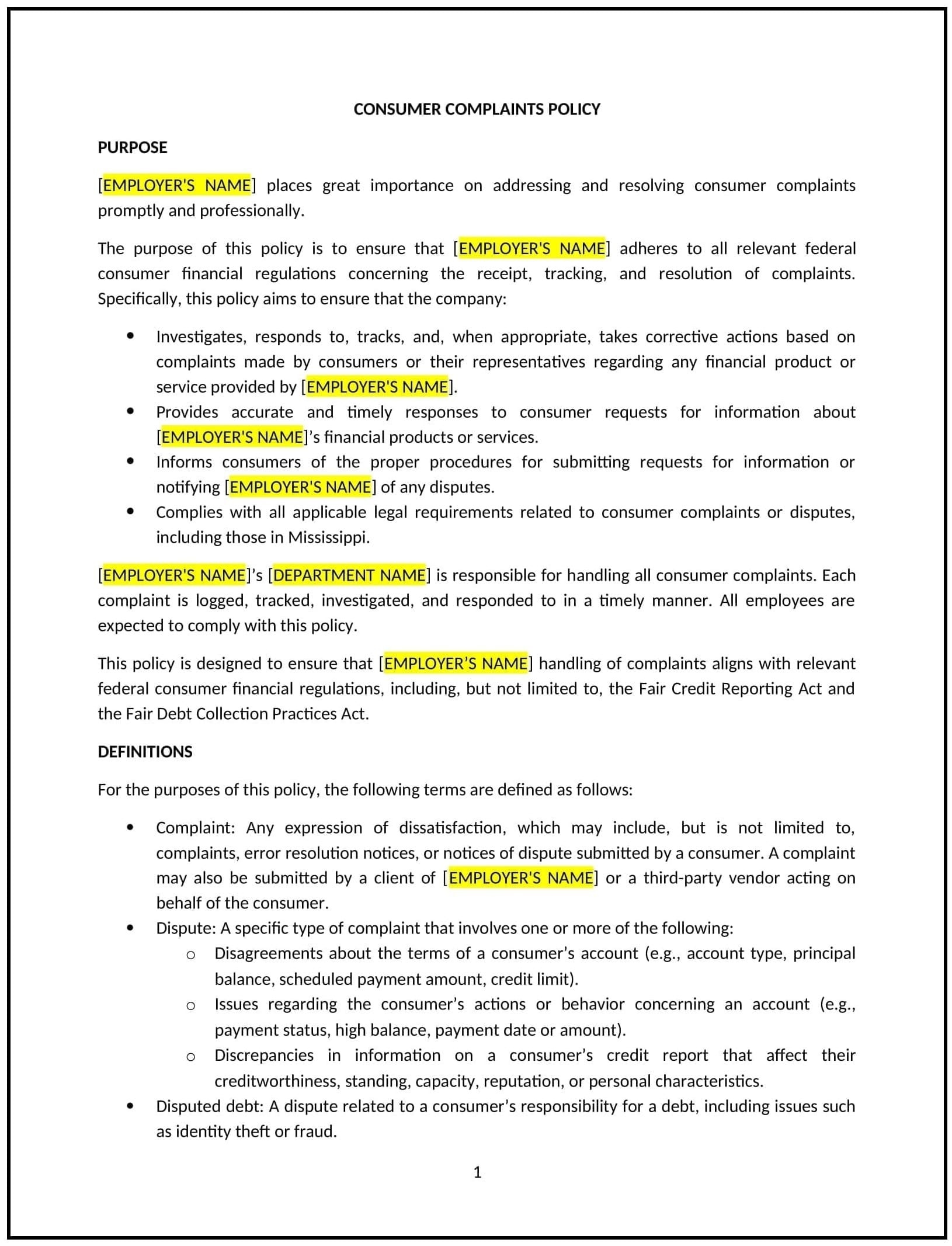
A consumer complaints policy helps Mississippi businesses define the process for receiving, addressing, and resolving complaints from customers. This policy outlines the steps customers should take to file complaints, how businesses should respond, and the actions taken to resolve issues in a timely and satisfactory manner.
By implementing this policy, businesses can improve customer satisfaction, foster loyalty, and enhance their reputation by demonstrating a commitment to addressing consumer concerns.
How to use this consumer complaints policy (Mississippi)
- Define the scope of complaints: Specify what types of complaints the business will address, including product quality issues, customer service concerns, billing errors, and any other grievances related to the company’s products or services.
- Set up clear channels for complaints: Provide customers with clear and accessible ways to submit complaints, such as an email address, a phone number, a web form, or an in-person submission process. The policy should also ensure that complaints can be filed anonymously if desired.
- Acknowledge complaints promptly: Ensure that the policy includes a commitment to acknowledge complaints within a specific time frame (e.g., 24 to 48 hours). Acknowledging receipt of complaints helps build trust and shows the business is responsive.
- Investigate and resolve complaints: Outline the process for investigating complaints, including how the business will determine the root cause, the steps for resolving the issue, and the expected time frame for resolution.
- Offer solutions or compensations: Specify how the business will resolve complaints, whether through product replacements, refunds, discounts, or other forms of compensation. The policy should also include guidelines for offering compensation where appropriate.
- Maintain records of complaints: Keep records of all complaints and resolutions for future reference, analysis, and to track patterns. This can help businesses identify areas for improvement.
- Ensure fair treatment: Clearly state that all complaints will be handled fairly and that customers will not face retaliation for submitting a complaint.
- Review and update the policy: Regularly review the policy to ensure it remains effective and relevant. The policy should be adjusted to reflect customer feedback, legal requirements, or changes in business practices.
Benefits of using this consumer complaints policy (Mississippi)
This policy provides several benefits for Mississippi businesses:
- Enhances customer satisfaction: Addressing consumer complaints in a timely and effective manner helps resolve issues and increases customer satisfaction.
- Improves business reputation: A company that handles complaints well demonstrates its commitment to customer service, which can improve its reputation and help build customer loyalty.
- Identifies areas for improvement: By reviewing consumer complaints, businesses can identify recurring issues and areas that require attention or improvement, leading to better products and services.
- Reduces legal risks: Properly addressing consumer complaints helps mitigate the risk of legal action or regulatory fines related to unresolved customer issues.
- Promotes transparency: A clear, accessible complaint resolution process promotes transparency and trust with customers, showing that the business values their input and takes concerns seriously.
Tips for using this consumer complaints policy (Mississippi)
- Make the complaint process accessible: Ensure that the complaint submission process is easy to navigate and accessible to all customers, including those with disabilities or language barriers.
- Respond in a timely manner: Ensure that the business commits to addressing consumer complaints promptly. Set specific timeframes for acknowledging complaints and resolving them.
- Train employees: Regularly train staff on how to handle complaints, including active listening skills, empathy, and the ability to offer solutions to dissatisfied customers.
- Follow up with customers: After resolving a complaint, follow up with the customer to ensure they are satisfied with the resolution and to gather feedback on how the process can be improved.
- Use complaints as feedback: Treat customer complaints as valuable feedback that can help improve the business. Use the information gathered from complaints to refine processes, policies, or products.