Got contracts to review? While you're here for policies, let Cobrief make contract review effortless—start your free review now.
Customize this template for free
Consumer complaints policy (Nevada)
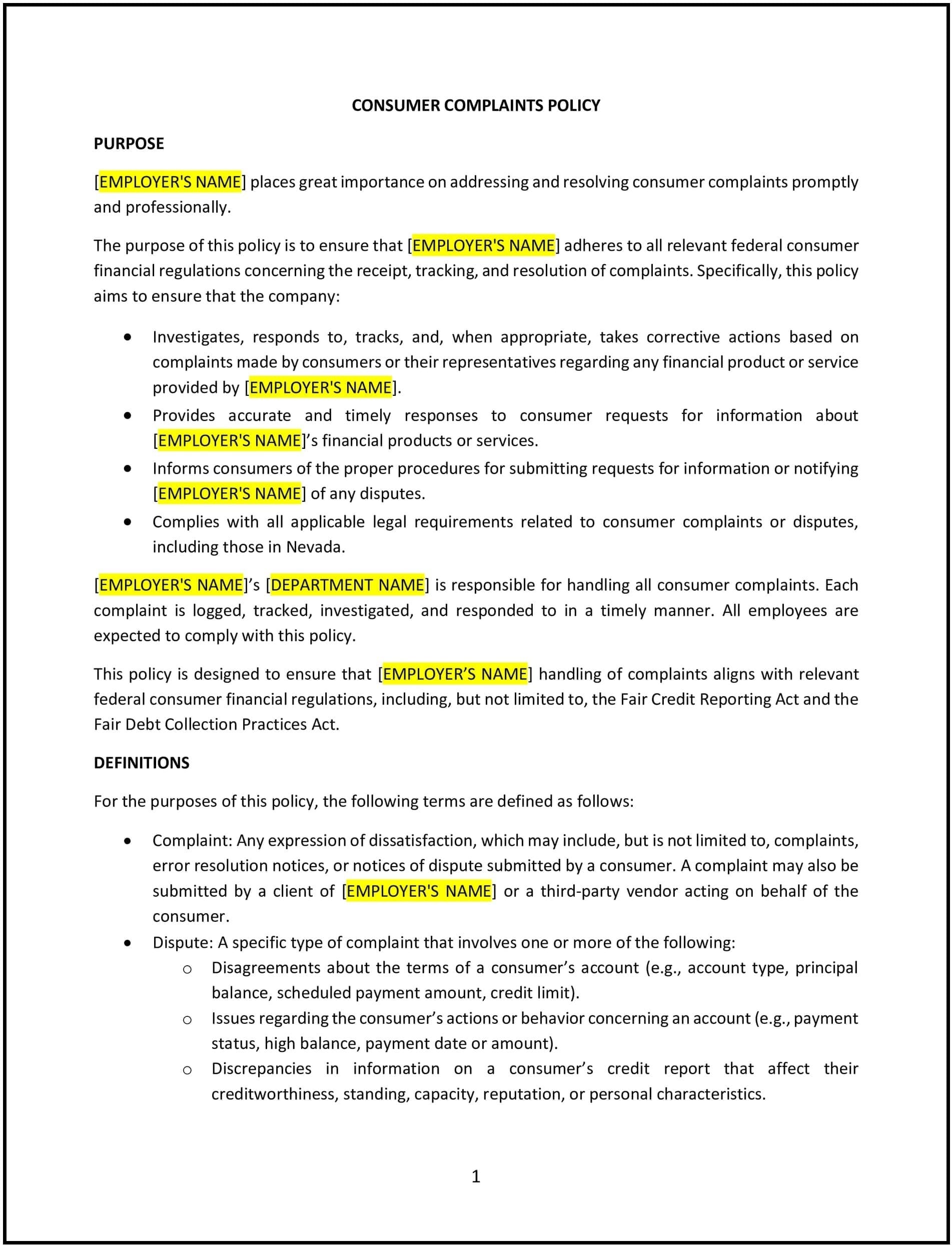
This consumer complaints policy is designed to help Nevada businesses establish a clear and fair process for handling consumer complaints. It outlines how consumers can raise concerns, how the company will address those concerns, and the steps employees should follow to resolve issues promptly and professionally.
By adopting this policy, businesses can improve customer satisfaction, maintain a positive reputation, and ensure that consumer complaints are handled efficiently and in compliance with applicable Nevada laws.
How to use this consumer complaints policy (Nevada)
- Define the scope of complaints: Clearly outline what constitutes a consumer complaint, including issues related to product quality, customer service, delivery, and any other aspects of the business.
- Provide clear reporting channels: Specify how consumers can submit complaints, such as via email, phone, online forms, or in person. Ensure that the process is easily accessible and transparent.
- Establish response times: Set guidelines for how quickly complaints will be acknowledged and resolved. Specify how long it may take to investigate and respond to complaints and provide regular updates.
- Address the investigation process: Define how complaints will be investigated, including the steps employees will take to assess the situation, gather relevant information, and determine an appropriate resolution.
- Set expectations for resolution: Provide guidelines on how complaints will be resolved, whether through refunds, replacements, apologies, or other measures. Ensure that resolutions are fair and meet consumer expectations.
- Ensure non-retaliation: Make it clear that consumers will not face retaliation for filing complaints and that their concerns will be treated with respect and confidentiality.
- Promote continuous improvement: Encourage feedback from consumers on the complaint resolution process, and use that feedback to improve business practices and prevent future complaints.
Benefits of using this consumer complaints policy (Nevada)
This policy provides several key benefits for Nevada businesses:
- Enhances customer satisfaction: A clear and efficient complaints process improves customer experience and increases the likelihood of resolving issues to the consumer’s satisfaction.
- Improves business reputation: Responsively addressing consumer complaints demonstrates the company’s commitment to quality service and can enhance the company’s reputation.
- Supports legal compliance: By providing a structured approach to handling complaints, businesses can support compliance with Nevada state laws regarding consumer protection.
- Reduces risks of consumer disputes: A formalized complaints process can reduce the likelihood of disputes escalating into legal claims, protecting the business from reputational damage and potential financial penalties.
- Drives operational improvements: Complaints often highlight areas for improvement, allowing businesses to address underlying issues and prevent recurring problems.
Tips for using this consumer complaints policy (Nevada)
- Communicate the policy effectively: Ensure that consumers are aware of the complaints process and know how to file a complaint. This can be communicated through websites, receipts, and customer service channels.
- Respond promptly: Acknowledge all complaints as quickly as possible, even if a resolution is not immediately available. This demonstrates that the business values consumer concerns.
- Train employees: Ensure that employees are trained on how to handle complaints professionally and in accordance with the company policy. Employees should understand the importance of resolving issues respectfully.
- Track complaints: Keep a record of all complaints, resolutions, and outcomes to identify patterns or recurring issues that may need to be addressed at a systemic level.
- Follow up with consumers: After a complaint has been resolved, follow up with consumers to ensure they are satisfied with the outcome and gather feedback on their experience.