Got contracts to review? While you're here for policies, let Cobrief make contract review effortless—start your free review now.
Customize this template for free
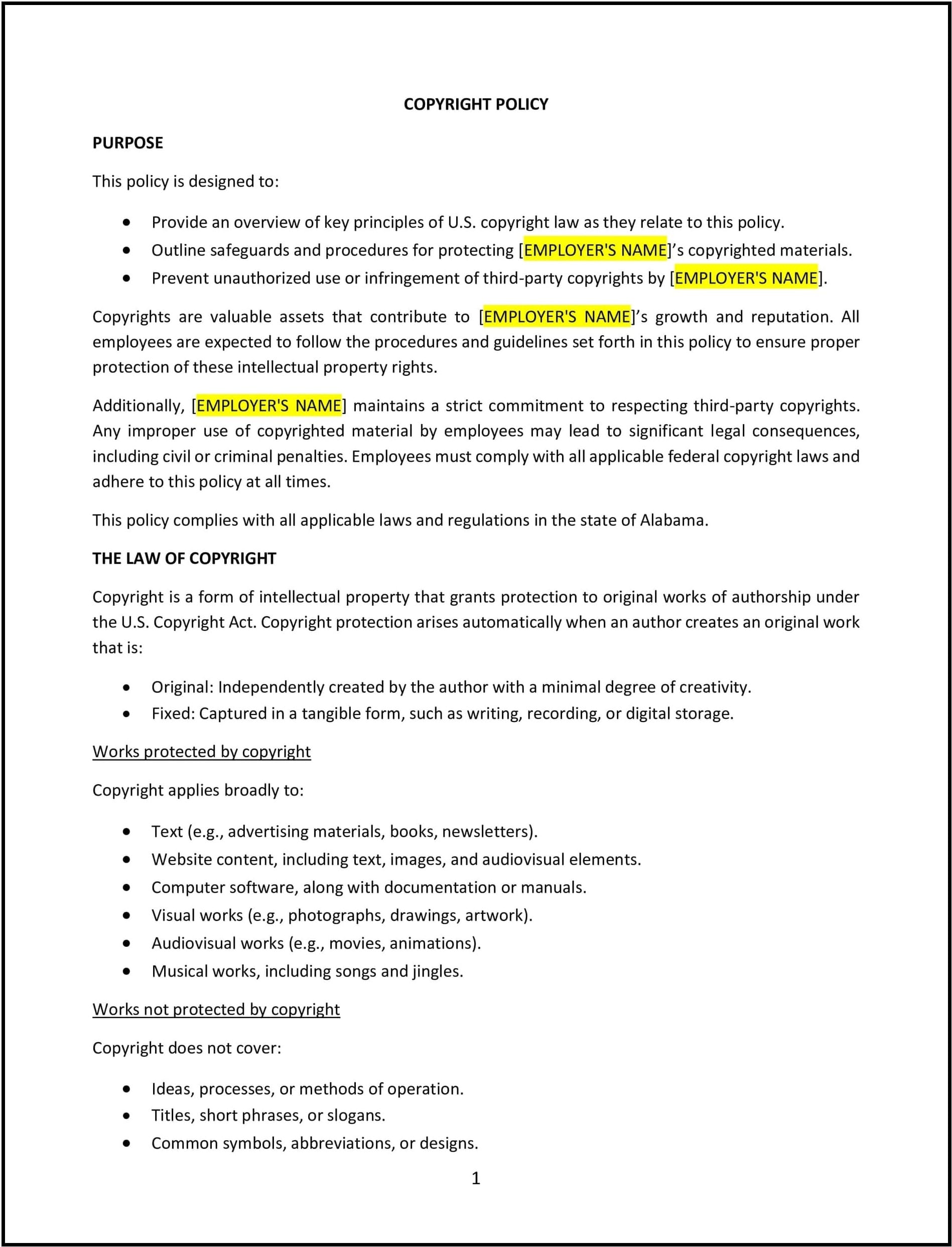
Copyright policy (Alabama)
A copyright policy provides clear guidelines on how your business handles intellectual property (IP) rights, ensuring compliance with copyright laws. For SMBs in Alabama, this policy is essential for protecting your own copyrighted works while respecting the intellectual property rights of others. Tailoring this policy to your business helps prevent infringement, fosters respect for creativity, and ensures legal compliance.
This policy also defines how your company approaches the creation, use, and distribution of copyrighted material, whether it’s content you produce or materials you license.
How to use this copyright policy (Alabama)
- Define copyrighted works: Specify what types of works are covered by the policy, such as written content, designs, software, and multimedia.
- Clarify ownership: Establish who owns the copyright to content created by employees, contractors, or freelancers. This could include terms for work-for-hire agreements or usage rights.
- Set guidelines for use: Clearly outline how employees and third parties are allowed to use copyrighted material, including any restrictions, licensing terms, or fair use guidelines.
- Address infringement: Define the process for handling cases of potential copyright infringement, including reporting mechanisms, internal investigations, and corrective actions.
- Ensure compliance with Alabama and federal laws: Align your policy with the U.S. Copyright Act and any relevant Alabama state laws to prevent legal issues related to copyright ownership and infringement.
Benefits of using a copyright policy (Alabama)
A well-structured copyright policy protects your business’s intellectual property while promoting a culture of compliance. Here’s how it helps:
- Prevents copyright infringement: By clearly defining ownership and usage rights, you minimize the risk of infringing on others' copyrighted work.
- Safeguards intellectual property: Protects your business’s creations, such as designs, products, software, and written content, from unauthorized use or reproduction.
- Ensures legal compliance: Helps your business adhere to Alabama and federal copyright laws, avoiding potential legal consequences.
- Promotes ethical use of IP: Encourages employees and third parties to respect intellectual property rights, fostering an environment of creativity and innovation.
- Enhances brand protection: Ensures your brand’s content is used properly and attributed correctly, protecting your reputation and original works.
Tips for implementing a copyright policy (Alabama)
- Tailor to your industry: Customize the policy based on your business’s industry and the type of content you produce. For example, a media company may need specific clauses regarding licensing and distribution rights for creative content.
- Consider fair use: Include clear guidelines on how employees can use copyrighted materials under the "fair use" doctrine, such as for educational or commentary purposes, in compliance with the law.
- Track licenses and permissions: Keep records of any third-party licenses or permissions obtained for using external content, ensuring all necessary rights are secured.
- Establish an infringement response protocol: Develop a clear procedure for identifying and addressing copyright infringement, including how to issue takedown notices if necessary.
- Educate employees: Provide regular training on copyright law, what constitutes infringement, and how to properly handle copyrighted material in their daily work.