Got contracts to review? While you're here for policies, let Cobrief make contract review effortless—start your free review now.
Customize this template for free
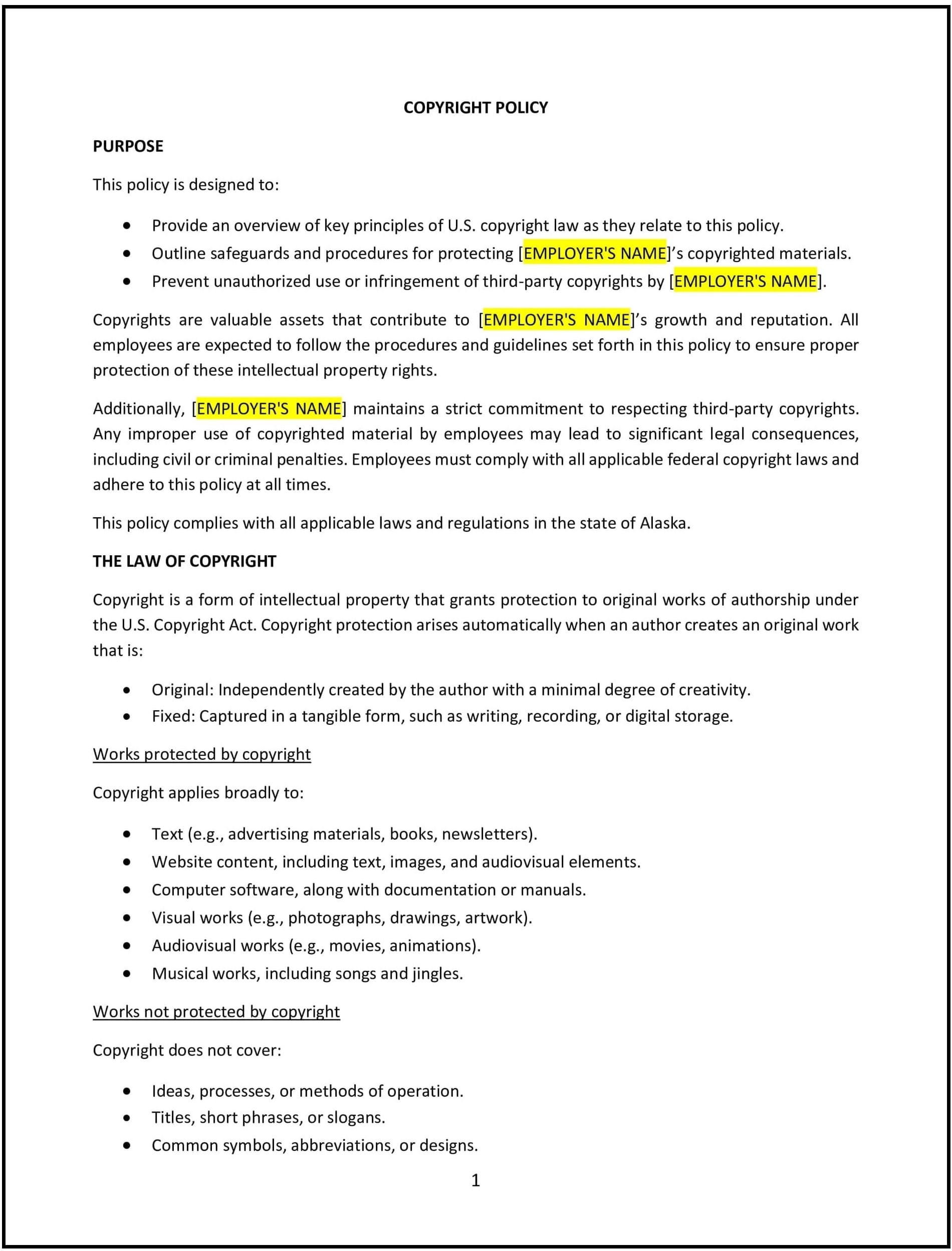
Copyright policy (Alaska)
In Alaska, a copyright policy helps businesses protect intellectual property and ensure compliance with copyright laws while establishing guidelines for using third-party materials. This policy outlines employee responsibilities for respecting copyrights, safeguarding the company’s intellectual property, and avoiding infringement risks. By implementing this policy, businesses can promote ethical practices and minimize legal exposure.
Given Alaska’s reliance on industries such as tourism, creative arts, and technology, a copyright policy can address specific concerns related to the use of marketing materials, digital content, or proprietary designs.
How to use this copyright policy (Alaska)
- Define copyright protection: Clearly state what types of materials are protected under copyright law, such as written works, images, videos, music, and software.
- Outline employee responsibilities: Provide guidelines for employees on using copyrighted materials, including obtaining permissions, citing sources, and avoiding unauthorized duplication.
- Address company-owned content: Specify how employees should handle the company’s copyrighted materials, including proper usage, storage, and protection from unauthorized access.
- Include reporting procedures: Establish a process for reporting suspected copyright violations, whether by employees or external parties.
- Provide training: Educate employees about copyright law, fair use, and their responsibilities to protect intellectual property, ensuring they understand the policy and its implications.
Benefits of using a copyright policy (Alaska)
A copyright policy provides numerous advantages for businesses in Alaska. Here’s how it helps:
- Protects intellectual property: Safeguards the company’s creative assets from unauthorized use or infringement, maintaining competitive advantages.
- Reduces legal risks: Minimizes exposure to copyright infringement claims by establishing clear guidelines for using third-party materials.
- Promotes compliance: Encourages adherence to copyright laws and industry standards, supporting ethical business practices.
- Enhances reputation: Demonstrates the company’s commitment to respecting intellectual property rights, fostering trust with clients, partners, and stakeholders.
- Streamlines processes: Provides employees with clear instructions on how to use and protect copyrighted materials, reducing misunderstandings and inefficiencies.
Tips for using a copyright policy (Alaska)
- Customize for your industry: Tailor the policy to address copyright concerns specific to your business, such as creative content in marketing or software development.
- Address digital usage: Include provisions for handling digital content, such as using licensed images, videos, or software in compliance with copyright terms.
- Include fair use guidelines: Provide examples of fair use scenarios to help employees understand how copyrighted materials can be used without infringing rights.
- Monitor external use: Implement procedures to monitor unauthorized use of the company’s copyrighted materials by third parties and enforce protections if needed.
- Regularly review the policy: Update the policy to reflect changes in copyright laws, industry practices, or business needs.