Disability accommodations policy (Minnesota): Free template
Got contracts to review? While you're here for policies, let Cobrief make contract review effortless—start your free review now.
Customize this template for free
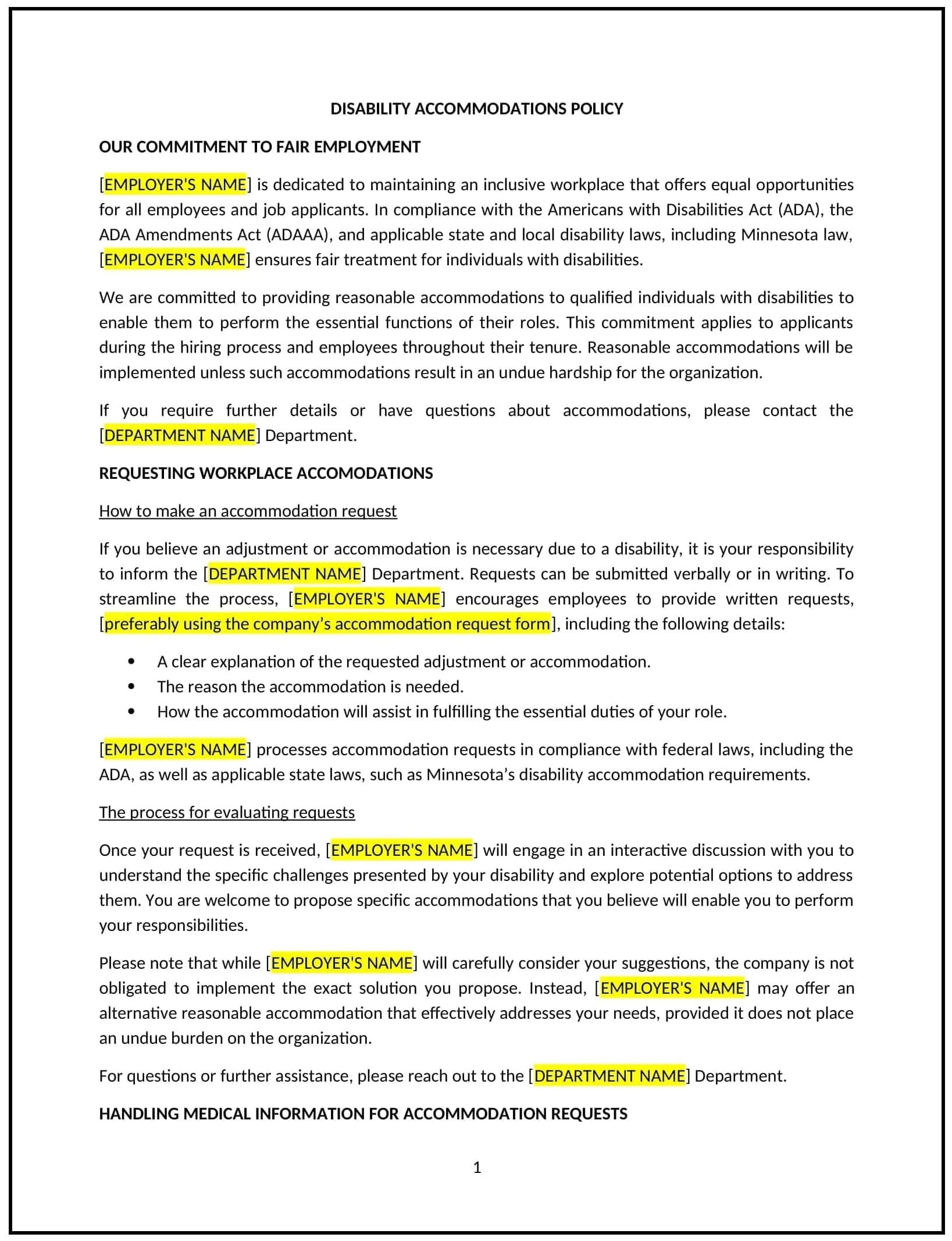
Disability accommodations policy (Minnesota)
This disability accommodations policy is designed to help Minnesota businesses provide reasonable accommodations for employees with disabilities to ensure they can perform their job functions effectively. It outlines the process for requesting accommodations, the types of accommodations that may be provided, and the responsibilities of both employees and employers.
By implementing this policy, businesses can foster an inclusive work environment, improve employee retention, and comply with local and federal laws regarding disability rights.
How to use this disability accommodations policy (Minnesota)
- Define disability and accommodations: Clearly define what constitutes a disability under Minnesota state law and the types of accommodations the company may provide, such as adjustments to work schedules, physical workspace modifications, or assistive technologies.
- Set the request process: Outline the steps employees should take to request accommodations, including whom to contact, any required documentation, and expected response timelines.
- Address confidentiality: Ensure that employees' medical information or disability status is kept confidential, with only necessary personnel involved in the accommodation process.
- Provide examples of accommodations: Include examples of possible accommodations, such as flexible work hours, ergonomic workstations, or the use of assistive devices, and explain how each might be evaluated based on individual needs.
- Clarify the interactive process: Establish a clear process for dialogue between the employer and employee to determine the most appropriate accommodation, ensuring that both parties are actively involved.
- Specify undue hardship: Outline the circumstances under which the company may not be able to provide a specific accommodation due to undue hardship, such as significant cost or operational impact.
Benefits of using a disability accommodations policy (Minnesota)
Implementing this policy provides several advantages for Minnesota businesses:
- Promotes inclusivity: Supports employees with disabilities by providing the tools and resources they need to succeed in the workplace.
- Enhances employee satisfaction: Offering accommodations fosters a more supportive work environment, leading to higher employee morale and retention.
- Reduces legal risks: Helps businesses comply with local, state, and federal regulations, reducing the risk of legal action related to disability discrimination.
- Improves productivity: By providing employees with the necessary accommodations, businesses can improve overall performance and ensure that employees can contribute to their full potential.
- Reflects Minnesota-specific considerations: Adapts the policy to Minnesota’s specific disability-related laws and cultural expectations regarding workplace inclusivity.
Tips for using this disability accommodations policy (Minnesota)
- Communicate clearly: Ensure that employees are aware of the accommodations process, how to request accommodations, and their rights under the policy.
- Encourage an open dialogue: Create an environment where employees feel comfortable discussing their accommodation needs without fear of discrimination or retaliation.
- Keep documentation organized: Maintain accurate records of accommodation requests, including any supporting documentation, communications, and decisions made during the process.
- Evaluate on a case-by-case basis: Each accommodation request should be assessed individually to ensure the employee’s specific needs are met in a reasonable and effective manner.
- Update regularly: Review and update the policy periodically to ensure it reflects any changes in disability laws or Minnesota-specific requirements.