Got contracts to review? While you're here for policies, let Cobrief make contract review effortless—start your free review now.
Customize this template for free
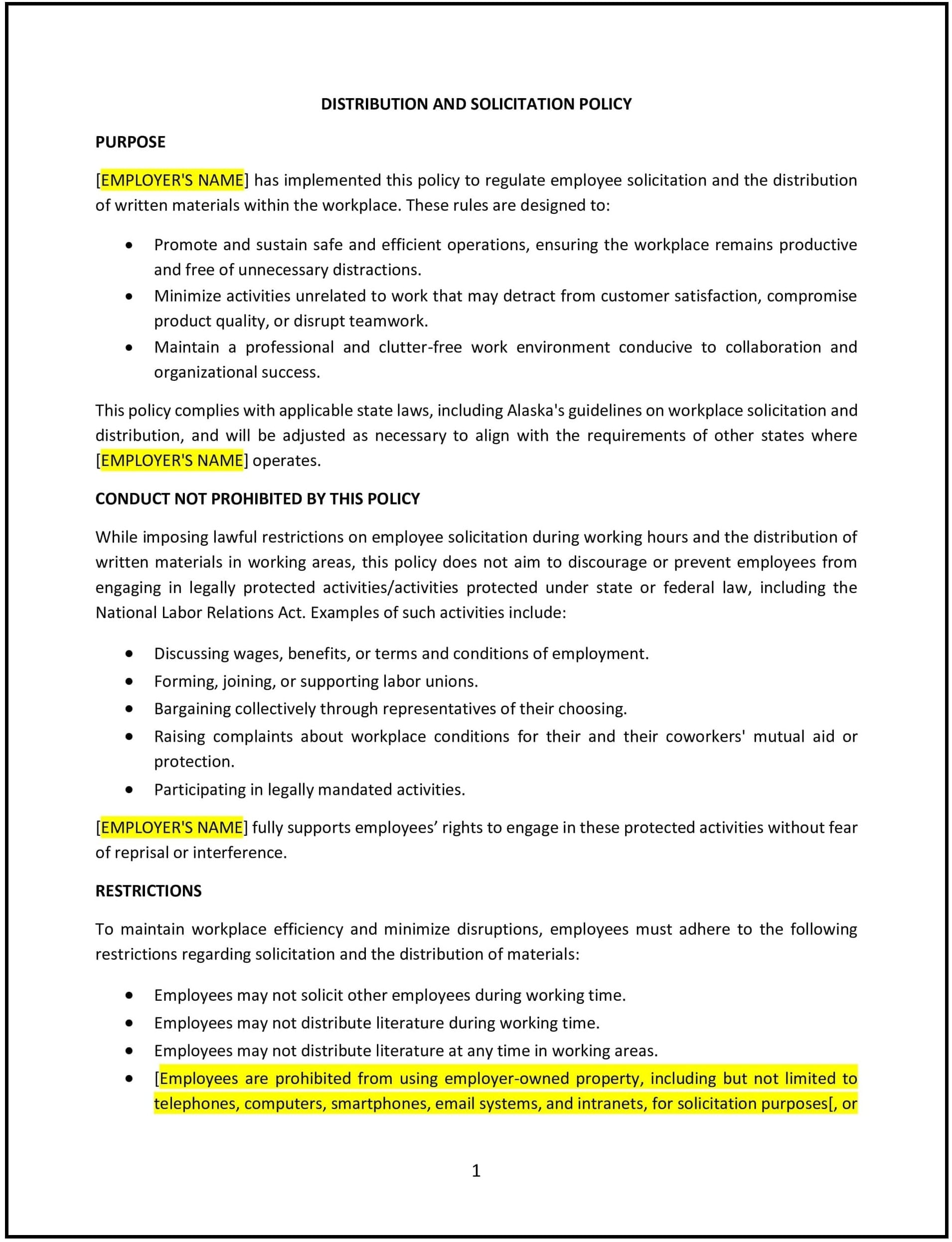
Distribution and solicitation policy (Alaska)
In Alaska, a distribution and solicitation policy establishes clear guidelines for managing the distribution of materials and solicitation activities within the workplace. This policy helps businesses maintain productivity, ensure a professional environment, and minimize disruptions caused by unauthorized activities. By implementing a well-structured policy, businesses can address common concerns such as workplace distractions, inappropriate solicitations, and the misuse of company resources.
Given Alaska’s diverse work settings, including remote sites and seasonal operations, businesses may need to adapt the policy to address location-specific considerations, such as safety protocols or unique employee needs.
How to use this distribution and solicitation policy (Alaska)
- Define acceptable activities: Specify what types of solicitation and distribution are permitted, such as charitable campaigns approved by the company or essential workplace communications.
- Set boundaries: Clarify when and where solicitation and distribution activities can take place, such as during breaks or in designated areas, to avoid disrupting operations.
- Prohibit inappropriate activities: Clearly state which activities are not allowed, such as unauthorized sales, political campaigning, or distribution of offensive materials.
- Address external parties: Include guidelines for managing solicitation or distribution requests from non-employees, such as vendors or community groups.
- Communicate enforcement: Explain the consequences for violating the policy and ensure all employees understand their responsibilities to comply.
Benefits of using a distribution and solicitation policy (Alaska)
A distribution and solicitation policy provides several advantages for businesses in Alaska. Here’s how it helps:
- Maintains workplace productivity: Reduces disruptions caused by unsolicited activities, ensuring employees can focus on their tasks.
- Promotes a professional environment: Sets clear expectations for appropriate behavior, fostering a respectful and distraction-free workplace.
- Supports compliance: Helps businesses adhere to labor laws and regulations regarding workplace solicitation and distribution.
- Protects company resources: Ensures that company time, facilities, and equipment are used for business purposes rather than personal or unauthorized activities.
- Enhances employee relations: Provides a consistent framework for managing solicitation requests, reducing potential conflicts or misunderstandings.
Tips for using a distribution and solicitation policy (Alaska)
- Be specific: Clearly define the types of solicitation and distribution activities allowed or prohibited to avoid ambiguity.
- Address remote locations: For workplaces in remote or seasonal settings, include provisions tailored to the unique dynamics of these environments.
- Encourage employee involvement: Allow for company-approved activities, such as charity drives or workplace events, to promote team engagement and morale.
- Enforce consistently: Apply the policy uniformly to all employees and external parties to maintain fairness and prevent favoritism.
- Review periodically: Update the policy as needed to reflect changes in workplace practices, regulations, or employee feedback.